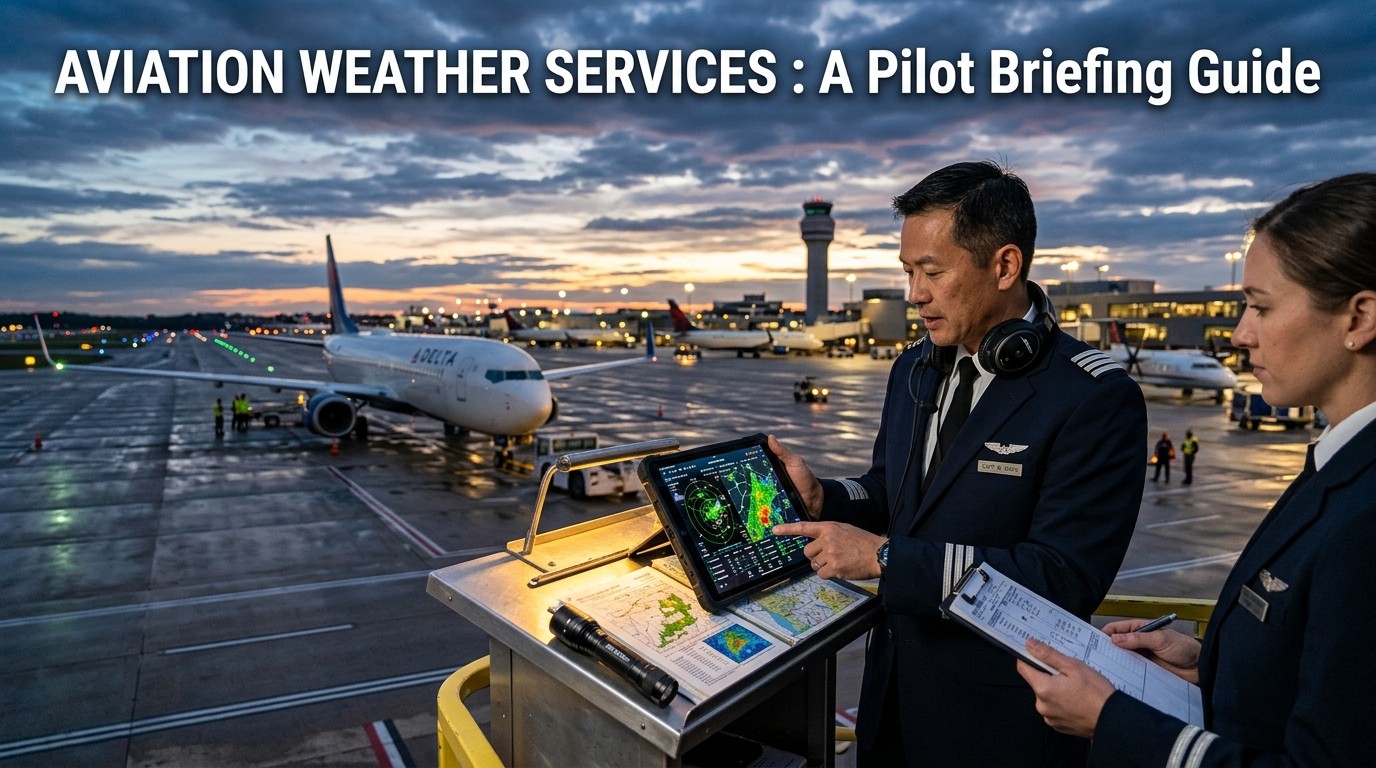
Aviation Weather Services help pilots reduce uncertainty, plan safer routes, and make clearer go or no-go decisions before departure, during flight, and again before landing.
A flight does not begin when the wheels leave the runway. It begins when the crew starts building a weather picture that is detailed enough to support safe action. Aviation Weather Services matter because the atmosphere changes quickly, and pilots need more than a casual glance at the sky. They need a structured way to connect current conditions, forecasts, hazards, and airport reports to the actual aircraft and route.
That is especially important when the day already feels busy. A late passenger, a narrow departure window, or a long route can create pressure to launch before the situation is fully understood. Aviation Weather Services help remove guesswork by showing what the weather is doing now and what it is likely to do next. When that information is reviewed early, pilots gain time to choose a better runway, a safer alternate, or a more realistic departure window.
The value is not just technical. Good briefing also lowers mental load. When the crew understands the weather clearly, the cockpit feels calmer and decisions feel less rushed. Aviation Weather Services support that calm by turning scattered data into one operational story.
What a Pilot Briefing Should Actually Include
A useful briefing should answer a few simple but critical questions: What is happening now? What is likely to change soon? Which hazards matter to this route? Which alternates remain viable? Aviation Weather Services are valuable because they help organize those answers into a practical framework instead of leaving the pilot to piece everything together from separate charts.
A strong briefing normally combines observations, forecasts, winds aloft, turbulence cues, precipitation trends, visibility changes, and hazard advisories. The pilot should know whether current conditions match the earlier forecast, whether the forecast is still holding, and whether a new line of weather is building along the route. Aviation Weather Services make that comparison easier because they bring different layers of information into one decision space.
Route context matters too. A mountain approach, a coastal airport, and a short regional hop all carry different weather risks. A single weather summary is never enough. Aviation Weather Services work best when they are matched to the actual mission so the pilot can see how the atmosphere affects the aircraft, the runway, and the arrival window in real terms.
How Weather Supports Pilot Decision Making

The best flying decisions are rarely made from instinct alone. They come from a mix of judgment, experience, and current conditions. Aviation Weather Services strengthen Pilot Decision Making because they turn weather from an abstract concern into a specific operational factor. Instead of asking whether the weather looks “bad,” the crew can ask whether the weather exceeds aircraft limits, changes the fuel picture, or narrows runway choices.
That shift matters because weather affects many parts of flight at once. A headwind may lengthen the trip. A crosswind may limit runway options. A lowering ceiling may push the crew toward an alternate. A convective line may force a reroute. Aviation Weather Services help the pilot connect those conditions to the actual impact on the flight, which makes the final decision more rational and less emotional.
Timing also matters. A weather briefing taken too early can become stale before departure. A briefing taken too late may leave no room to change the plan. Aviation Weather Services are most useful when they are reviewed more than once: during early planning, close to departure, and again if the flight is long enough for weather to evolve en route.
Shared Understanding Improves Crew Coordination
A cockpit works best when both crewmembers are looking at the same weather picture. Aviation Weather Services create that shared reference so the team can divide tasks without dividing understanding. One pilot may watch the destination trend, another may verify the alternate, and another may assess runway and fuel implications, but all of them should be using the same weather logic.
That shared view supports Crew Resource Management Tools because it gives the crew a neutral base for discussion. If one crewmember is concerned about icing and another is focused on wind shear or visibility, the briefing helps them compare risks in the same language. Aviation Weather Services reduce confusion because they make the weather discussion specific, measurable, and tied to flight operations.
This matters even more when pressure is high. Fatigue, schedule stress, and passenger expectations can make crews more likely to accept a weak plan. Aviation Weather Services interrupt that pattern by creating a pause for review. That pause gives the team time to challenge assumptions before the aircraft is committed.
The Core Products Every Pilot Uses
No single weather product tells the whole story. Aviation Weather Services are most effective when they combine current observations, forecasts, hazard alerts, and real pilot reports into one flight picture.
| Product | What It Shows | Operational Value |
|---|---|---|
| METAR | Current airport observations | Confirms what is happening now |
| TAF | Airport forecast | Helps plan the departure and arrival window |
| SIGMET | Significant hazards | Warns of serious weather threats |
| AIRMET | Broad flight-impacting conditions | Flags moderate but important weather |
| PIREP | Pilot report | Confirms what aircraft are actually experiencing |
| Radar/Satellite | Weather movement and structure | Shows storm and cloud development |
The challenge is not simply access. It is interpretation. A pilot who reads only one report may miss the pattern underneath it. Aviation Weather Services help by turning several sources into one operational story. That story should answer whether the forecast is stable, whether the route is still practical, and whether the destination is likely to remain usable.
A good habit is to begin with current conditions, then move to the forecast, then check hazard products, then review alternates. Aviation Weather Services become much more useful when they are processed in that order because the pilot sees the weather as a sequence of decisions rather than a pile of disconnected charts.
Weather as a Timeline, Not a Snapshot
One of the biggest mistakes in flight planning is treating weather like a fixed image. It is not fixed. It is moving, building, weakening, and shifting. Aviation Weather Services matter because they help pilots think in time. What is true at 8 a.m. may not be true by departure, and what is true at takeoff may no longer be true by descent.
That is why update timing matters so much. The first briefing creates the base plan, but the last review often reveals the most important change. Aviation Weather Services become especially valuable when a route crosses a front, a storm band, or terrain that can reshape local conditions quickly. The pilot needs to know not just what the sky is doing now, but what it will likely do when the aircraft reaches the next phase of flight.
This timeline thinking also reduces surprise. If a destination ceiling is trending down and the arrival window is tight, the pilot can act early. Aviation Weather Services make that early action possible, which is often the difference between a controlled delay and a forced diversion.
How Weather Shapes Route Planning
A short hop and a long cross-country flight need different levels of weather attention. Aviation Weather Services are useful in both cases, but the route length changes the question. Short flights need immediate legality and current trend awareness. Long flights need a wider view that includes alternates, fuel reserves, en route weather movement, and destination trend confidence.
Terrain can make weather more complicated. Mountains can create turbulence, cloud build-up, and sudden visibility changes. Coastal routes can bring low ceilings, fog, and wind shifts. Aviation Weather Services help the pilot translate those regional patterns into route-specific decisions. That means the crew can see where the stronger risk sits instead of assuming the forecast applies evenly across the entire flight.
Route planning should also account for the type of aircraft. A smaller aircraft may need a more conservative approach to wind, visibility, and icing. A larger aircraft may have more performance margin, but it still needs realistic awareness of runway, traffic, and alternate conditions. Aviation Weather Services support those decisions by connecting the route to the aircraft rather than giving a generic weather summary.
Common Weather Interpretation Errors
Even experienced pilots can misread the atmosphere when they are rushed or mentally overloaded. Aviation Weather Services reduce that risk, but they cannot remove human bias completely. One common error is assuming that a legal forecast is automatically a comfortable or smart one. Another is reading a broad forecast as if it describes every point along the route.
Confidence levels matter too. A slight chance of thunderstorms may still deserve caution if the timing lines up with peak heating or unstable air. Aviation Weather Services are useful because they show not just the possibility of weather, but the operational relevance of that possibility. They help the pilot ask whether the risk is manageable, growing, or moving closer to the route.
Confirmation bias is another danger. If a crew wants the flight to go, they may focus on the parts of the forecast that support the plan. If they expect trouble, they may overstate the threat. Aviation Weather Services help reduce both errors by forcing a comparison among observations, forecasts, and pilot reports before a final choice is made.
Technology Helps, But Judgment Still Wins
Modern cockpit and planning tools are powerful, but they do not replace human judgment. Aviation Weather Services work best when they support the pilot rather than act as a substitute for thinking. A clean screen can feel reassuring, but reassurance is not the same thing as operational confidence.
That is why Top Travel Apps should be treated as convenience tools, not flight-safety tools. They are useful for arranging hotels, transportation, and general trip logistics, but they do not interpret weather risk for a specific aircraft and route. Aviation Weather Services remain the more important source when the question is whether the flight should continue, delay, or divert.
The same warning applies to Best Flight Tracking Apps. Those apps can show traffic flow, schedule changes, and aircraft positions, but they do not explain how a storm line may affect an approach path or how icing may develop along a climb profile. Aviation Weather Services fill that gap by linking atmosphere and aircraft in a way that supports actual flight planning.
Stress Drops When the Weather Picture Is Clear
Uncertainty is often more stressful than the weather itself. When the crew does not know what will happen next, they spend mental energy preparing for every possibility. Aviation Weather Services reduce that burden by narrowing the range of likely outcomes and making the next decision more concrete.
That calm has practical value. When the weather picture is shared and current, the crew can focus on the real operating problem instead of debating guesses. Even if the decision is to delay or divert, it feels more controlled when it is supported by Aviation Weather Services rather than made under pressure with incomplete information.
Passengers also benefit indirectly from that calm. A confident crew usually creates a steadier cabin atmosphere. So weather briefing is not only about compliance or technical safety. It also improves the human side of the flight, which matters every time the aircraft is full of people who want a smooth, predictable trip.
Why Timing of Updates Matters So Much
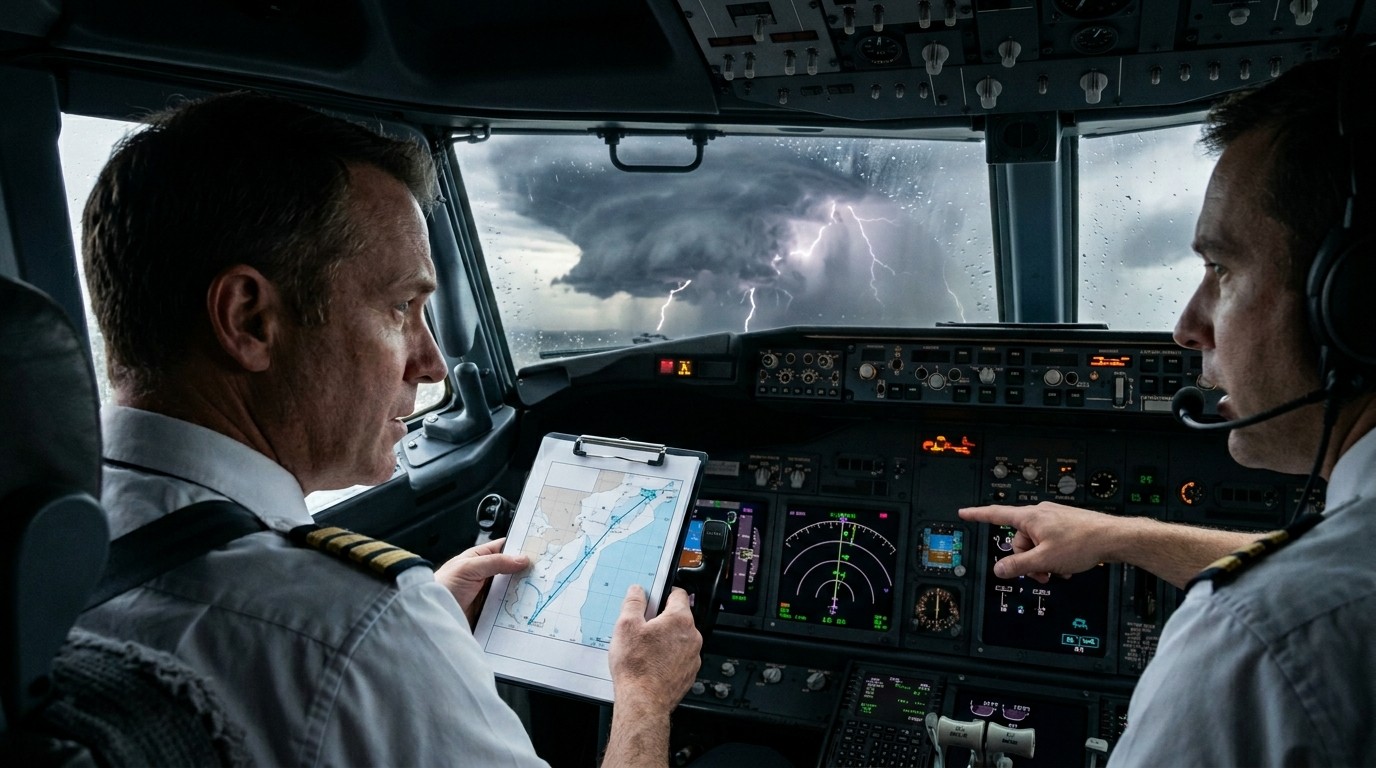
Weather is dynamic, and that means a briefing has a shelf life. Aviation Weather Services matter most when the crew reviews them at the right moment. An early briefing sets the foundation, but a fresh review closer to departure often shows the most important change. The same route can move from acceptable to marginal in a short span of time.
This is especially true when the flight passes near terrain, convective activity, or a moving front. A plan that looked reasonable two hours earlier may no longer be smart by taxi time. Aviation Weather Services help the pilot catch that change before the aircraft is committed. That is one of the biggest practical advantages of using them consistently.
For longer flights, in-flight review matters too. The destination may be improving or deteriorating while the aircraft is still airborne. Aviation Weather Services support the habit of refreshing the weather picture before the approach, not after the decision window is already closing.
Building a Repeatable Briefing Habit
Safety habits work best when they are simple, clear, and repeatable. Aviation Weather Services are strongest when the crew uses the same workflow every time rather than starting from scratch in a hurry. A good workflow might begin with the departure airport, move to the destination, then review en route weather, alternates, and hazards.
A repeatable order lowers the chance of missing a critical detail. If the crew always follows the same sequence, changes stand out faster. A new ceiling trend or a stronger wind shift becomes easier to notice when the process is consistent. Aviation Weather Services are much easier to trust when they are integrated into that disciplined routine.
The habit also improves learning. Over time, pilots begin to remember which airports drop ceilings quickly, which routes are sensitive to terrain, and which forecast details deserve extra caution. Aviation Weather Services do more than inform one flight. They help the crew get smarter for the next one.
A Simple Preflight Weather Workflow
The best workflow is not the most complicated one. It is the one that the crew actually uses every time. Aviation Weather Services fit well into a practical sequence: current observations, forecast trends, hazard products, alternates, and final confirmation before departure.
A pilot can also ask a few direct questions: Is the weather improving or worsening? Is the uncertainty localized or widespread? Does the arrival window still make sense? Do winds, visibility, or convection affect runway choice? These questions keep the briefing centered on decisions, which is the whole purpose of Aviation Weather Services.
A second review source is helpful if the first and second sources do not match. That does not automatically mean one of them is wrong. It means the pilot should slow down and investigate why the picture differs. Aviation Weather Services are most valuable when they encourage that kind of disciplined cross-checking.
Weather and Operational Safety
Operational safety is about preserving margin, not just meeting minimums. Aviation Weather Services help pilots see whether enough margin remains for fuel, runway, terrain, alternate choices, and arrival timing. A flight can be technically legal and still be operationally weak if the margins are too thin.
That is why weather planning should never stop at the departure runway. The crew should consider fuel reserve, missed approach options, icing exposure, and the likelihood that the destination will remain usable. Aviation Weather Services help tie those pieces together so the pilot can judge whether the plan is truly prudent or merely barely possible.
This wider thinking is especially important when the flight is carrying passengers who may not understand the difference between a legal plan and a wise one. Aviation Weather Services help the crew act as professionals by choosing the safer option before the risk becomes visible to everyone else.
Shared Weather Understanding Improves Communication
A cockpit conversation is better when both pilots are using the same facts. Aviation Weather Services create that shared reference point, which makes it easier to ask clear questions, assign tasks, and compare concerns without confusion.
That shared understanding also improves rhythm. Once the weather picture is clear, the rest of the flight tends to feel smoother. There is less second-guessing, fewer repeated checks, and more confidence in the chosen plan. Aviation Weather Services do not just provide data. They improve coordination, which is one reason they are so valuable in daily flight operations.
This is especially important when weather is changing fast. A team that already shares the same picture can move faster and with less stress. Aviation Weather Services keep the team aligned so the crew can focus on flying, not on guessing what the other person meant.
Long-Haul Flights Need a Wider Weather View
Longer flights create more room for weather to change. A route that begins in clear conditions can end in a very different atmosphere. Aviation Weather Services matter more on those flights because they help crews think across time and distance instead of focusing only on the departure airport.
The destination may be improving at takeoff and deteriorating by arrival. The en route corridor may look calm but still contain a band of turbulence or icing risk. Aviation Weather Services make those transitions easier to see so the pilot can adjust before the aircraft is boxed in by the final approach environment.
That wider view also affects alternate planning. A good alternate is not just legal. It is likely to stay usable, reachable with current fuel, and appropriate for the aircraft. Aviation Weather Services help the crew judge whether the alternate is strong enough to matter if the destination changes suddenly.
A Practical Checklist for Departure
A standard checklist makes weather review faster and more reliable. Aviation Weather Services are easier to use when the crew moves through the same order every time.
| Step | Weather Question |
|---|---|
| 1 | What are current conditions at departure? |
| 2 | What is the forecast at destination? |
| 3 | What hazards affect the route? |
| 4 | What is the status of the alternate? |
| 5 | Does fuel still support the plan? |
| 6 | Is there a final update before engine start? |
This sequence helps the pilot avoid jumping to the most dramatic chart first. It also makes the briefing easier to repeat under pressure. Aviation Weather Services are strongest when they are part of a process that the crew can trust even on a busy day.
A checklist also lowers memory pressure. The pilot does not have to hold every detail in short-term memory at once. The sequence does the work. That is a major reason Aviation Weather Services are most useful when they are organized, not just available.
Learning From Each Flight
Weather review becomes more powerful when crews debrief it after the flight. Did the forecast match the reality? Did the wind shift earlier than expected? Did the ceiling lower faster than the terminal forecast suggested? Those questions turn each flight into a learning opportunity, and Aviation Weather Services provide the comparison point.
That comparison improves future judgment. Over time, pilots become better at spotting which airports are prone to rapid change, which routes are vulnerable to terrain-driven weather, and which forecast details deserve extra skepticism. Aviation Weather Services support that learning because they give the crew a consistent way to compare expectation against reality.
That matters because confidence should be earned, not assumed. A crew that learns from weather every time is less likely to be surprised later. Aviation Weather Services help build that steady, professional habit.
Balancing Efficiency and Caution
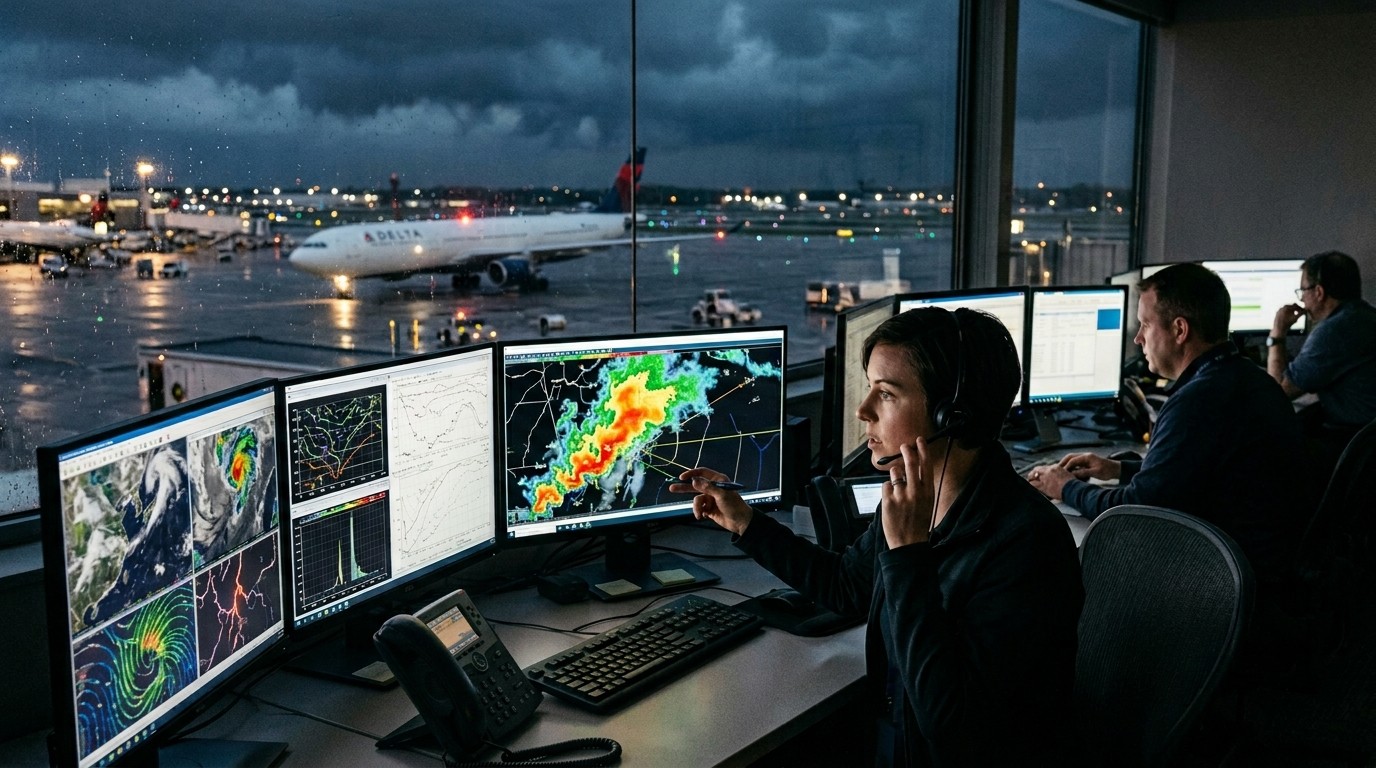
Pilots are often expected to be efficient and cautious at the same time. Depart too early and weather may worsen. Wait too long and the day may become costly or inconvenient. Aviation Weather Services help identify the point where the balance sits by showing how conditions are likely to develop over the next few hours.
Sometimes the smartest decision is a short delay that preserves a better arrival window, more stable weather, or a safer alternate. Sometimes the best decision is to reroute before a storm line closes the path. Aviation Weather Services make those tradeoffs easier to see, which is why they are so useful in real-world operations.
The key is to avoid treating weather as a fixed obstacle. It is a changing environment. Aviation Weather Services help the pilot respond to that environment in a way that protects both safety and efficiency.
Where Weather Briefing Fits Into Everyday Flying
The most effective pilots do not treat weather as a separate task. They treat it as part of the flight itself. Aviation Weather Services belong in the same mental category as fuel, weight and balance, runway length, alternates, and aircraft performance. If weather is ignored until the last minute, it becomes a surprise. If it is included from the beginning, it becomes manageable.
That mindset is especially useful for training, instrument flying, and professional operations. The pilot learns to expect weather as part of the system rather than as an interruption to it. Aviation Weather Services make that mindset practical because they keep the crew focused on what matters most: the safe completion of the flight.
When weather is handled this way, briefings become more than routine paperwork or app checking. They become a thoughtful risk-management process that supports better decisions all the way from preflight to landing.
Conclusion
Good flight planning is not about hoping the weather stays friendly. It is about knowing enough to act early when conditions shift. Aviation Weather Services give pilots that advantage by turning forecasts, observations, and hazard data into a clear operational picture. They support Pilot Decision Making, strengthen Crew Resource Management Tools, and help the crew stay calm under pressure. They also make it easier to compare weather with aircraft capability, fuel margin, runway options, and destination trends. The result is not just better briefing. It is better flying. When the weather picture is current, shared, and understood, the cockpit becomes a more disciplined place and the flight becomes more predictable from start to finish.
Frequently Asked Questions (FAQ)
1. What are Aviation Weather Services used for?
Aviation Weather Services are used to gather, interpret, and apply weather information for safe flight planning, departure decisions, route changes, and arrival planning.
2. Why are Aviation Weather Services important before takeoff?
Aviation Weather Services help pilots understand current and expected weather conditions so they can choose a safer runway, alternate, or departure time before committing to the flight.
3. How do Aviation Weather Services support Pilot Decision Making?
They turn weather data into operational insight. That helps the pilot decide whether the flight remains within limits or needs a delay, reroute, or diversion.
4. Do Aviation Weather Services replace the pilot’s judgment?
No. Aviation Weather Services support judgment, but the pilot still has to interpret the information and decide what it means for the specific aircraft and route.
5. How do Aviation Weather Services help with Crew Resource Management Tools?
They give the crew one shared weather picture, which makes it easier to divide tasks, challenge assumptions, and coordinate decisions clearly.
6. Are Top Travel Apps enough for weather planning?
No. Top Travel Apps are useful for logistics, but they are not a substitute for actual Aviation Weather Services or operational weather judgment.
7. Are Best Flight Tracking Apps useful for pilots?
Yes, but only for tracking flights, traffic, and schedules. Best Flight Tracking Apps do not replace Aviation Weather Services for weather risk evaluation.
8. How often should a pilot review Aviation Weather Services?
They should be reviewed during early planning, again close to departure, and again if the flight is long enough for weather to change before arrival.
9. What is the biggest mistake pilots make with weather?
The biggest mistake is treating weather as a snapshot instead of a changing timeline. Aviation Weather Services help prevent that by showing trends and updates.
10. Can Aviation Weather Services improve safety on short flights too?
Yes. Even short flights can be affected by low ceilings, wind shifts, precipitation, and runway changes, so Aviation Weather Services remain important on short routes as well.