
Airline Pilot Schedules shape sleep, family time, commuting, and long-term career control, which means the lifestyle is a mix of flexibility, fatigue management, and seniority-driven choices.
Airline Pilot Schedules are often described as glamorous, but the real story is more practical than cinematic. The month is usually built around bid packets, reserve coverage, duty limits, and the reality that the next week may look different from the week you planned. In many systems, the monthly bid packet summarizes the available lines, reserve numbers, bidding timeline, and days off, while preferences are awarded by seniority.
Airline Pilot Schedules also have a human side that travelers rarely see. A pilot may be dealing with early report times, late arrivals, time-zone shifts, hotel rest, jumpseat planning, and family logistics all in the same month. The FAA’s duty-and-rest framework exists because fatigue is a real operational issue, and the rules are designed to keep flightcrew members from accumulating dangerous amounts of it.
Airline Pilot Schedules are therefore less about a fixed workweek and more about managing a moving system. Some months are predictable, some are not, and a pilot’s sense of lifestyle usually changes as seniority rises, base changes, or commuting becomes easier or harder. The truth is that the job can be rewarding, but only if the schedule is understood as a lifestyle engine rather than a simple work calendar.
How the monthly schedule is built
Airline Pilot Schedules usually start with the monthly bid packet, which is the summary of available lines for the month organized by domicile and equipment. A pilot typically bids for preferred pairings, days off, reserve days, and other schedule features, then the system awards options based on seniority and contractual rules. In an Envoy example, bid packets are released around the 15th of the month and close near the 20th, which shows how formal and deadline-driven the process can be.
Airline Pilot Schedules are not created on a blank page each morning; they are built from a monthly framework that already contains line flying, reserve coverage, and legal constraints. That means pilots spend a lot of time thinking a month ahead, not just a day ahead. A schedule can feel stable on paper and still change quickly if operational needs, weather, or legality issues force a swap.
Airline Pilot Schedules are strongly shaped by seniority, and that is one of the biggest truths about airline life. Seniority influences whether a pilot gets an attractive base, a better line, a more predictable pattern, or even the ability to avoid reserve. The newer the pilot, the more likely the month will be built around leftovers, reserve, or less desirable trip patterns.
Airline Pilot Schedules can include reserve lines or hard lines, and those two concepts change the entire feel of the month. A hard line is a set schedule with known trips and days off, while reserve means being available to cover open flying. Some airline materials describe reserve lines as having guaranteed credit and a set number of days off, which is why reserve can feel both restrictive and strangely flexible at the same time.
Airline Pilot Schedules often include room for trip trading after bids close. In some systems, once bids are finalized, a trip-trading window opens, and pilots can exchange pairings as long as legality and staffing allow it. That creates a layer of personal strategy, because a pilot can sometimes reshape a month after the initial award instead of living with the exact first result.
What the rules do to the month
Airline Pilot Schedules are not just shaped by company preference; they are bounded by FAA flight, duty, and rest rules. Part 117 applies to Part 121 passenger operations and certain Part 91 operations, and the FAA wrote the rule specifically to address fatigue risks that can accumulate in commercial flying. For all-cargo operations, the FAA made compliance voluntary under Part 117, which shows that schedule rules can differ by operation type.
Airline Pilot Schedules must also respect the minimum rest period before reserve or flight duty. The FAA says a flightcrew member must receive at least 10 consecutive hours of rest immediately before beginning reserve or flight duty, and that rest period must provide a minimum of 8 uninterrupted hours of sleep opportunity. That requirement changes the practical shape of the month because rest is not simply “free time”; it is protected time.
Airline Pilot Schedules become even more restrictive on long-haul or globe-crossing trips. FAA legal interpretation explains that a flightcrew member must receive 56 consecutive hours of rest upon return to home base if the trip involves more than 60 degrees of longitude and more than 168 consecutive hours away from home base, and that the rest must encompass three physiological nights based on local time. That rule is one reason long international sequences can feel very different from domestic turns.
Airline Pilot Schedules also have a psychological reason behind them, not just a legal one. The FAA’s fitness-for-duty guidance exists because a pilot who is alert at one point in an FDP can become dangerously fatigued later in the same duty period. That is why fatigue management is not a soft topic in aviation; it is part of the operating system.
Airline Pilot Schedules can therefore feel like a negotiation between human sleep needs and operational demands. FAA materials repeatedly note that adequate sleep sustains performance, while cumulative sleep debt and long time on task degrade concentration, communication, and decision-making. That matters because the lifestyle is not only about being away from home; it is about staying mentally sharp while living inside a regulated system.
What reserve really feels like

Airline Pilot Schedules on reserve are one of the biggest lifestyle surprises for people outside the profession. Reserve means being available when the company needs coverage, and the day may feel open until a call changes everything. Some airline documents describe reserve lines with guaranteed credit or a minimum number of days off, but the emotional reality is still “wait and be ready.”
Airline Pilot Schedules on short-call reserve can feel especially compressed because the report window can matter a lot. FAA discussion of short-call reserve shows that the callout timing interacts with the maximum flight duty period, which means part of the reserve day can be consumed before the actual flying even begins. For pilots, that creates a very different mental frame from the traditional nine-to-five model.
Airline Pilot Schedules on reserve can still be attractive for some pilots, especially if they live in base and prefer more days at home. A reserve month may allow a pilot to stay close to family, handle home life, and still be paid for availability rather than constantly chasing pairings. A frequent theme in pilot lifestyle discussions is that reserve can be easier to live with when the pilot is not also commuting.
Airline Pilot Schedules on reserve become harder when the pilot’s personal life is already crowded. If you are trying to coordinate childcare, appointments, or a second job, reserve can feel like a constant alert state. The uncertainty is the point: it gives the airline flexibility, but it asks the pilot to hold their own life loosely for a while.
Airline Pilot Schedules on reserve also make you think about seniority in a very immediate way. More senior pilots can often bid more stable work, while junior pilots spend more time adapting to reserve or less desirable patterns. That creates a lifestyle ladder, where quality of life often improves as seniority accumulates and the pilot gains more control over the monthly picture.
The commuting truth
Airline Pilot Schedules are much easier when a pilot lives in base, and much harder when they commute. Commuting means the month is not just about flying; it also includes the logistics of getting to the base with enough margin to make the first leg, handling delays, and protecting the schedule from last-minute disruptions. That hidden work is often the biggest difference between “good schedule” and “good lifestyle.”
Airline Pilot Schedules can feel shorter when commuting because days off are often compressed by travel on both ends. A pilot may leave home early before the pairing starts and return home late after the pairing ends, which means a two-day block can consume much more than two ordinary calendar days. That is why living in base is often described as the single biggest quality-of-life advantage.
Airline Pilot Schedules and commuting also depend on backup planning. Many pilots use flight-status tools, jumpseat information, and schedule alerts to reduce the odds of missing work because of a sold-out flight or a delayed connection. The ALPA app, for example, includes Flight Finder and flight status notifications, while FlightAware provides live tracking and airport delay data.
Airline Pilot Schedules in commuter life can make the pilot feel like a traveler even on days off. That lifestyle can be exciting at first, but it can also become tiring if every workweek starts with uncertainty and ends with a race to get home. The emotional cost is not always visible in the schedule itself, but pilots feel it quickly when the commute becomes inconsistent.
Airline Pilot Schedules are often judged by the calendar, but commuting changes the meaning of that calendar. A “free” day may actually be a travel day. A “rest” day may still include packing, standby anxiety, and jumpseat planning. That is why commuting is not a side issue; it is part of the schedule lifestyle itself.
The hidden work behind each trip
Airline Pilot Schedules involve a lot more than simply showing up to fly. Before each pairing, the pilot reviews weather, NOTAMs, airport conditions, and route details. FAA Flight Service says it provides pilots with weather and aeronautical information through pilot briefings, flight planning, inflight advisory services, weather cameras, search and rescue initiation, aircraft emergencies, and NOTAMs, which is a reminder that preflight preparation is part of the job’s rhythm.
Airline Pilot Schedules also force pilots to think carefully about weather more often than many passengers realize. FAA pilot briefings are described as the gathering, translation, interpretation, and summarization of weather and aeronautical information into a form usable for flight planning and decision-making. That means weather is not background noise; it is one of the inputs that shapes whether the day is smooth, delayed, diverted, or changed entirely.
Airline Pilot Schedules become more intense when weather is dynamic, because a route that looked fine on paper can become a delay, reroute, or duty-extension problem once the weather changes. Pilots rely on briefings, forecast updates, and airport information to make the legal and safe decision in the moment rather than the convenient one. That ongoing weather awareness is part of why the lifestyle can feel mentally heavy even on a normal day.
Airline Pilot Schedules also connect to cockpit work in a subtle way: the schedule affects how much mental margin a pilot has once seated in the cockpit. Cockpit Instrumentation, checklists, and cross-check discipline require attention, and fatigue can erode that attention if the month has been too compressed or the overnight pattern too harsh. The schedule is therefore upstream of performance in the aircraft itself.
Airline Pilot Schedules can also interact with international life outside the cockpit. On layovers abroad, pilots sometimes lean on Language Translation Apps to order food, handle transport, or navigate basic daily tasks when they are far from home and tired after a long sequence. That is not glamorous, but it is realistic, and it shows how the lifestyle bleeds into ordinary life in practical ways.
Lifestyle outside the flight deck
Airline Pilot Schedules affect family life in a way that is hard to understand until you live it. A pilot can be physically at home but mentally on reserve, or physically away but emotionally focused on the next trip. That split is why good schedules are not just about pay; they are about how much stable time a pilot can actually give to the people around them.
Airline Pilot Schedules also shape sleep hygiene. The FAA’s fatigue language emphasizes that sleep debt, time on task, and the opportunity for 8 hours of sleep are all central to performance. In real life, that means pilots may protect sleep in a way many other professions do not. The schedule is not only telling them when to work; it is also telling them when to rest like it matters.
Airline Pilot Schedules can make holidays feel unusual. A calendar holiday may be a workday, while a random Tuesday may be the day off that matters most. Pilots often learn to celebrate on different dates than everyone else, which can be charming for some families and frustrating for others. The profession rewards adaptability, but adaptation comes with tradeoffs.
Airline Pilot Schedules also shape fitness and meal routines. If a month includes early reporting, back-to-back pairings, or time-zone changes, the pilot has to work harder to keep healthy habits stable. That challenge does not make the job impossible; it just means the schedule affects more than flight time. It reaches food, sleep, movement, and social rhythm too.
Airline Pilot Schedules can be emotionally better or worse depending on whether the pilot is in a phase of growth or a phase of waiting. A junior pilot may feel trapped by reserve and commuting, while a senior pilot may feel almost strategic about the same system. The truth is that the lifestyle changes as the pilot changes, and seniority is often the biggest variable in that evolution.
Airline Pilot Schedules are easier to live with when the pilot accepts that “control” is partial. You cannot command the weather, the bid award, or every swap. You can only influence your base, your preferences, your rest discipline, and your commute strategy. The pilots who do best often become masters of that smaller circle of control.
The off-duty reality
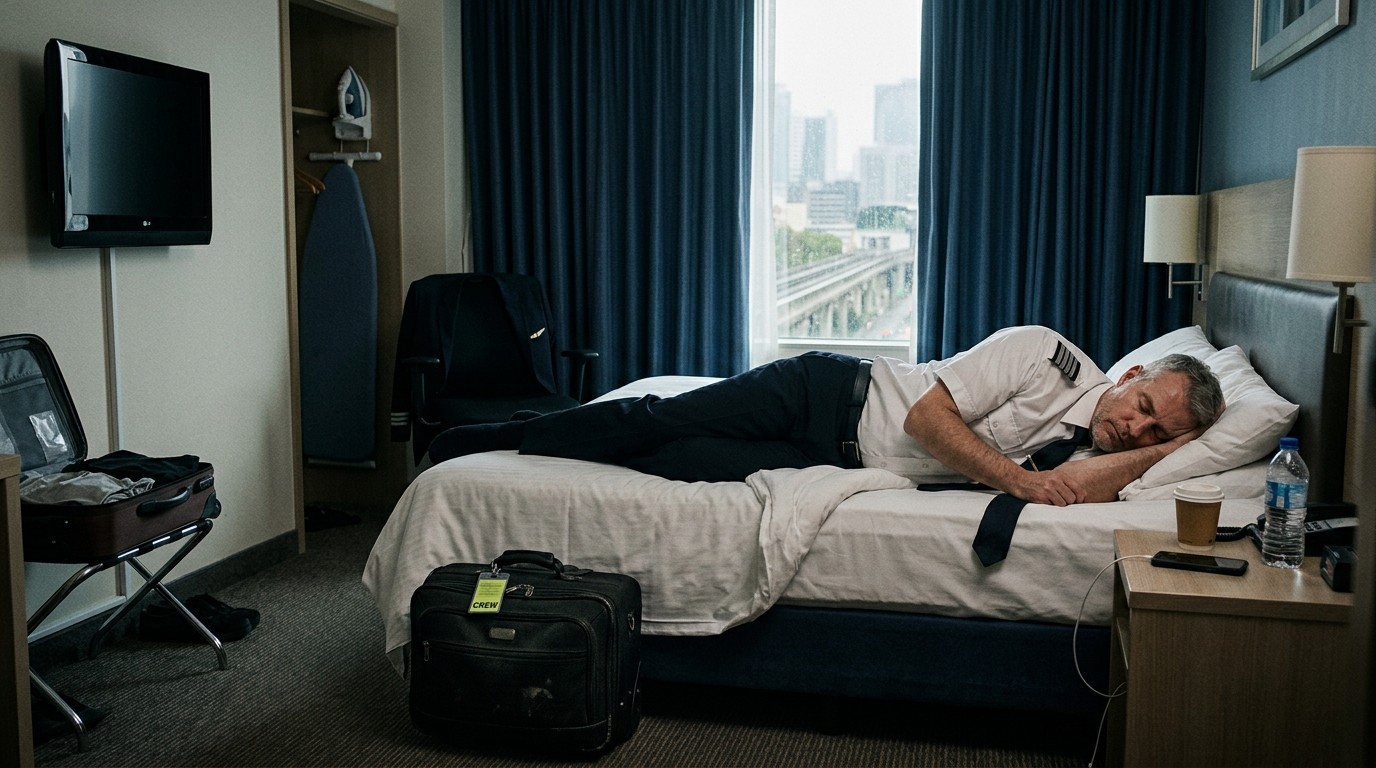
Airline Pilot Schedules also leave a lot of invisible off-duty work. Pilots may spend free time studying schedules, checking bid packets, reviewing trip trades, or monitoring airport conditions. The off-duty period is therefore not always fully “off” in the way a nine-to-five job might be. There is often a planning layer that keeps the whole month functional.
Airline Pilot Schedules can make the use of technology feel essential rather than optional. Best Flight Tracking Apps help pilots and families monitor flight status, delay changes, and connection risk, which is especially useful for commuters and people trying to protect a return leg. The ALPA app and FlightAware are examples of tools that show how the profession now mixes Aviation Weather Services work with real-time information management.
Airline Pilot Schedules also influence relationships because the pilot is often “present in segments.” A few days of real availability can be wonderful, but if those days are immediately followed by reserve or a trip, the family feels the pattern more than the calendar label. That is why pilots and families alike often think in terms of quality blocks of time rather than just total days off.
Airline Pilot Schedules are sometimes misunderstood as “lots of travel and lots of free time,” but that misses the fatigue management and personal coordination behind the scenes. The better view is that pilots have unusual freedom in some areas and unusual restrictions in others. The lifestyle is not uniformly good or bad; it is a trade set by the profession’s structure.
Airline Pilot Schedules also reward pilots who can make ordinary life efficient. Packing the night before, staying close to the base when possible, keeping documents organized, and treating rest as part of the job all help the month feel lighter. Those habits do not change the schedule, but they can dramatically change how the schedule feels.
Airline Pilot Schedules tend to become more livable when the pilot stops expecting a normal rhythm and starts building a pilot rhythm. That means planning around reserve risk, keeping a buffer for commuting, and knowing that not every month will offer the same quality of life. Once that expectation is realistic, the profession often feels less chaotic and more manageable.
What the public usually misses
Airline Pilot Schedules can look elegant from the outside because the airline publishes a line or a pairing and passengers only see the flights. What they do not see is the sleep management, commuting uncertainty, reserve readiness, and weather-related adjustment hidden behind that neat display. The visible schedule is just the top layer of a larger operational machine.
Airline Pilot Schedules also differ across airlines, aircraft, and bases, which means lifestyle stories are not universal. A pilot at one airline may have a highly predictable month, while a pilot at another may live largely on reserve. Contract details, base staffing, and seniority all matter, so any honest discussion has to allow for variation rather than pretending every pilot lives the same way.
Airline Pilot Schedules are easiest to appreciate when you think of them as a balance sheet. On one side are travel, hotel stays, high responsibility, and schedule flexibility. On the other side are fatigue management, commuting stress, and less control when junior. The lifestyle is attractive to many people precisely because it balances both sides in a way few other careers do.
Airline Pilot Schedules also change as a pilot advances. Early career often means less control and more waiting, while later career may mean better bases, better lines, and better days off. This is why many pilots talk about “paying dues” early and gaining lifestyle control later. That pattern is not a myth; it is a structural feature of seniority-based scheduling.
Airline Pilot Schedules are not a fantasy lifestyle, but they are not a punishment either. They are a structured, regulated, and often strategic way of living that rewards preparation, flexibility, and patience. Pilots who understand the system usually do much better than pilots who keep expecting it to act like a standard office job.
Practical comparison of schedule types

Airline Pilot Schedules often fall into two broad shapes at the monthly level: reserve and set-schedule flying. Reserve means standing ready to cover open flying, while a hard line means knowing the trips, overnights, and days off in advance. Some airline materials also note that reserve bid packets may list projected reserve numbers and days off, which is why the monthly packet matters so much.
Airline Pilot Schedules can therefore be compared less by “busy or not busy” and more by “predictable or flexible.” A hard line tends to feel cleaner, but it can also be less forgiving if the pilot wants schedule control through trading. Reserve tends to feel less predictable, but it can allow a pilot to stay at home more when the base is local and the phone stays quiet.
Airline Pilot Schedules are also a lesson in paperwork discipline. The bid packet, legality rules, trip trade windows, and reserve obligations all need attention. Pilots who stay on top of those details usually feel less surprised by the month. In this profession, schedule literacy is part of lifestyle literacy.
Conclusion
Airline Pilot Schedules are not just calendars; they are the architecture of pilot life. They control rest, shape family time, influence commuting, and determine how much predictability a pilot can actually keep from month to month. FAA duty-and-rest rules, bid packet systems, reserve logic, and commuting realities all combine to make the lifestyle more structured than it looks from the outside. For some pilots, that structure creates freedom and variety. For others, it creates fatigue and frustration. The truth is that the lifestyle improves when seniority grows, commute stress falls, and planning becomes second nature.
Frequently Asked Questions (FAQ)
1. How predictable are the monthly patterns?
Airline Pilot Schedules are only as predictable as the pilot’s seniority, base, and reserve status allow. A set line can be fairly clear, but reserve and commuting can add uncertainty even when the monthly bid looks tidy.
2. Why do pilots care so much about seniority?
Airline Pilot Schedules are heavily seniority-driven, and seniority often determines which line a pilot can hold, which base is possible, and how much control they have over the month. That is why seniority has such a direct effect on lifestyle.
3. Is reserve always bad?
Airline Pilot Schedules on reserve are not automatically bad. Some pilots like the ability to stay near home, and some airline systems even give reserve lines structured credit and days off. The tradeoff is uncertainty and readiness.
4. What does FAA fatigue guidance really change?
Airline Pilot Schedules are bounded by FAA rest and fitness-for-duty rules, including 10 hours of rest before reserve or flight duty, plus 8 hours of uninterrupted sleep opportunity. Those rules exist because fatigue affects safe performance.
5. Why do long-haul trips feel so different?
Airline Pilot Schedules for long-haul or time-zone-crossing flying can trigger special rest considerations, including 56 hours of rest after certain long away-from-base patterns. That makes long trips feel physically and mentally different from shorter domestic work.
6. Do commuting pilots have a harder lifestyle?
Airline Pilot Schedules become harder when commuting is added because the pilot has to protect the schedule from missed connections, delays, and jumpseat uncertainty. Living in base is usually much easier on quality of life.
7. What tools help with day-to-day pilot life?
Airline Pilot Schedules are easier to manage with flight-status tools, jumpseat information, weather briefings, and planning apps. The ALPA app and FlightAware are examples of tools that help with status changes and tracking.
8. How important is weather in the lifestyle?
Airline Pilot Schedules are closely tied to weather because pilots use flight briefings and aeronautical information to plan safely and efficiently. The FAA’s Flight Service and pilot briefing guidance make weather a core part of the pilot workflow.
9. Do pilots really live by the clock that much?
Airline Pilot Schedules make time management a constant part of life because duty periods, rest periods, and reporting windows all matter. The job is highly structured, so sleep and timing are not optional extras.
10. Is the pilot lifestyle worth it?
Airline Pilot Schedules can absolutely be worth it for people who value travel, seniority growth, and a nontraditional rhythm, but the tradeoff is reserve stress, commuting, and fatigue management. It is a lifestyle that rewards planning more than luck.