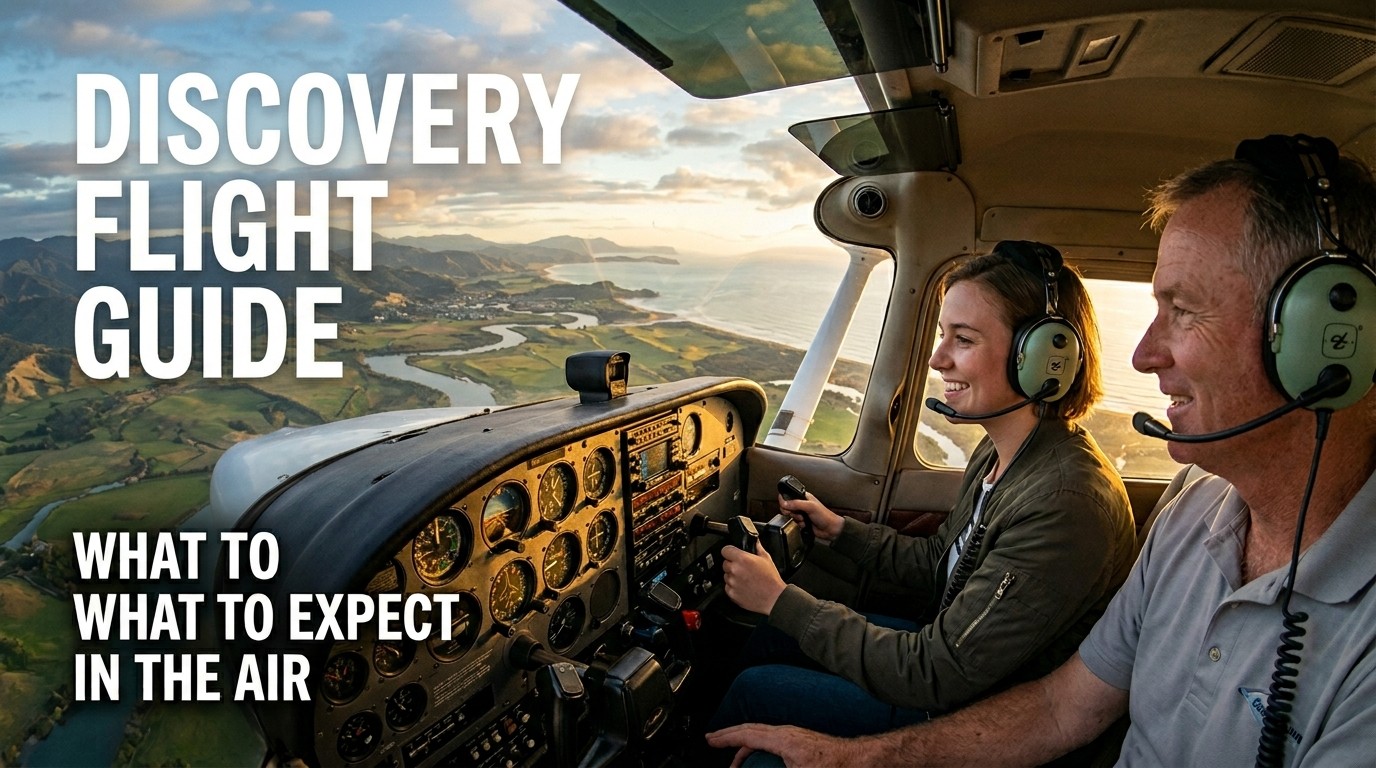
A first flight lesson can feel exciting, calm, and slightly unfamiliar, but the right preparation turns it into a memorable introduction to aviation, confidence, and cockpit decision-making.
The first time you step into a small aircraft for a lesson, you are not signing up for a test of perfection. You are entering a guided experience designed to make flying understandable, personal, and surprisingly human. A good Discovery Flight Guide helps remove the mystery before the engine even starts. It explains what the day looks like, how the instructor will support you, and why the flight usually feels smoother than most first-timers expect.
Many people imagine a discovery flight as a dramatic leap into the unknown. In reality, it is closer to a carefully supervised introduction to aviation. You learn how the cockpit works, how the aircraft behaves, and how a pilot thinks while the plane is in motion. A strong Discovery Flight Guide focuses on calm preparation, because calm preparation lowers anxiety. When you know what to expect, your brain has less room to invent worst-case scenarios.
This article is written for curious future pilots, nervous first-timers, gift recipients, and travelers who have always wondered what flying a small aircraft actually feels like. It is also useful for anyone comparing lessons after using a simulator guide, because practice often builds curiosity about the real thing. By the end, you will understand the rhythm of the experience, from check-in to takeoff to landing, and you will know how to make the most of it.
Why a Discovery Flight Guide feels different from a normal flight
A commercial flight is usually about being transported from one place to another with minimal involvement. A discovery flight is the opposite. You are not just a passenger. You are a participant in a learning experience. That is why a Discovery Flight Guide matters so much. The lesson is designed to feel welcoming, not intimidating, and the instructor will usually explain each stage in simple language.
The aircraft is smaller, the environment is more intimate, and the purpose is educational. Instead of waiting for cabin service or airport announcements, you are learning how the airplane responds to inputs, weather, altitude, and communication. A Discovery Flight Guide helps first-time flyers understand that this is not about doing everything alone. The instructor is there to manage the flight safely while still letting you see the process from the pilot’s seat.
Many people are surprised by how personal the experience feels. You can hear the engine, feel the vibration, and notice the control movements in a way that is impossible on a large airliner. That closeness is part of the appeal. The Discovery Flight Guide is not only about safety and procedure. It is also about the emotional shift that happens when aviation stops feeling distant and starts feeling accessible.
Before you arrive for the Discovery Flight Guide
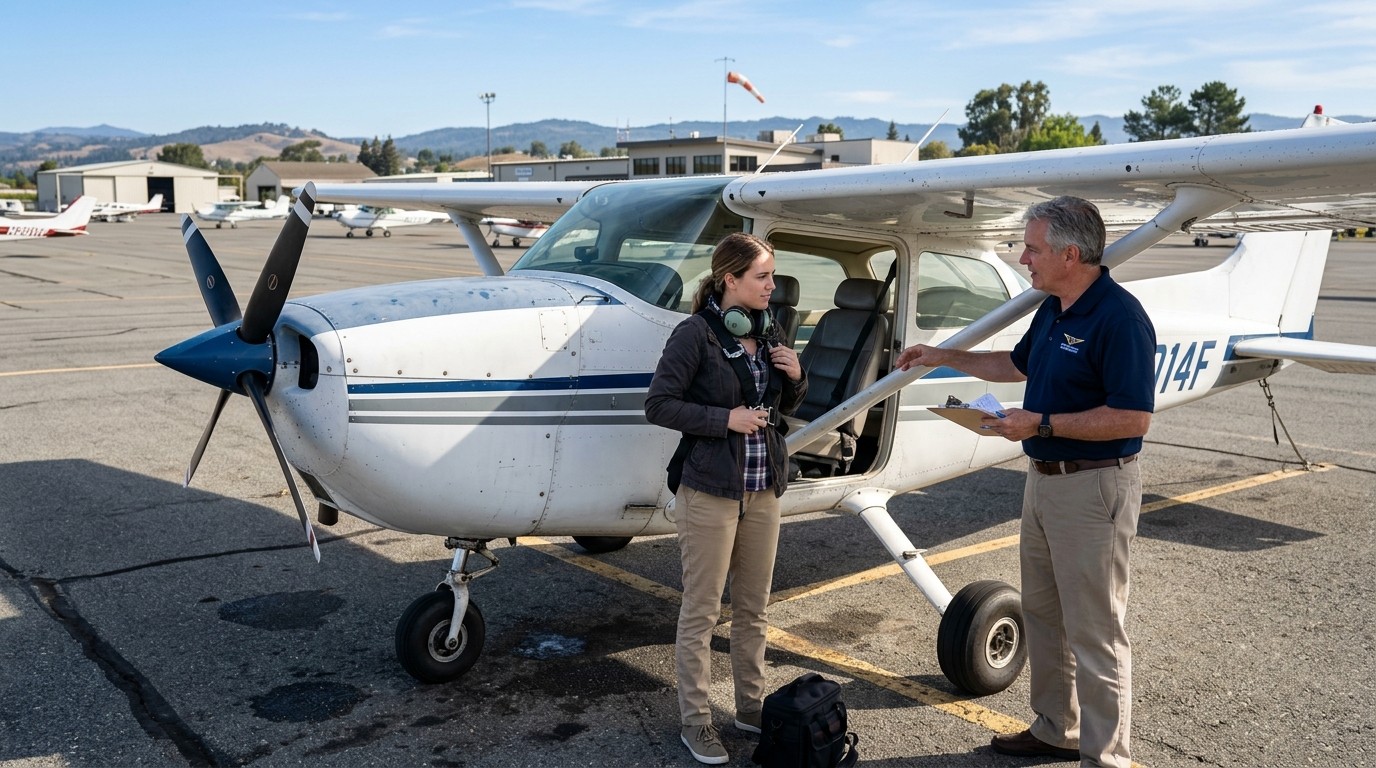
The best way to enjoy the day is to arrive with realistic expectations. A Discovery Flight Guide usually begins long before the plane moves. You should wear comfortable clothes, avoid bulky bags, and bring any identification or documents the flight school requests. It also helps to eat lightly so you feel steady without being uncomfortable. Small choices like these make the first impression smoother.
If you tend to get nervous, it helps to sleep well the night before and arrive a little early. Time pressure is the enemy of calm. A good Discovery Flight Guide encourages you to treat the day like a learning appointment, not a performance. You do not need to know aviation terms in advance, and you do not need to impress anyone. Curiosity is enough.
Some people also like to prepare mentally by imagining the sequence of events. You may check in, meet the instructor, review a short briefing, walk to the aircraft, and then talk through the basics before starting the engine. Thinking in sequence turns vague stress into manageable steps. That is one reason a Discovery Flight Guide can be so helpful. It replaces uncertainty with structure.
What happens during the Discovery Flight Guide briefing
The pre-flight briefing is where the lesson starts to feel real. Your instructor will usually explain the aircraft, the plan for the route, basic safety procedures, and what your role will be in the cockpit. A strong Discovery Flight Guide emphasizes that this part is not meant to overwhelm you. It exists to create comfort and clarity.
You may hear terms about the controls, the instruments, the runway, and how communication with air traffic control works. You do not need to memorize everything. The goal is to hear enough to recognize what is happening later in the flight. A Discovery Flight Guide is most useful when it reminds you that repetition is normal. Instructors expect beginners to ask simple questions and forget details.
The briefing also helps the instructor learn about you. If you have any anxiety, motion sensitivity, or hearing concerns, this is the time to mention them. Honest communication makes the flight better for both sides. Good instruction is responsive. A Discovery Flight Guide should always encourage open conversation, because trust starts on the ground.
Taxi, takeoff, and the Discovery Flight Guide motion
The moment the aircraft begins to move, many first-time flyers feel a change in energy. The engine becomes louder, the runway feels more real, and the lesson starts to feel active instead of theoretical. This is where a Discovery Flight Guide becomes especially reassuring. It helps you understand that taxiing is normal, controlled, and usually much slower than people imagine.
Takeoff is often the most emotionally intense part of the experience, but it is also the part most people remember with the greatest excitement. The airplane accelerates, the nose lifts, and the ground begins to drop away. A well-made Discovery Flight Guide explains that this sensation can feel smoother than expected. What seems dramatic from the ground often feels surprisingly stable from inside the aircraft.
You may notice pressure in your ears, changes in sound, and a sense of lightness as altitude increases. These sensations are common and usually settle quickly. A calm instructor will guide you through what is happening and may even let you look outside and enjoy the view once the aircraft is stable. The Discovery Flight Guide matters here because it prepares you for a moment that is emotionally bigger than it is technically dangerous.
What you will see and feel in the air
Once airborne, the experience shifts from motion to perspective. The land looks smaller, roads become lines, and familiar places seem newly organized from above. A good Discovery Flight Guide explains that this is one of the biggest reasons people fall in love with aviation. Flying changes not only your location, but also your sense of scale.
You may feel gentle turns, subtle climbs, and small changes in engine sound as the aircraft moves. Nothing about the motion should feel chaotic when the flight is well managed. The instructor will often talk through what the aircraft is doing so you can connect the feeling in your body with the action in the cockpit. A Discovery Flight Guide is valuable because it helps you interpret those sensations instead of fearing them.
This is also the moment when many people realize that small aircraft flying is more interactive than expected. You may look out the window, identify landmarks, watch the horizon, and begin to understand how a pilot stays oriented. The Discovery Flight Guide should make that experience feel exciting, not intimidating.
How much control you may actually get
One of the most interesting parts of a discovery flight is that many instructors allow the student to try basic controls under supervision. This does not mean you are suddenly flying alone. It means you may get a chance to see how the aircraft responds to small inputs. A Discovery Flight Guide should explain that this is often the moment when fear turns into fascination.
The instructor might show you how the yoke or stick feels, how the rudder pedals work, or how tiny adjustments affect the plane. You may be invited to help maintain straight and level flight or make a gentle turn. The goal is not perfection. The goal is awareness. A Discovery Flight Guide should remind you that your instructor will always be ready to take over if needed.
This part of the lesson often creates a lasting memory because it turns flight from something abstract into something physical. When you feel how sensitive the controls are, you begin to understand why pilots train so much. The Discovery Flight Guide prepares you for that moment by encouraging openness and curiosity rather than performance pressure.
The role of the instructor
A good instructor is not there to judge you. They are there to guide, explain, and keep the flight calm. That is one of the most important ideas in any Discovery Flight Guide. The instructor manages the bigger picture so you can focus on learning. Their tone, pacing, and confidence influence the entire experience.
You should feel free to ask questions, even if they seem basic. Instructors are used to nervous first-time flyers and usually prefer clear communication over silent guessing. A Discovery Flight Guide works best when it reminds you that aviation culture values discipline and patience, but not unnecessary perfectionism. The lesson is meant to be educational.
If at any point you feel unsure, the instructor can slow things down with explanation or reduce your involvement for a moment. That flexibility matters. The best instructors know how to read body language, answer questions simply, and keep the atmosphere steady. A Discovery Flight Guide is incomplete if it ignores this human side of flying.
Common emotions first-timers experience
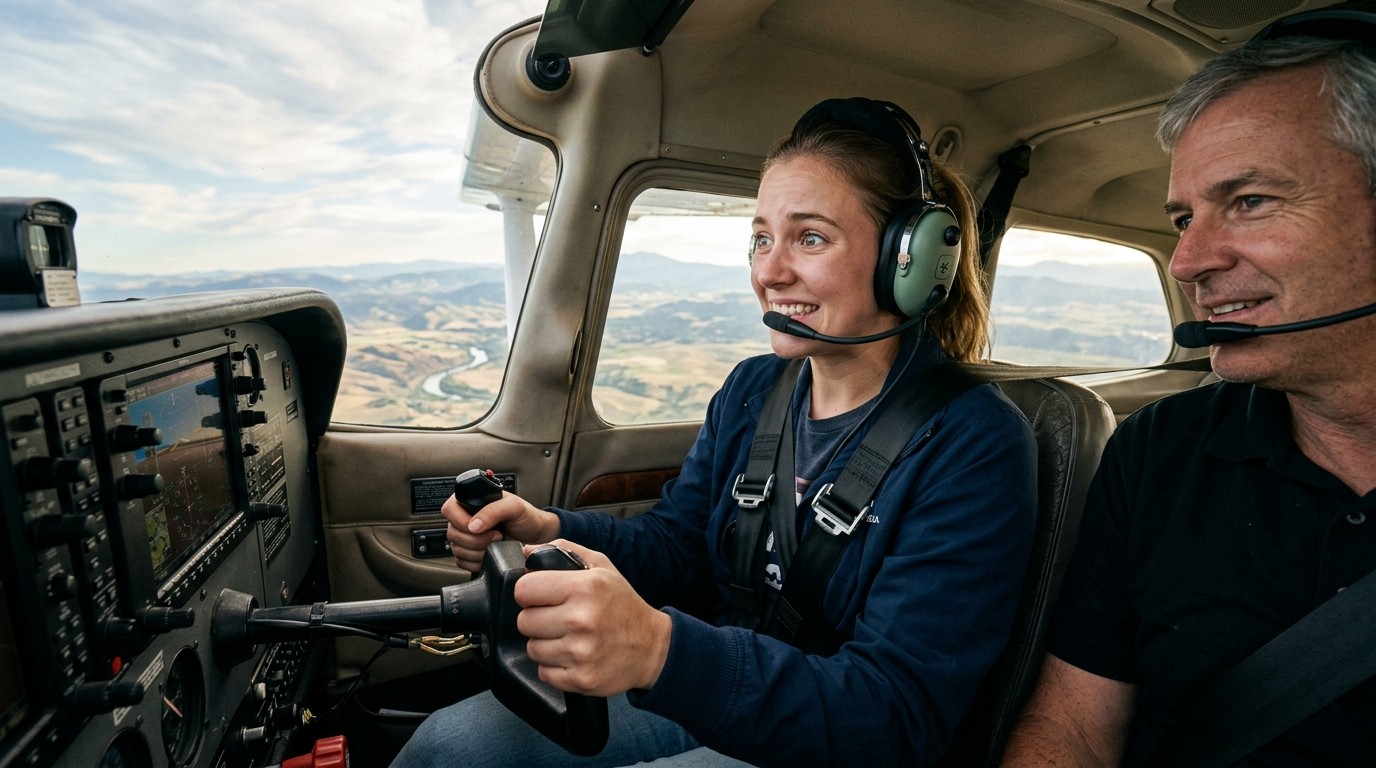
It is normal to feel a mix of excitement, fear, curiosity, and concentration. Some people smile constantly. Others become very quiet. A few feel tense at first and then relax once the aircraft is stable. A Discovery Flight Guide should make clear that all of these responses are normal.
The most common emotional pattern is anticipation before the flight, intensity during takeoff, then relief and enjoyment once the plane settles in the air. Many first-timers are surprised by how quickly they adapt. The brain often imagines more danger than the body actually experiences. A Discovery Flight Guide helps close that gap by showing that the experience is controlled, structured, and monitored from start to finish.
If you are prone to anxiety, it can help to focus on breathing and on small details instead of the whole experience at once. The sound of the engine, the instructor’s voice, and the view outside can all serve as anchors. A calm Discovery Flight Guide encourages you to stay present instead of mentally jumping ahead to landing before you have even taken off.
Safety and why it usually feels more controlled than expected
Safety is one of the first questions many people have, and it should be. A discovery flight happens in a training environment where procedures matter. The aircraft is checked, the route is planned, and the instructor is there to manage the process. A Discovery Flight Guide should reassure readers that training flights are built around supervision and caution.
The weather is usually assessed carefully before the flight. If conditions are not suitable, the lesson may be delayed or rescheduled. That can be frustrating, but it is a sign of good aviation judgment. A thoughtful Discovery Flight Guide does not romanticize risk. It explains that responsible flying means knowing when not to fly.
The aircraft itself is typically maintained according to strict schedules. Before any movement, there are checks, briefings, and routine procedures. A Discovery Flight Guide helps first-timers see that aviation is not casual guesswork. Even though the experience is exciting, it is still built on structure, checklist discipline, and communication.
What to wear for the Discovery Flight Guide
Comfort matters more than fashion on a discovery flight. Wear clothing that lets you sit comfortably and move easily. Closed-toe shoes are usually a practical choice. If the weather is bright, sunglasses can help, and a light jacket may be useful because the cabin can feel cooler than expected. A Discovery Flight Guide should always include basic packing advice because small discomforts can distract from the experience.
Do not bring unnecessary luggage unless the flight school asks you to. Keep your items light and simple. A phone, ID, and maybe a notebook are often enough. Some people like to jot down observations after the flight. That can be a great idea because it helps preserve details that might otherwise fade. A Discovery Flight Guide is most useful when it focuses on comfort, preparation, and ease.
Using simulation and research to feel more prepared
Many future flyers like to read, watch videos, or practice in software before the real experience. That can be useful as long as you remember that the real aircraft will feel different. A Flight Simulator Guide can teach you cockpit orientation, navigation basics, and the logic of flight controls, which makes the actual discovery lesson easier to follow.
Some people also compare travel tools and trip-planning ideas out of habit, using resources like Skyscanner Hacks for airfare research or reading about Stopover Programs for future travel inspiration. That kind of curiosity is normal. It shows that the discovery flight may be the first step in a wider aviation interest, not just a one-time event. The more familiar you feel with the language of flying, the more confident you may feel in the cockpit.
Still, it is important not to overprepare in a way that creates pressure. The aircraft lesson is not a test of technical knowledge. A Discovery Flight Guide exists to help you enjoy the real-world experience, not to turn you into an expert before you arrive.
Why people book a Discovery Flight Guide experience
Some book a discovery flight because they have always wanted to become pilots. Others do it because a friend gave them a gift certificate. Some are simply curious about aviation and want to see whether it feels right. A Discovery Flight Guide should speak to all three motivations because each one is valid.
For career-seekers, the flight may confirm whether pilot training is worth pursuing. For gift recipients, it may be a memorable first taste of aviation. For the curious, it may become an unexpectedly powerful experience that opens a new interest. In every case, a Discovery Flight Guide should keep the tone encouraging and grounded. The point is not to force a conclusion. The point is to give you a real experience you can reflect on honestly.
What happens after the Discovery Flight Guide landing
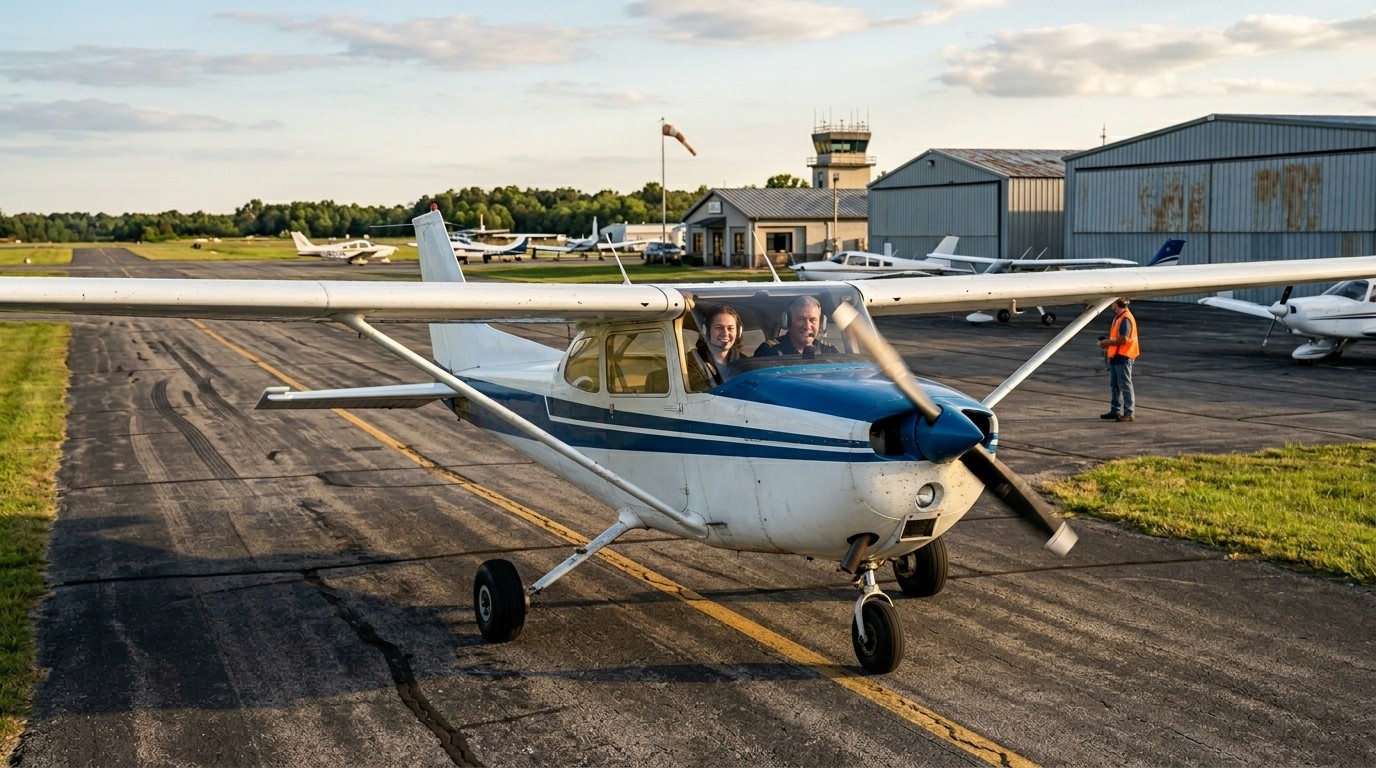
When the aircraft returns to the runway and taxis back, the lesson is not over immediately. Many instructors spend a few minutes answering questions, reviewing what happened, and discussing whether you enjoyed the experience. A Discovery Flight Guide should include this final part because it is where the experience becomes meaningful.
You may realize that some parts felt easier than expected and others felt more intense. That reflection is valuable. It helps you understand whether flying is a passing curiosity or something you want to explore further. Many people leave with a strong sense of motivation, even if they were nervous before takeoff. A Discovery Flight Guide helps you interpret those feelings without overthinking them.
Some schools may also talk about next steps, such as introductory lessons or pilot training paths. You do not need to decide anything immediately. The best response is usually to enjoy the memory, review your notes, and let the experience settle. A Discovery Flight Guide should end with clarity, not pressure.
How to make the most of the experience
The best way to get value from the day is to stay curious. Ask questions, notice sensations, and pay attention to how the instructor explains things. A Discovery Flight Guide encourages active observation because the more you notice, the more you learn.
It also helps to be honest with yourself. If you feel nervous, say so. If you are thrilled, say so. If you want to understand a control, ask about it. If you just want to look out the window and enjoy the ride, that is fine too. A Discovery Flight Guide is successful when it gives you permission to engage at your own pace.
Take a moment after landing to write down what surprised you. Was it quieter than expected? Smoother? More technical? More emotional? Those reflections matter. They can shape how you think about aviation in the future.
A simple pre-flight checklist
Before the lesson, it helps to have a short mental checklist:
- Wear comfortable clothes and closed-toe shoes.
- Bring identification if requested.
- Eat lightly and stay hydrated.
- Arrive early enough to avoid stress.
- Ask questions during the briefing.
- Mention motion sensitivity or anxiety.
- Keep your expectations focused on learning.
A Discovery Flight Guide is not meant to make everything feel routine. It is meant to make the experience less uncertain so you can enjoy it fully.
Conclusion
A discovery flight is one of the clearest ways to turn aviation from an abstract idea into a real, personal experience. Instead of guessing what flying feels like, you get to see the cockpit, hear the engine, feel the aircraft respond, and learn directly from an instructor who is there to guide every step. That is why a Discovery Flight Guide matters so much. It prepares you for the sequence of the day, the sensations in the air, the emotions that may come up, and the questions you are likely to ask after landing. The more prepared you feel, the easier it is to stay calm and present. Whether your goal is curiosity, celebration, or the first step toward flight training, the experience can leave you with a deeper appreciation for aviation and a much clearer sense of what flying really means.
Frequently Asked Questions (FAQ)
1. What is a discovery flight?
A discovery flight is an introductory airplane lesson where a student or guest flies with an instructor to experience basic aviation from the cockpit.
2. Do I need any experience before a discovery flight?
No. The lesson is designed for beginners, and the instructor will explain what you need to know step by step.
3. Will I be allowed to touch the controls?
Often yes, at least in a limited and supervised way. The instructor decides how much involvement is appropriate.
4. Is a discovery flight scary?
It can feel exciting or slightly nerve-racking at first, but most people settle in quickly once the aircraft is stable.
5. What should I wear?
Comfortable clothes and closed-toe shoes are usually best. Sunglasses and a light jacket can also help.
6. How long does it usually last?
The length varies by school, but the overall experience usually includes briefing, flight time, and a post-flight discussion.
7. Can I get motion sickness?
Some people do feel mild motion sensitivity. Eating lightly, staying hydrated, and talking to the instructor can help.
8. Is a discovery flight useful if I want to become a pilot?
Yes. It is one of the best ways to see whether flight training feels right for you.
9. Should I study before the flight?
A little research can help, but there is no need to memorize aviation terms. Curiosity is enough.
10. What is the main benefit of a discovery flight?
It gives you a real, low-pressure introduction to flying and helps you understand whether aviation is something you want to explore further.