Planning a trip becomes easier when smart travel advice replaces outdated myths, helping you save time, money, effort, and avoid common mistakes without sacrificing the experience.
Travel content has become one of the most shareable categories on the internet. A thirty-second video can promise a cheaper flight, a secret hotel trick, a faster airport experience, or a clever packing technique and suddenly thousands of travelers are repeating the same advice. Some Viral Travel Hacks are genuinely useful. Others are incomplete, destination-specific, outdated, or simply wrong.
The real problem is that Viral Travel Hacks often look convincing because they are demonstrated in a simple, visual format. A creator shows a successful booking, places everything into a tiny suitcase, or claims that changing one setting on your phone will dramatically reduce travel costs. Viewers naturally assume the result is universal. It rarely is.
Good travel planning therefore requires a second step: verification. Viral Travel Hacks should be treated as ideas worth investigating rather than rules that automatically apply to every airline, airport, destination, hotel, or traveler.
This guide separates practical advice from travel myths and explains which shortcuts are worth trying, which need conditions, and which should be avoided. It also considers how technology is changing travel planning, including AI-based planning systems and more personalized itineraries.
The goal is simple: make Viral Travel Hacks useful without allowing hype to replace judgment.
The First Rule : Test the Claim Before Trusting It
The most reliable way to evaluate Viral Travel Hacks is to ask a basic question: “Under what conditions does this work?”
A travel trick may work brilliantly for one traveler and fail completely for another. A particular airport may have a specific security procedure. An airline may have different baggage allowances depending on fare type. A hotel may offer flexible cancellation only on selected rates. A destination may have local restrictions that make an internet tip irrelevant.
This is why Viral Travel Hacks should never be evaluated only by the number of views or comments underneath a video. Popularity is not evidence.
For example, a creator may recommend putting expensive electronics into checked luggage to save cabin space. That sounds convenient until you consider airline policies and battery safety. IATA advises passengers to carry lithium-powered devices and spare batteries in hand baggage rather than checked baggage.
Another common mistake is treating one successful experience as a permanent rule. Viral Travel Hacks often depend on timing, route, airline, season, or personal circumstances.
The better approach is to separate a tip into three categories: generally useful, conditionally useful, and unsafe or misleading.
A Simple Verification Formula
Before using Viral Travel Hacks, check:
| Question | Why It Matters |
|---|---|
| Who created the tip? | Expertise affects reliability |
| When was it published? | Travel rules change |
| Where does it work? | Policies differ by destination |
| Which airline or hotel was involved? | Company rules vary |
| Is there an official source? | Primary sources reduce misinformation |
| Does it create financial or safety risk? | High-risk shortcuts deserve more scrutiny |
This five-minute verification habit can prevent hours of frustration later.
Packing Tricks That Actually Make Sense
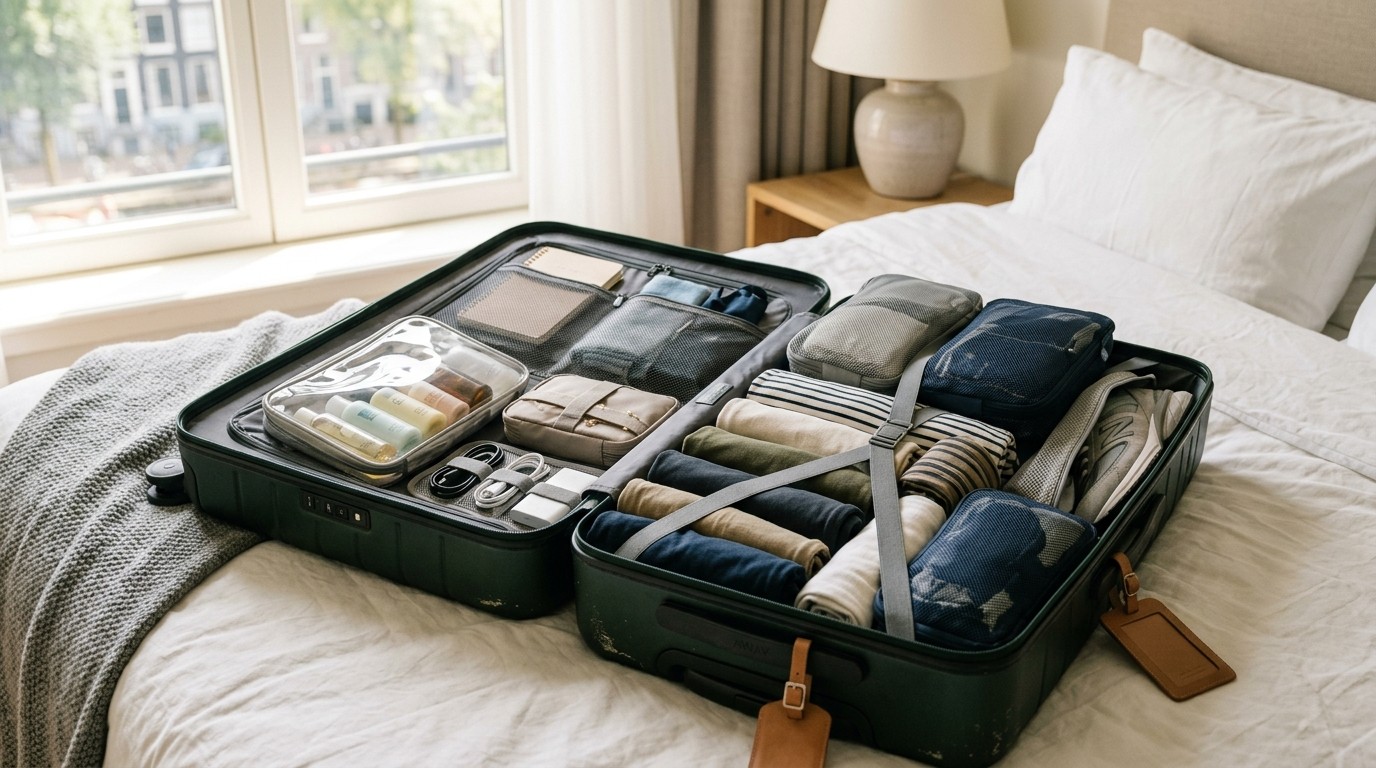
Packing advice dominates social media because it is visually satisfying. Watching someone turn a large pile of clothes into a compact suitcase feels like discovering a hidden travel superpower. Some Viral Travel Hacks here are practical, particularly techniques that improve organization rather than promising impossible space savings.
Rolling clothes can make organization easier, especially for casual clothing and soft garments. Packing cubes can separate categories and reduce the time needed to find individual items. Choosing versatile clothing can also reduce the total number of pieces you need.
But the idea that rolling clothes automatically creates dramatically more luggage capacity is often exaggerated. The amount of physical fabric remains the same. Compression techniques can reduce unused space, but they cannot break the basic limits of volume.
Another practical technique is to pack according to frequency of use. Items needed during the journey should be placed where they are easy to reach. For example, headphones, a light jacket, medication, travel documents, and basic toiletries should not be buried under everything else.
TSA recommends starting with an empty bag and checking prohibited-item rules before packing. Its checklist also recommends placing large electronics where they can be accessed easily during screening and keeping carry-on liquids organized for inspection.
This is where Viral Travel Hacks become useful when they focus on reducing friction rather than creating gimmicks.
The “One Bag” Reality Check
The one-bag trend looks attractive, but it is not automatically better. Minimal luggage works beautifully when the trip is short, weather is predictable, laundry is available, and activities do not require specialized equipment.
For longer trips or changing climates, forcing everything into one small bag can create unnecessary stress.
The strongest Viral Travel Hacks do not tell everyone to pack identically. They encourage travelers to understand their own trip before deciding what “minimal” actually means.
The Liquid Rule: Do Not Trust a Generic Internet Shortcut
Liquids are one of the most misunderstood airport topics online. Travelers frequently share methods claiming to bypass security restrictions, transfer liquids into unusual containers, or use packaging that supposedly avoids screening.
These Viral Travel Hacks deserve special caution because security procedures are not merely travel conveniences. They are regulated processes.
For example, TSA states that carry-on liquids, gels, and aerosols generally need to follow its 3-1-1 framework, including containers of 3.4 ounces or less and a single quart-sized clear bag for the applicable items.
However, travelers should not assume that a rule from one airport applies identically everywhere in the world. Security rules can differ by country and airport.
One of the smartest Viral Travel Hacks in this category is actually very simple: check the official airport or government guidance before leaving home.
Put frequently inspected items where they are easy to reach. Do not overcomplicate your packing strategy in an attempt to “beat” security.
What Smart Travelers Do
Instead of relying on a social media demonstration:
- Check the airport’s official security rules.
- Confirm airline baggage restrictions.
- Keep liquids accessible.
- Follow special rules for medication or baby supplies.
- Allow extra time when carrying unusual items.
A useful hack should make compliance easier, not encourage travelers to gamble with a security rule.
Cheap Flight Hacks: What Is Actually Worth Testing?
Flight-price advice is among the most viral travel content online. Travelers are frequently told to book on a specific weekday, use private browsing, search in a different location, clear cookies, or buy tickets at an exact hour.
Some Viral Travel Hacks in this area can lead to useful experimentation, but they should not be treated as guaranteed formulas.
Airfare pricing is dynamic. Prices can vary because of inventory, demand, route, competition, fare rules, booking conditions, seasonality, and many other factors.
The widely repeated claim that simply switching browsers or using incognito mode will always reveal cheaper flights is especially weak as a universal strategy. It is much more productive to compare dates, nearby airports, fare conditions, baggage costs, and alternative routes.
Travelers should also compare the final trip price rather than the headline fare. A low-cost ticket can become expensive after adding baggage, seat selection, transportation to a distant airport, meals, or inflexible change rules.
The strongest Viral Travel Hacks therefore focus on flexibility rather than magic.
A Better Flight Search Strategy
Search across several date combinations. Compare nearby airports when practical. Examine one-way combinations as well as round trips. Check baggage rules before comparing fares. Set alerts when a platform supports them. Most importantly, calculate total trip cost.
A $90 ticket that requires $120 in extras is not necessarily cheaper than a $150 fare that includes essentials.
The best Viral Travel Hacks help you compare intelligently instead of encouraging you to obsess over a single number.
Hotel Booking: Do Not Let a “Secret Rate” Fool You
Hotel hacks are another social-media favorite. Travelers are told to call the property directly, book at a particular time, ask for upgrades, or search through a supposedly hidden channel.
Some techniques are sensible. Politely asking whether a better available room exists can cost nothing. Joining a hotel loyalty program can also provide legitimate benefits.
But Viral Travel Hacks become risky when they imply that staff are obligated to provide upgrades or that every hotel has a secret discount waiting for anyone who asks.
A hotel’s pricing and availability depend on its policies, occupancy, season, demand, room category, and distribution channels.
A better strategy is to compare the actual terms of multiple rates. Look at cancellation conditions, taxes, breakfast, resort fees where applicable, and payment timing.
The “Cheapest Room” Trap
The cheapest displayed room is not necessarily the cheapest useful room.
Suppose one room costs $100 without breakfast and another costs $118 with breakfast for two people. The second may have better value depending on your plans.
Likewise, a refundable $125 room may be more valuable than a $110 non-refundable room if your schedule is uncertain.
The most useful Viral Travel Hacks make travelers better at comparing value instead of chasing fake secrets.
Travel Scams: The Hacks You Should Never Follow
Some of the most dangerous Viral Travel Hacks are not travel hacks at all. They are scam tactics disguised as deals.
The FTC warns travelers to be suspicious of offers that demand immediate payment, promise unrealistic luxury for unusually low prices, or insist that travelers use wire transfers, gift cards, cryptocurrency, or other hard-to-recover payment methods.
This matters especially when booking vacation rentals through unfamiliar websites or social media accounts.
A legitimate-looking listing can still create serious problems if the property does not exist, the address is false, or the person requesting payment is not authorized to rent it.
Before paying, research the company, search for independent reviews, verify the property address, and read refund and cancellation terms.
Red Flags Worth Remembering
Watch for:
| Red Flag | Why It Matters |
|---|---|
| Pressure to pay immediately | Scammers want to remove your research time |
| Price far below the market | Unrealistic discounts can be bait |
| No clear property details | Legitimate listings should provide useful information |
| Unusual payment method | Recovery can become difficult |
| Refusal to provide written terms | You may have little protection |
| Fake urgency | Pressure can override judgment |
Among all Viral Travel Hacks, scam awareness has one of the highest practical returns because avoiding one fraudulent transaction can save more money than dozens of minor discounts.
The Airport Timing Hack: Arrive for the Real Risk
Another popular idea is to arrive at the airport at exactly the same number of hours before every flight.
This is one of the Viral Travel Hacks that sounds scientific but ignores context.
Airport timing should reflect factors such as departure type, airport size, security queues, immigration, luggage requirements, parking, transportation reliability, and your tolerance for risk.
A frequent domestic traveler with only a personal item may have a completely different optimal timeline from a first-time international traveler checking several bags.
The “hack” is not choosing an exact universal number. The smarter strategy is calculating your own risk.
Consider the time required for transportation, check-in, baggage drop, security, immigration, walking to the gate, and unexpected delays.
Then add a buffer.
This becomes especially important during peak travel periods when roads and airport facilities can become congested.
The most valuable Viral Travel Hacks are therefore personalized. They reduce uncertainty rather than pretending uncertainty does not exist.
Your Phone Is a Travel Tool, Not Just a Camera
Modern travelers can carry maps, boarding passes, translation tools, reservations, emergency numbers, banking access, and travel documents in one device.
That makes digital preparation one of the strongest categories of Viral Travel Hacks.
Download offline maps before leaving dependable internet access. Keep important booking confirmations available offline. Save hotel contact information. Store copies of essential documents securely. Carry a physical backup when appropriate.
Do not assume your phone will always have internet service. Roaming can fail. A battery can die. Networks can be unreliable. Apps can require authentication.
CDC travel guidance recommends carrying copies of important documents and checking destination-specific requirements before traveling.
A particularly smart habit is creating a simple “travel emergency folder” that contains your accommodation details, insurance information if applicable, emergency contacts, transportation details, and copies of essential documents.
Offline Preparation Beats Last-Minute Searching
Viral Travel Hacks often emphasize clever apps, but the more important principle is redundancy.
Have information available in more than one form.
Keep critical reservations accessible offline. Know where you are staying. Download maps for areas where you expect connectivity problems.
Technology is powerful when it reduces dependency. It becomes a weakness when travelers assume it can never fail.
Battery and Power Bank Advice: Safety Beats Convenience
Power banks are travel essentials for many modern travelers, but online advice about them can be dangerously incomplete.
IATA guidance states that spare lithium batteries and power banks should be carried in hand baggage rather than checked baggage. It also notes that airline policies can impose additional restrictions, and battery ratings matter.
Some of the newest Viral Travel Hacks encourage travelers to hide batteries inside checked bags because security staff “rarely check.” That is precisely the kind of advice that should be rejected.
Do not use popularity as a substitute for safety.
Keep your power bank protected from damage and follow your airline’s current rules. IATA’s 2026 guidance also notes that airlines may impose stricter conditions concerning power banks.
The practical lesson is straightforward: Viral Travel Hacks involving batteries should always be cross-checked with your airline immediately before departure.
Rules can change faster than old social-media videos.
Build Hyper-Personalized Trips Instead of Copying Someone Else’s Itinerary
The travel industry is moving toward increasingly customized planning. Rather than following a generic “top 10 things to do” itinerary, travelers can build Hyper-Personalized Trips around interests, energy levels, budget, food preferences, mobility, working schedules, and preferred pace.
This makes many Viral Travel Hacks more useful when they are treated as inputs rather than instructions.
For example, a traveler who loves museums and quiet cafés should not copy a nightlife-heavy itinerary simply because it performed well online. A family with young children should not replicate an aggressive backpacking schedule. A solo traveler may value flexibility more than a packed timetable.
Personalization also helps solve a common travel problem: itinerary overload.
A destination might contain fifty famous attractions, but you do not need to see all fifty.
Choose experiences based on what you genuinely value.
That is where technology can help. Planning software and AI systems can generate alternatives, but the traveler still needs to evaluate feasibility, opening hours, transportation, weather, reservations, and local conditions.
The smartest Viral Travel Hacks therefore shift the question from “What is everyone doing?” to “What works best for my trip?”
AI Travel Agents: Powerful Assistants, Not Automatic Authorities
AI planning systems are becoming increasingly useful for trip research. AI Travel Agents can help organize destination ideas, summarize options, compare plans, create draft itineraries, and adapt a trip around preferences.
But Viral Travel Hacks that claim AI can automatically guarantee the cheapest flight, perfect hotel, or error-free itinerary should be treated cautiously.
Artificial intelligence can produce useful suggestions while still making factual, timing, availability, or location mistakes. A generated itinerary may contain an attraction that is closed on the proposed day, unrealistic travel times, or assumptions that do not match your budget.
The correct approach is to use AI as a planning assistant rather than the final authority.
Ask it to generate several options. Then verify the critical facts using official sources or direct providers.
For example, an AI system might suggest visiting three attractions in one afternoon. Check their opening hours and actual geographic relationship before accepting the schedule.
The most valuable Viral Travel Hacks involving AI are not “let AI do everything” tricks. They are workflows that combine fast research with human verification.
A Practical AI Verification Process
Use AI to:
- brainstorm destinations;
- create itinerary drafts;
- compare travel styles;
- organize research;
- identify questions you need to investigate.
Then manually verify:
- opening hours;
- prices;
- transportation;
- visa or entry conditions;
- airline policies;
- hotel cancellation terms;
- safety advisories;
- reservation requirements.
This balance produces better results than blind automation.
Microadventure: Why Short Trips Can Feel Bigger
Not every memorable trip requires an expensive international vacation.
A Microadventure can be a short, nearby escape designed around exploration, nature, photography, food, hiking, cycling, or simply changing your environment for a day or a weekend.
This concept fits modern travel particularly well because it reduces planning complexity.
Instead of spending weeks coordinating an ambitious itinerary, travelers can identify an interesting destination within practical reach and build a small adventure around it.
Some Viral Travel Hacks focus heavily on maximizing the number of locations visited. Microadventure thinking encourages the opposite: maximize the quality of the experience.
A day trip with one excellent trail, a local restaurant, and a sunset viewpoint may be more memorable than a rushed weekend involving twelve attractions.
The principle is useful for people who cannot take long vacations, students with limited schedules, professionals with demanding jobs, or travelers who simply prefer lower-pressure experiences.
Make Short Travel Feel Intentional
Pick one theme.
Choose one main activity.
Add one or two flexible extras.
Leave space for discovery.
This approach avoids the psychological trap of turning every trip into a productivity challenge.
Some of the best Viral Travel Hacks are really mindset shifts: travel does not always need to be large to be meaningful.
Digital Detox Travel: Disconnecting Can Improve the Experience
Technology solves many travel problems, but excessive connectivity can also interfere with the reason people travel.
Digital Detox Travel is the deliberate reduction of unnecessary screen use during a trip.
That does not mean abandoning your phone completely. Navigation, communication, payments, translation, tickets, and emergency information can all be valuable.
The goal is to separate essential digital functions from compulsive consumption.
Instead of constantly filming every moment, travelers can create periods where the phone remains in a pocket or bag.
This can change how a destination feels.
You notice sounds. You observe local interactions. You stop interrupting meals to check notifications. You may even become less focused on producing evidence that you had a good trip.
Viral Travel Hacks often teach travelers how to optimize every second. Digital Detox Travel introduces another useful principle: not every second needs optimization.
The 30-Minute Rule
Try setting specific periods during the day when you intentionally stop checking social media.
Keep your phone available for genuine needs while removing unnecessary browsing.
Use offline maps, downloaded tickets, and saved information so that you do not need constant connectivity.
The result is not necessarily less technology. It is more intentional technology use.
And ironically, some Viral Travel Hacks become more effective when you stop consuming new hacks long enough to experience the trip you already planned.
The “Tourist Trap” Myth Needs More Nuance

Travel influencers sometimes describe entire neighborhoods or attractions as tourist traps.
That label can be misleading.
Popular places become popular for reasons. A famous landmark may genuinely be worth visiting even if it is crowded. A highly rated restaurant may serve excellent food despite attracting tourists.
The real question is whether the experience matches your interests, budget, and expectations.
Some Viral Travel Hacks advise travelers to avoid famous attractions completely and search only for “hidden gems.” This can create another problem: chasing obscurity simply because it sounds exclusive.
Instead, combine major attractions with local experiences.
Visit one iconic location, then explore a less crowded neighborhood. Try a famous viewpoint, then spend time in an ordinary local district. Balance the itinerary.
Travel becomes richer when you stop treating popularity and authenticity as opposites.
Free Walking Tours: Great Value, But Check the Details
Free or tip-based walking tours frequently appear in lists of Viral Travel Hacks.
They can be excellent for orientation, historical context, and discovering areas you might otherwise miss.
However, “free” does not necessarily mean completely costless. Many tours operate on tips, and some have booking conditions or additional rules.
The quality can also vary significantly between operators.
Read recent reviews, check meeting points carefully, and understand the expected tipping model.
Use the tour as an introduction rather than assuming it represents the complete truth about a city.
A strong guide can help you understand context that a generic map cannot provide.
That is one reason Viral Travel Hacks based around experiences often outperform hacks based only on saving a few dollars.
Currency and Payment Tricks: Avoid the Convenience Trap
Currency exchange generates endless travel advice.
You may hear that airport exchange counters are always terrible, that one type of card is universally superior, or that carrying large amounts of cash is essential.
Reality is more complicated.
Exchange rates, fees, card policies, ATM charges, merchant practices, and local acceptance vary.
The safest approach is to understand the fees associated with your own payment methods before traveling.
Carry a reasonable backup option rather than depending entirely on one card.
Avoid carrying more cash than you reasonably need, especially when secure card or ATM access is available.
Some Viral Travel Hacks recommend aggressive currency-conversion strategies that create more complexity than savings.
A tiny exchange-rate improvement is not always worth adding significant risk or inconvenience.
The goal is predictable access to money, transparent costs, and redundancy.
Food Hacks: Cheap Does Not Always Mean Better
Food recommendations spread rapidly because eating is a central part of travel.
One of the best Viral Travel Hacks is to look beyond the most photographed restaurants and investigate where residents regularly eat.
But “locals only” content can also become a marketing phrase.
Instead of assuming a restaurant is authentic because an influencer says so, examine menus, reviews, prices, location, and customer patterns.
Food safety matters too.
CDC recommends destination-specific health preparation and explains that what travelers should pack depends partly on destination risks and personal circumstances.
When trying street food or unfamiliar dishes, basic judgment still matters. Busy food stalls with high turnover can be useful indicators, but no single visual rule guarantees safety.
Some Viral Travel Hacks are valuable simply because they encourage travelers to observe before choosing.
The Weather Hack: Stop Packing for the Forecast Alone
Weather apps are useful, but travelers often pack according to a single daily temperature number.
That can be misleading.
Humidity, wind, rain probability, elevation, indoor temperatures, and regional differences can change how conditions feel.
A smart strategy is layered clothing.
Layers allow you to adjust without carrying radically different wardrobes.
For destinations with unpredictable weather, a compact rain layer can be more useful than several heavy garments.
Viral Travel Hacks should help you prepare for variability rather than create false confidence.
Check the forecast close to departure and consider how the weather may change during different parts of the day.
Travel Insurance: The “I Never Need It” Hack
Some travel videos portray travel insurance as an unnecessary expense.
That is not a reliable universal recommendation.
Whether insurance is valuable depends on the trip, financial exposure, booking conditions, destination, activities, and the coverage being purchased.
The important point is to understand what a policy actually covers rather than buying based purely on the word “insurance.”
Read exclusions.
Understand cancellation conditions.
Check coverage limits.
Know how claims work.
A cheap policy with poor coverage may create a false sense of security.
Among Viral Travel Hacks, this is an area where personal circumstances matter so much that blanket advice is especially weak.
The Best Travel Hack May Be Flexibility
Flexibility is one of the strongest principles behind effective travel planning.
Flexible dates can reveal alternatives. Flexible routes can reduce costs. Flexible expectations can reduce stress. Flexible itineraries allow unexpected discoveries.
This is why the most valuable Viral Travel Hacks are often less dramatic than the tricks presented in short videos.
Changing your travel dates by one day may help more than learning a complicated booking “secret.”
Staying two streets away from the most famous tourist zone may provide better value without radically changing the experience.
Leaving one afternoon free may produce a memorable local discovery that a tightly scheduled itinerary would have eliminated.
Optimization should not become an obsession.
The purpose of a trip is not to prove that you extracted maximum numerical efficiency from every booking.
The purpose is to experience somewhere well.
How to Detect Fake Travel Hacks in Seconds
Before trying Viral Travel Hacks, run the claim through a quick mental filter.
Ask Whether It Sounds Too Absolute
Words such as “always,” “never,” “guaranteed,” and “secret” should trigger skepticism.
Travel systems are complex. Universal guarantees are rare.
Look for the Missing Condition
A creator might say a trick saved them $300.
Ask:
What route?
Which dates?
Which airline?
What baggage?
Which country?
Was the booking refundable?
Did they use a promotion?
Without context, the story may be technically true but practically useless.
Check the Original Source
If a creator says an airline changed a rule, visit the airline’s website.
If they mention an airport security regulation, check the relevant airport or security authority.
If they mention health requirements, consult an official public-health source.
This is how Viral Travel Hacks move from entertainment to evidence-based planning.
A Better Way to Save Money Without Chasing Every Hack
Travel savings are often cumulative.
Saving a few dollars on accommodation, avoiding unnecessary baggage fees, choosing better transportation, reducing impulse purchases, and selecting the right travel dates can produce substantial results together.
Do not spend an hour trying to save $5 while ignoring a booking decision that could save $100.
Rank decisions according to financial impact.
High-Impact Savings
Focus first on:
- destination and travel dates;
- airfare;
- accommodation;
- baggage;
- transportation;
- cancellation flexibility.
Then look at smaller expenses.
Many Viral Travel Hacks receive attention because they are entertaining, not because they provide the largest savings.
A professional approach is different. Start with high-impact variables.
Safety Should Always Beat Convenience
Travel is supposed to create positive experiences, but convenience should never override basic safety.
Be careful with advice encouraging travelers to ignore official instructions, carry prohibited items, conceal important information, bypass security, or share sensitive documents publicly.
CDC guidance emphasizes practical preparation, including carrying copies of important documents, following local laws, and keeping valuables secure.
IATA also emphasizes checking airline-specific battery requirements because policies can vary.
These principles are more durable than any short-form trend.
The safest Viral Travel Hacks are those that help you prepare better.
Create Your Own Travel-Hack System
Instead of collecting hundreds of disconnected tips, build a simple personal system.
Before each trip, research the destination.
Check airline requirements.
Review baggage rules.
Confirm entry and documentation requirements.
Prepare digital backups.
Plan transportation.
Research common scams.
Check health considerations relevant to the destination.
Then review Viral Travel Hacks that specifically relate to your journey.
This method eliminates information overload.
You do not need every trick.
You need the right information for the trip you are actually taking.
A Fact-Checked Travel Planning Framework
The following framework can turn internet advice into something practical.
| Stage | What to Do | What to Avoid |
|---|---|---|
| Discover | Collect ideas | Believing every viral claim |
| Verify | Check official sources | Relying only on comments |
| Compare | Evaluate total cost | Chasing headline prices |
| Prepare | Save documents and maps | Depending on constant internet |
| Book | Read terms | Paying under pressure |
| Pack | Follow current restrictions | Copying another traveler blindly |
| Travel | Stay flexible | Overloading the itinerary |
| Review | Record what worked | Assuming every trick is universal |
This framework makes Viral Travel Hacks part of a process instead of allowing them to become the process.
The Psychology Behind Why Travel Hacks Go Viral
Travel hacks spread because they trigger powerful psychological responses.
People love shortcuts.
A shortcut implies less effort, lower cost, greater intelligence, or insider knowledge.
A video claiming “I discovered what airlines do not want you to know” feels more exciting than “Compare fare conditions carefully.”
That psychological difference explains why sensational advice gets attention.
But what attracts attention does not necessarily create value.
The smartest travelers learn to recognize this dynamic.
When content makes you feel that you have discovered a forbidden secret, pause before acting.
Ask whether the emotional excitement is replacing evidence.
Viral Travel Hacks can be excellent starting points for research, but curiosity should lead to verification.
Why Personalization Will Shape the Next Generation of Travel Planning
Travel planning is gradually becoming more adaptive.
Instead of starting with a destination and searching for a generic itinerary, travelers can start with their personal goals.
Maybe the goal is relaxation.
Maybe it is food.
Maybe it is nature.
Maybe it is photography.
Maybe it is meeting people.
Maybe it is working remotely while exploring a new location.
Technology can help translate these preferences into itinerary possibilities.
But personalization should still respect reality.
A schedule must account for geographic distance, opening hours, transportation, budget, energy, and local conditions.
The future of Viral Travel Hacks may therefore be less about hidden tricks and more about intelligent personalization.
What to Do When a Viral Hack Stops Working
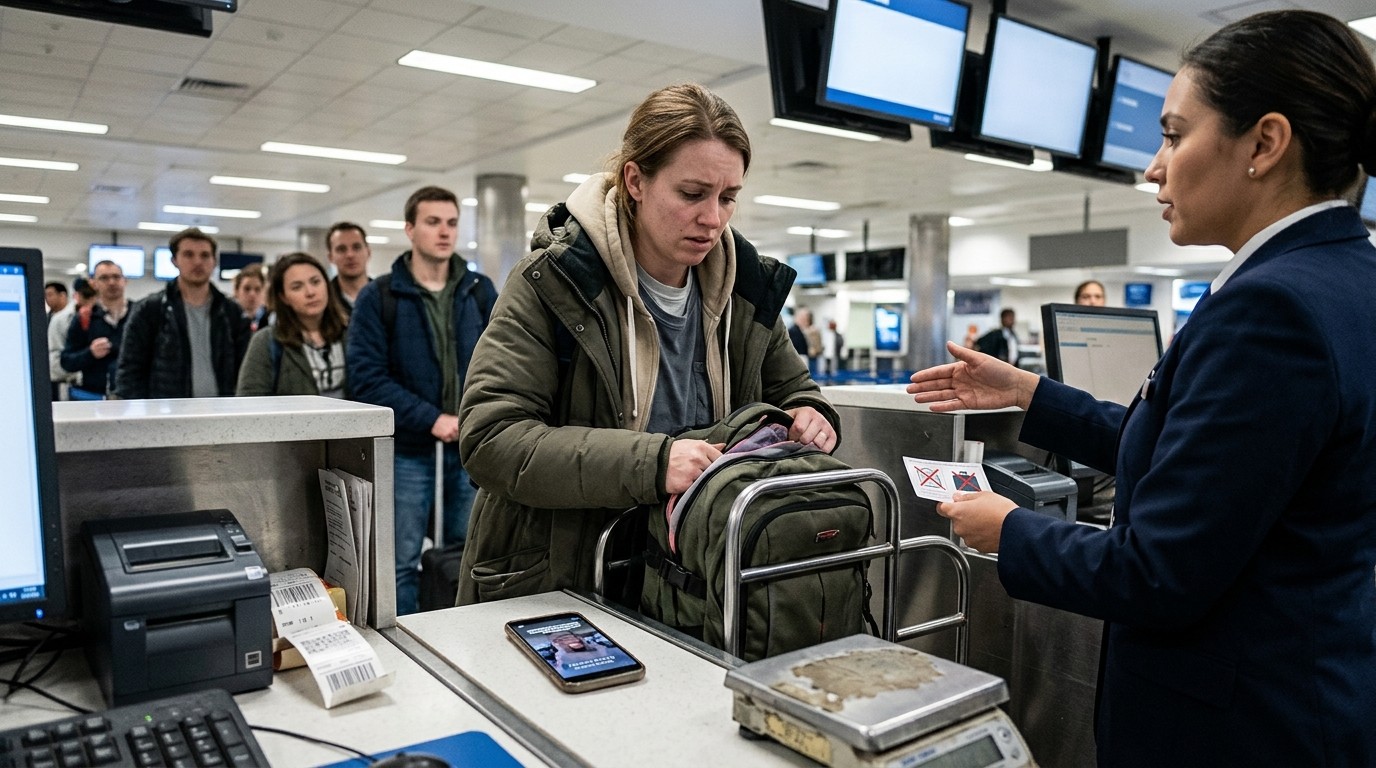
A common frustration is discovering that a travel trick worked for someone else but not for you.
Do not automatically conclude that you did something wrong.
Rules change.
Prices change.
Airlines change policies.
Hotels change inventory.
Algorithms change.
Promotions expire.
A hack can stop working without ever having been fake.
This is why travelers should focus on principles instead of rigid formulas.
“Compare total costs” is a durable principle.
“Book every flight at exactly 1:17 a.m. on Tuesday” is not.
The difference matters.
Good Viral Travel Hacks teach a principle that remains useful even when the exact tactic changes.
The Ultimate Travel-Hack Checklist
Use this quick review before your next trip:
| Category | Smart Question |
|---|---|
| Flights | Did I compare dates and total costs? |
| Hotel | Did I review cancellation and extra fees? |
| Bags | Did I verify current airline rules? |
| Security | Did I check the departure airport’s guidance? |
| Batteries | Are my power banks packed according to current rules? |
| Documents | Do I have secure backups? |
| Money | Do I have a backup payment method? |
| Safety | Did I research common scams? |
| Health | Did I check destination-specific advice? |
| Itinerary | Is there enough flexibility? |
If you consistently complete this review, you will need far fewer random hacks.
Final Rule : Use Travel Hacks as Tools, Not Truth
The internet has made travel information more accessible than ever.
That is a huge advantage.
But accessibility also means misinformation can spread faster.
A travel hack deserves trust when it is practical, supported by reliable information, appropriate for your specific trip, and unlikely to create unnecessary risk.
That is the standard travelers should apply.
Do not reject every Viral Travel Hacks idea simply because it became popular online. Test it. Verify it. Understand its limits.
A good traveler is not the person who knows the most hacks.
A good traveler is the person who knows which advice deserves to be trusted.
Conclusion
Viral Travel Hacks can make travel easier when they are treated as practical ideas rather than guaranteed secrets. The most useful advice usually involves preparation, flexibility, better comparison, smarter packing, stronger digital backups, scam awareness, and destination-specific research. Travelers should verify airline, airport, health, baggage, payment, and accommodation rules before acting on online recommendations. Technology, including AI planning tools, can accelerate research, but human judgment remains essential. The best travel strategy is not chasing every new trick. It is building a reliable system that saves meaningful money, reduces avoidable stress, protects your safety, and leaves enough freedom to enjoy the destination. Smart travel is less about knowing every shortcut and more about knowing which shortcuts are actually worth taking.
Frequently Asked Questions (FAQ)
1. Are Viral Travel Hacks actually reliable?
Some are useful, while others are exaggerated, outdated, or dependent on specific circumstances. Always verify important travel claims against current airline, airport, hotel, government, or official destination information before relying on them.
2. What are the safest Viral Travel Hacks for beginners?
Beginners should prioritize practical habits such as preparing digital document backups, organizing luggage, checking baggage restrictions, comparing total travel costs, researching scams, and creating a flexible itinerary.
3. Can Viral Travel Hacks really save money on flights?
They can encourage useful behaviors such as comparing flexible dates, nearby airports, baggage costs, and alternative routes. However, no single trick reliably guarantees the cheapest airfare for every traveler or route.
4. Is using a VPN a guaranteed way to get cheaper travel prices?
No. A VPN may change the location from which you access a website, but it does not guarantee cheaper airfare or hotel rates. Pricing depends on many variables, so compare actual final prices and booking conditions.
5. Should I trust Viral Travel Hacks about airport security?
Only after checking the relevant airport, airline, and security authority. Security requirements can differ by location, and travelers should never depend on social media claims to interpret regulated screening rules.
6. Are Viral Travel Hacks involving power banks safe?
Only when they follow current airline and aviation requirements. IATA advises that spare lithium batteries and power banks belong in hand baggage, and airlines may have additional requirements.
7. How can AI help with travel planning?
AI can help brainstorm destinations, organize research, create itinerary drafts, compare alternatives, and adapt plans to personal preferences. However, travelers should independently verify important facts such as opening hours, transportation, prices, entry conditions, and booking policies.
8. What is the biggest mistake people make with travel hacks?
The biggest mistake is assuming that a successful experience from another traveler automatically applies to everyone. Route, destination, season, airline, budget, travel style, and personal circumstances can completely change the result.
9. How do I identify a fake travel hack?
Be skeptical of guaranteed savings, secret formulas, extreme discounts, urgent payment demands, and claims based only on one person’s experience. Look for conditions and verify important information through authoritative sources.
10. What is the best overall travel hack?
The best approach is preparation plus flexibility. Research before booking, understand the rules that actually apply to your trip, compare total costs, protect important documents, maintain backup options, and leave enough flexibility to respond when circumstances change. That strategy will usually outperform chasing every new internet trend.