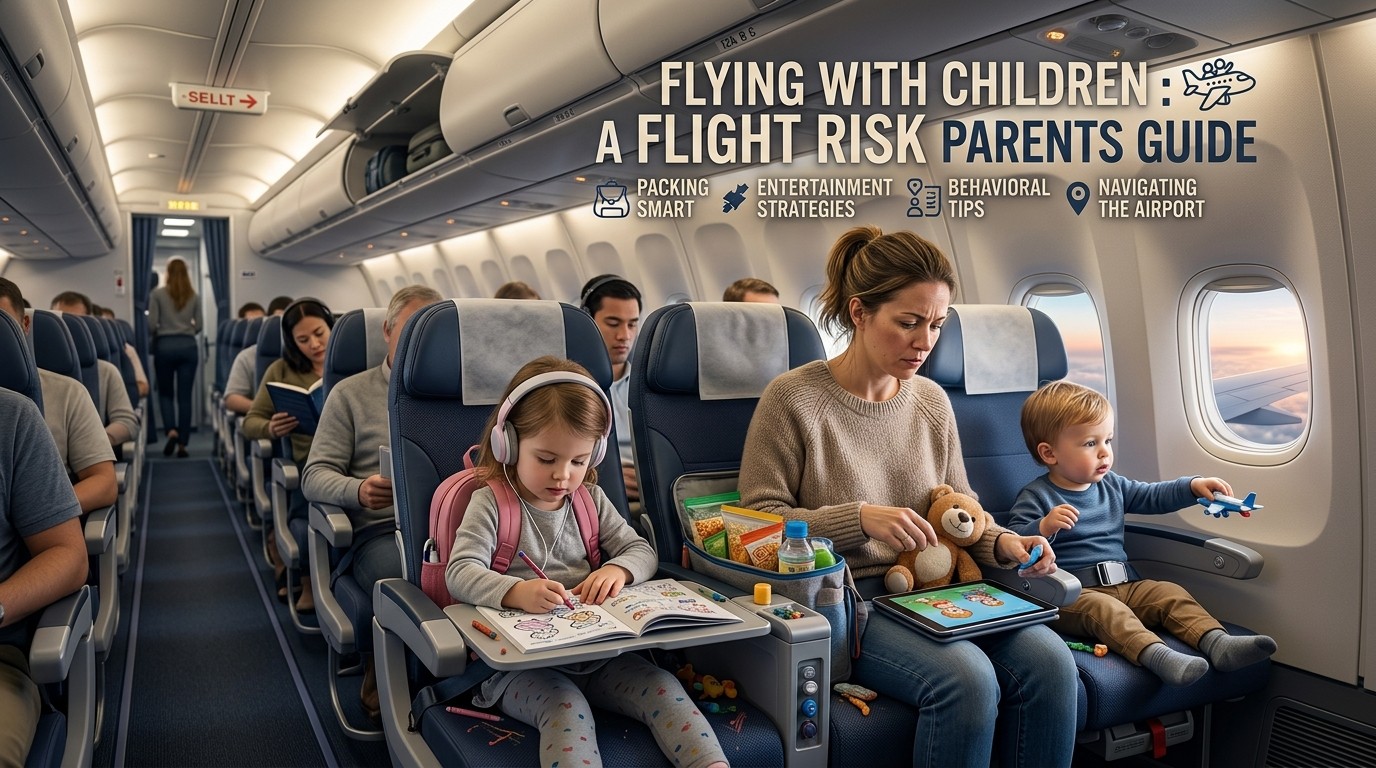
Flying With Children becomes far easier when parents plan for sleep, snacks, movement, calm language, and realistic expectations before the first boarding call, reducing stress for everyone.
Travel becomes easier when parents understand that Flying With Children is less about perfection and more about preparation. The goal is not to create a silent cabin or a flawless schedule. The goal is to reduce stress, protect energy, and make the journey predictable enough that children feel safe and adults feel in control.
Planning Before the Flight
Parents usually worry about noise, movement, delays, and the reactions of other passengers. Those concerns are normal, but Flying With Children becomes easier when you plan for the moments that commonly trigger distress. A hungry child, a bored toddler, a tired infant, or a rushed parent can turn a manageable trip into a difficult one. Preparation lowers that risk and gives everyone a better chance to settle in.
The best starting point is the trip itself. Choose flight times that fit your child’s sleep pattern when possible, and avoid unnecessary layovers unless they genuinely improve comfort. Shorter travel days can be worth a little extra cost because Flying With Children often becomes harder when children are overtired or forced to wait for long stretches in airports.
Before the flight, talk through the journey in simple language. Children handle uncertainty better when they know what will happen next, especially during Flying With Children. Explain check-in, security, boarding, seatbelts, takeoff, and landing without overloading them with information. Confidence grows when the process feels familiar, even if they have never done it before.
Packing well is one of the smartest things a family can do. A small backpack with snacks, wipes, a change of clothes, a favorite comfort item, and a few quiet activities can change the tone of Flying With Children. Parents who prepare for small needs usually spend less time reacting to big problems once they are in the air.
Clothing matters too. Dress children in soft, layered outfits that are easy to adjust as cabin temperatures change. When Flying With Children is planned with comfort in mind, small irritations become less likely to spiral into bigger problems. Avoid tight shoes, scratchy fabrics, or anything that makes it hard for a child to rest, stretch, or use the restroom quickly.
At the airport, give yourself more time than you think you need. Rushing increases stress for both adults and children, and Flying With Children tends to go better when the family starts from a calm baseline. Extra time allows for bathroom breaks, water refills, snack stops, and the occasional emotional reset before boarding.
Security screening can be one of the most stressful moments for families, but it is also one of the most manageable when expectations are clear. Let children know that bags will be checked and people may need to take off shoes or jackets. For Flying With Children, predictability reduces resistance and helps even nervous kids cooperate more easily.
Airport and Boarding
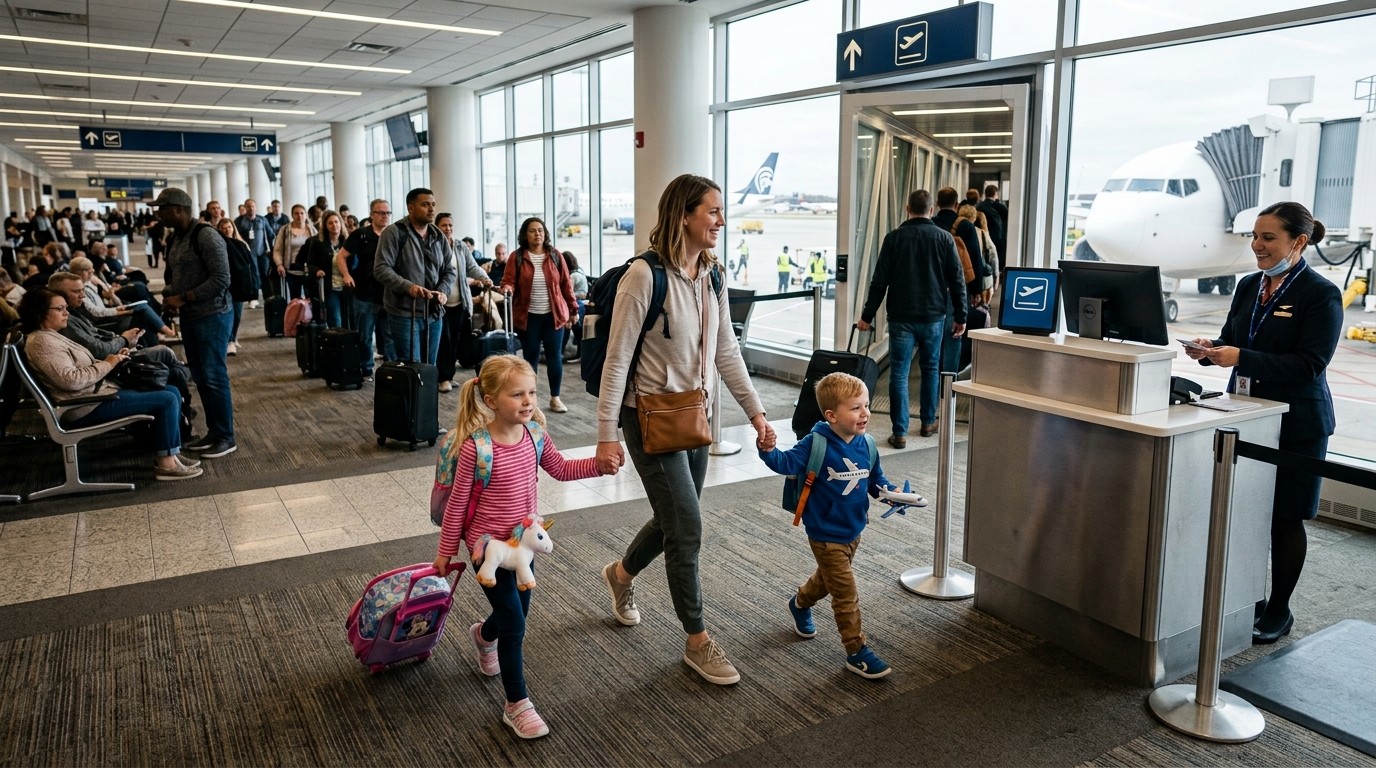
Boarding early can be helpful, but not always for every child. Some children do better with more time on the ground rather than sitting still for too long. Parents should match the strategy to the child instead of assuming there is one perfect approach. That flexibility is often the difference between calm and chaos during Flying With Children.
Once seated, the first ten minutes matter a lot. Children need a sense of control, even if that control is small. Let them place a toy, choose a snack, or hold a blanket. During Flying With Children, tiny choices can reduce anxiety and make the cabin feel less restrictive. A child who feels settled early is often easier to support later.
Takeoff can sound intense, especially for younger children who do not yet understand the sensations of pressure changes and engine noise. A drink, a chewable snack, or a comforting phrase can help. When Flying With Children includes takeoff preparation, the first major transition usually feels less surprising and less frightening for everyone involved.
Ear pressure is another common issue, especially for babies and young children. Sucking on a bottle, sipping water, or chewing an appropriate snack can help during ascent and descent. Families who anticipate this part of Flying With Children often handle the strongest discomfort before it becomes a full meltdown.
Screen time can be useful on flights, but it works best when paired with other options rather than used as the only plan. Download a mix of shows, games, and music before departure so you are not relying on airplane Wi-Fi. In Flying With Children, variety matters because children’s attention changes quickly and unpredictably.
Quiet activities are especially valuable when the cabin environment feels cramped. Sticker books, coloring pages, puzzle cards, and small toys can buy time without creating too much mess. For Flying With Children, the right toy is not the fanciest toy; it is the one that reliably keeps hands busy and helps a child self-soothe.
Snacks can have a bigger influence than many parents expect. A child who is hungry can become frustrated much faster than an adult realizes. Pack familiar, easy-to-eat foods and keep them accessible. In Flying With Children, stable blood sugar and familiar flavors often support better behavior and reduce unnecessary tension.
Hydration matters for the whole family, especially in the dry cabin environment. Encourage regular sips of water and avoid relying too heavily on sugary drinks. With Flying With Children, simple physical comfort often prevents emotional problems before they begin, and thirst is one of the easiest issues to forget until a child is already upset.
In the Cabin
If your child struggles with motion sickness, prepare for it before you leave home. Sit them where the view is steadier if possible, keep their head supported, and avoid heavy meals right before boarding. Flying With Children becomes easier when parents plan for nausea instead of reacting after a child already feels unwell.
Rest is another major factor. A tired child has less patience, lower flexibility, and a shorter fuse. Try to align the flight with naps or bedtime when it makes sense, but be realistic about your child’s sleep habits. During Flying With Children, small gains in rest can prevent large behavioral swings later in the journey.
Parents also need a realistic mindset. Children cry, squirm, ask repeated questions, and change preferences without warning. That does not mean the trip is failing. It means they are children. When Flying With Children is approached with patience instead of perfection, the whole experience becomes easier to manage emotionally.
Set expectations with older children before takeoff. Tell them how long the flight is, what they can do during the trip, and what behavior you expect. Clear rules help them feel included rather than controlled. In Flying With Children, respectful communication often leads to better cooperation than constant correction once the plane is airborne.
For toddlers, repetition is your friend. Repeat simple phrases about sitting, snacks, water, and waiting. Toddlers are not being difficult on purpose; they are simply learning how to handle frustration. A calm, repetitive style makes Flying With Children less overwhelming and creates a rhythm they can follow even when they are tired.
Infants need a different strategy. Feedings, diaper changes, swaddles, and soothing routines matter more than entertainment. Parents who prepare the diaper bag carefully usually cope better when plans shift unexpectedly. During Flying With Children, the more predictable the comfort routine, the more relaxed both parent and baby tend to be.
If you are flying with more than one child, separate responsibilities by age and need rather than expecting one method to work for everyone. An older child may want a game, while a younger child needs movement or a snack. Flying With Children becomes far more manageable when each child is treated according to their real stage of development.
Solo Travel Ireland, if you have one, can reduce friction dramatically. Decide in advance who handles bags, who handles snacks, and who responds first if a child gets upset. Families often find Flying With Children smoother when no one is guessing about roles during stressful moments.
Choose seats with intention. A window seat may entertain some children, while an aisle seat may help with bathroom trips or movement. Families with infants may prefer seats that support feeding or holding comfortably. In Flying With Children, seat choice is not a luxury detail; it is part of the stress-reduction plan.
Noise can affect children more than adults realize. Headphones sized for kids, soft music, or white noise may help sensitive travelers settle. In Flying With Children, reducing sensory overload can be just as useful as giving a child something to do, especially when the cabin feels crowded or the flight is long.
A small sense of novelty can transform the atmosphere. A new coloring book, a special snack, or a surprise toy reserved for the flight can hold attention longer than everyday items. When Flying With Children includes one or two planned surprises, children often feel that the trip itself is part of the adventure.
At the same time, avoid overpacking entertainment. Too many options can create decision fatigue and clutter. Simplicity helps everyone. During Flying With Children, a limited but thoughtful set of items usually works better than a suitcase full of toys that are difficult to organize at 30,000 feet.
Health, Comfort, and Confidence
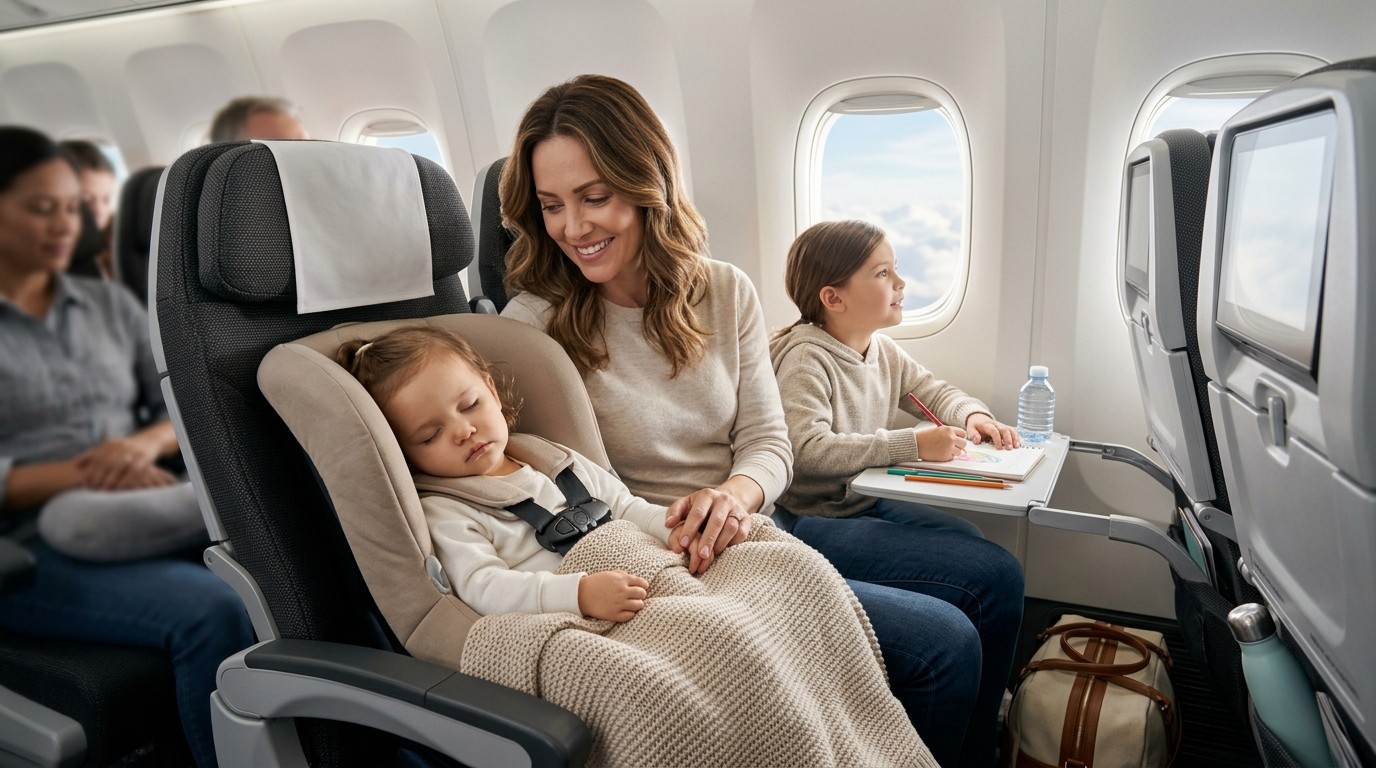
Break the flight into phases so the trip feels smaller. Think about pre-boarding, takeoff, cruising, and landing as separate tasks instead of one endless block of time. This mental structure helps adults stay calm, and during Flying With Children, parent calm is one of the strongest tools a child can borrow.
Try to avoid apologizing constantly to strangers. A polite acknowledgment is enough. Most travelers understand that children are part of public life. When parents feel ashamed, tension rises and children sense it. Flying With Children is easier when adults stay composed and stop treating every small noise as a crisis.
Respect your child’s emotions without giving in to every demand. Comforting a child is different from rewarding every protest. Boundaries help children feel safer because they know what is and is not allowed. That balance is especially important during Flying With Children, when an overstimulated child may test limits more often.
If your flight is delayed, protect the routine as much as possible. Snacks, movement, a bathroom visit, and quiet time can reset everyone’s mood. Delays are annoying, but they do not have to ruin the day. Flying With Children gets harder when adults panic, so staying steady helps the whole family.
Consider how your destination experience begins too. A smooth arrival matters because exhausted children often have limited patience after landing. Booking a transfer, planning a meal, or arranging an early check-in can make the first hour easier. With Flying With Children, the flight is only half the journey; the landing matters just as much.
Health planning matters for longer or more active trips. If your itinerary includes multiple transfers, remote destinations, or outdoor excursions, consider whether your family’s coverage matches the trip. Some parents compare Adventure Travel Insurance for active itineraries and keep Emergency Evacuation Insurance in mind when visiting places where medical transport could become complicated. That kind of planning is not dramatic; it is practical.
Travel can also shape children’s future confidence. A child who has calm, supported experiences on planes may grow more comfortable with new environments over time. That does not mean every trip will be perfect. It means that thoughtful preparation can turn Flying With Children into a skill-building experience instead of a stressful gamble.
When parents feel prepared, children often feel safer. That emotional spillover is powerful because children read adult cues constantly. If you seem organized, unhurried, and responsive, they are more likely to follow your lead. In many families, Flying With Children becomes easier not because the child changed first, but because the adult environment changed first.
Parents who travel frequently often learn that success is less about controlling every variable and more about building flexible habits. The habits may include early packing, predictable meals, favorite comfort items, and a backup plan for boredom. With Flying With Children, a family system matters more than any one perfect trick.
The same principle applies whether you are flying for vacation, visiting relatives, or connecting multiple flights. The reason matters less than the structure you create. A child who knows what comes next can tolerate inconvenience better. That is why Flying With Children rewards simple, repeatable routines more than elaborate solutions.
Long-haul journeys require extra patience. The cabin can feel like its own tiny world, and children may struggle with the lack of space and movement. Building in short walks when safe, stretching hands and legs, and using calm transitions can make Flying With Children feel less confining and more manageable.
Even a short flight can be tiring if it happens at the wrong time of day. Do not underestimate the emotional cost of early departures, missed naps, and airport overstimulation. In Flying With Children, the best strategy is often the one that protects the child’s energy before the flight ever begins.
Families sometimes assume that a child’s age alone determines how hard the flight will be. In reality, temperament matters just as much. Some toddlers are calm, some older children are anxious, and some infants are surprisingly adaptable. Flying With Children becomes more predictable when parents respond to the child in front of them rather than the age on the passport.
More Practical Tips
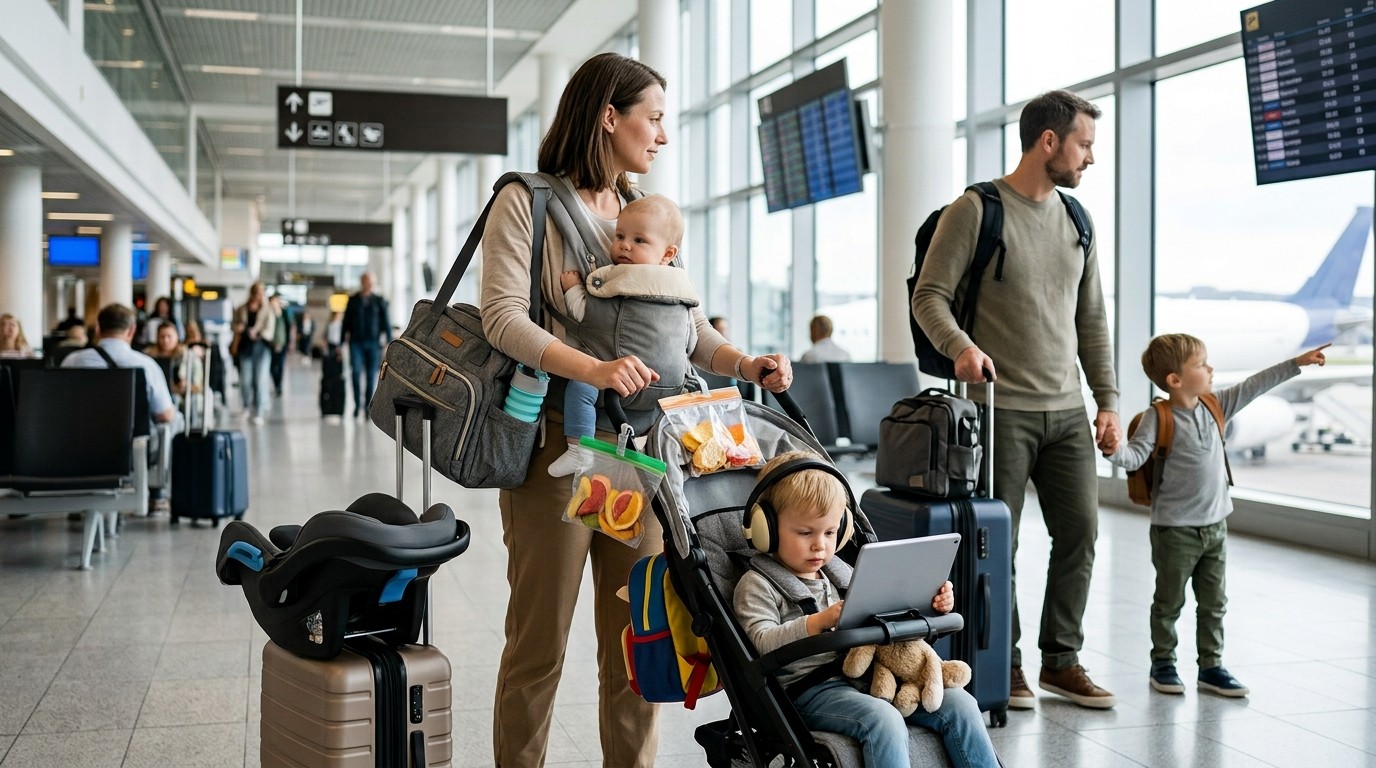
Another useful approach is to treat the airport as part of the trip rather than a hurdle to get through. Let children observe planes, walk a little, and have a small reward after security. When Flying With Children includes positive moments on the ground, the whole journey can feel less punitive and more collaborative.
If you are traveling during holiday periods or peak congestion, build in more patience than usual. Busy airports, longer lines, and more noise can add pressure quickly. Parents who accept that crowded conditions are part of the day usually cope better. Flying With Children is rarely improved by unrealistic expectations.
Sometimes the most effective strategy is not entertainment but calm presence. A parent’s voice, hand, or steady breathing can be enough to help a child through a rough patch. During Flying With Children, connection often works better than control, especially when children are too tired to respond to more instructions.
Think about what success looks like before you leave home. Success may simply mean arriving safely, keeping everyone fed, and getting through the trip without a major breakdown. That reframe matters because it lowers pressure. With Flying With Children, realistic goals create kinder travel days and fewer disappointments.
After landing, praise what went well instead of only focusing on what was hard. Children remember emotional tone, and positive reflection helps them associate flights with competence rather than stress. That lesson matters for the next trip too. If Flying With Children ends with encouragement, the family is already building a better future experience.
Jet lag, time zone changes, and unfamiliar meal times can make the first day harder than parents expect. For many families, Flying With Children gets smoother when the itinerary leaves room for sleep, light meals, and a slower start after arrival.
A good airport strategy also includes simple logistics. Keep documents together, use a clearly labeled bag, and put the most needed items where you can reach them without digging. The more predictable your setup is, the easier it becomes to respond to sudden requests without creating more stress.
Think about sensory overload before the trip begins. Crowds, announcements, bright lights, and long queues can drain children quickly. A calm tone, familiar music, and brief movement breaks can lower that pressure before it turns into frustration or tears.
If your child has medical needs or a history of anxiety, speak with a pediatric professional before a long journey. Families who prepare in advance usually feel more confident because they know what support options exist and what warning signs deserve attention.
Finally, remember that travel is not only a test of endurance. It is also a chance to model patience, problem-solving, and adaptability. Children learn from what adults do under pressure, so a steady response becomes part of the lesson itself.
Parents often underestimate the power of boredom. A child who has nothing to do for even twenty minutes may begin testing boundaries, searching for attention, or asking for snacks they do not actually need. Building in a rhythm of small tasks, small rewards, and short resets can prevent that slide into restlessness before it starts.
Another overlooked detail is the parent’s own energy. If adults are already tired, hungry, or anxious, children will sense it immediately. Eating before boarding, drinking water, and taking a few deep breaths may sound simple, but those basic habits can create a much better emotional baseline for the entire trip.
Finally, remember that every successful family flight does not look the same. Some trips are quiet, some are messy, and some include one difficult moment that is still completely manageable. What matters most is whether the family arrives safely, keeps moving forward, and learns one more useful lesson for the next journey.
At the airport, small routines reduce friction. Let children carry a light item, ask them to look for signs, or give them a simple job like counting gates or spotting the aircraft. Those tiny responsibilities create structure, and structure is often the difference between a family that feels scattered and a family that feels ready.
Consistency before, during, and after the flight builds confidence.
Conclusion
Flying With Children is rarely effortless, but it can be calm, memorable, and even empowering when parents prepare thoughtfully. The real goal is not a flawless cabin or a perfectly quiet child; it is a family experience that feels manageable from departure to arrival. When you plan ahead for snacks, rest, pressure changes, movement, and realistic expectations, you reduce tension before it starts. That preparation helps children feel safer and helps adults stay steady. With patience, flexibility, and a clear plan, Flying With Children can become less of a risk and more of a reliable part of family travel.
Frequently Asked Questions (FAQ)
How early should parents arrive at the airport?
Arriving early is one of the simplest ways to reduce stress, especially during Flying With Children. Extra time protects against surprise delays, slow bathroom trips, security lines, and the very real possibility that a child will need one more snack before boarding.
What should be in a child’s carry-on bag?
Keep snacks, wipes, a spare outfit, a comfort item, entertainment, and any medication in an easy-to-reach bag. For Flying With Children, the carry-on should solve the most likely problems before they become bigger and harder to manage.
How do parents handle crying on a plane?
Start with calm, quiet support. Check for hunger, fatigue, discomfort, or ear pressure, and avoid escalating the situation with visible panic. In Flying With Children, a steady parent usually helps more than a perfect one.
What if the flight is delayed for hours?
Break the waiting time into small parts: food, movement, restroom, quiet time, and more food if needed. A delay is easier to handle when the family keeps moving through mini-goals. That mindset keeps Flying With Children from becoming emotionally overwhelming.
What’s the most important tip for first-time family flyers?
Plan for comfort, not perfection. If meals, snacks, rest, and entertainment are covered, the flight usually feels much more manageable. For Flying With Children, a simple plan often beats an ambitious one.
Are night flights better for children?
Sometimes, but not always. Night flights can help if your child reliably sleeps in transit, yet they can also create overtired behavior if bedtime routines are disrupted. The best choice depends on the child and the timing of the trip.
Should parents buy extra seats for young children?
That depends on budget, age, and comfort needs. More space can help on longer flights, but it is not always necessary. Seat strategy should match both the child’s temperament and the trip length.
How can parents reduce ear pain during takeoff and landing?
Encourage swallowing through drinking, chewing, or feeding where appropriate. This simple habit often helps with pressure changes. Planning for ear discomfort ahead of time prevents a lot of last-minute distress.
How can parents stay calm themselves?
Prepare early, expect a few bumps, and define success realistically before the trip begins. When adults are grounded, children usually follow that lead. Parental calm is part of the travel toolkit.
What kind of snacks work best?
Choose familiar, low-mess foods that your child already likes. Fruit pouches, crackers, dry cereal, and cut fruit often work well. The best snack is the one that can be eaten quickly, cleanly, and without drama.