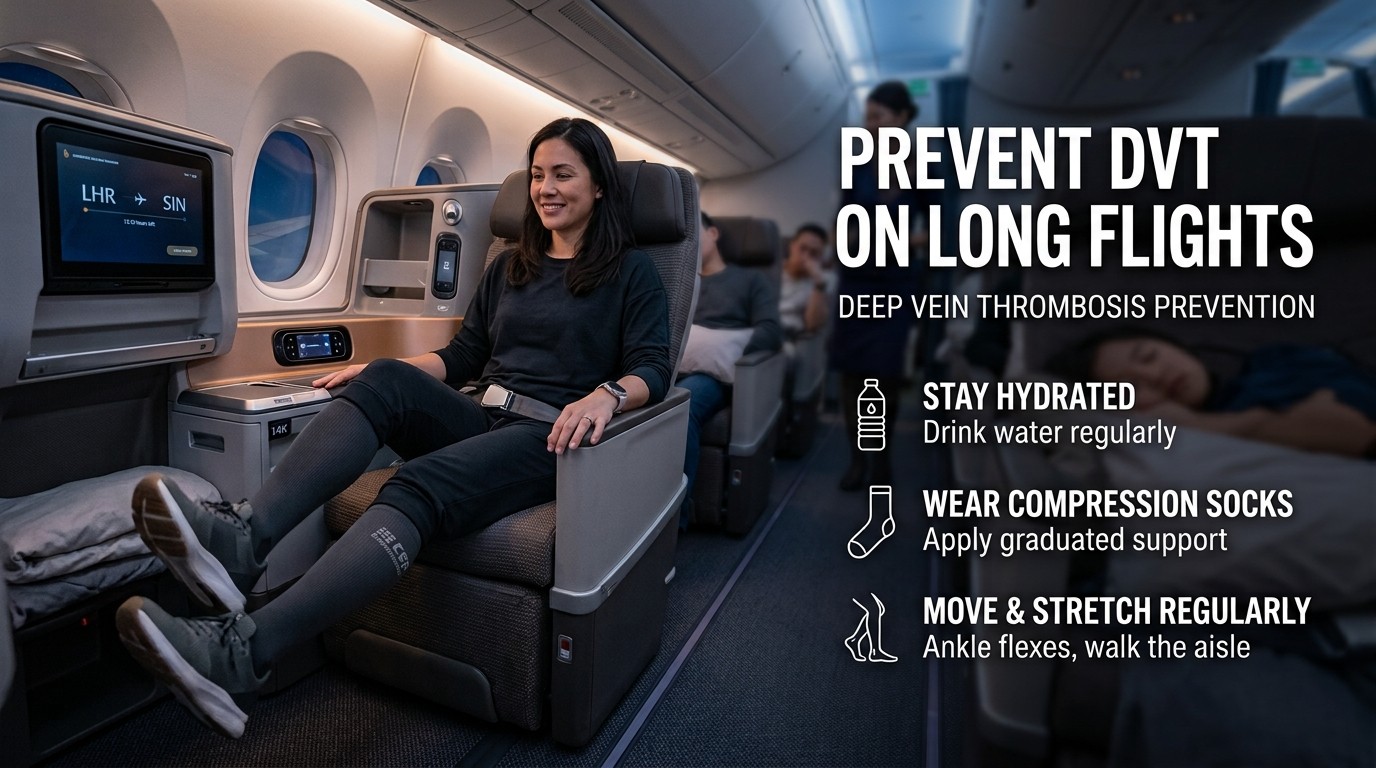
Deep Vein Thrombosis prevention on long flights works best when travelers combine movement, hydration, smart seat choices, and personal risk awareness into one calm routine.
Deep Vein Thrombosis becomes more relevant on long flights because prolonged sitting slows blood flow in the legs, creating the conditions where a clot can form. The CDC explains that long periods of limited mobility can raise travel-related clot risk, and that the risk is still generally low for most healthy travelers, but it rises when other factors are present. Deep Vein Thrombosis is therefore less about panic and more about understanding when immobility, dehydration, recent surgery, pregnancy, cancer treatment, obesity, or a prior clot may make the journey more complicated. On a plane, the environment also nudges people toward stillness: seat space is tight, sleep feels tempting, and people often drink less water than they normally would. That combination is why Deep Vein Thrombosis deserves a practical prevention plan before you board, not a worried thought after landing.
Who Should Pay Extra Attention
Most travelers do not develop travel-related clots, but Deep Vein Thrombosis deserves extra care when a person has had a previous clot, recent surgery, active cancer, pregnancy, postpartum status, obesity, hormonal therapy, a clotting disorder, or limited mobility. The CDC lists these as important risk factors, and the NHS also notes that long journeys of more than four hours can matter, especially when dehydration or recent illness is part of the picture. Deep Vein Thrombosis is not a random travel problem; it becomes more likely when travel stacks on top of an already higher-risk body state. That is why the trip should be planned with honesty, not hope. If you already know your risk is higher, Deep Vein Thrombosis should move from a general wellness idea to a specific prevention checklist.
Start Prevention Before You Pack
Deep Vein Thrombosis prevention begins before the airport, because the best habits are easier to follow when they are decided in advance. Choose clothing that does not pinch, leave space in your carry-on for water and movement aids, and think through the flight duration, connection times, and seat choice before you arrive. The CDC recommends standing or walking occasionally, selecting an aisle seat when possible so you can move every 2–3 hours, and exercising the calves while sitting. That means Deep Vein Thrombosis prevention is not a mystery technique; it is a simple routine repeated at the right time. If you know that a long trip will be mostly seated, you can treat the plan the way you would treat weather: as something to prepare for, not something to ignore.
The Role of Movement in Preventing Clots
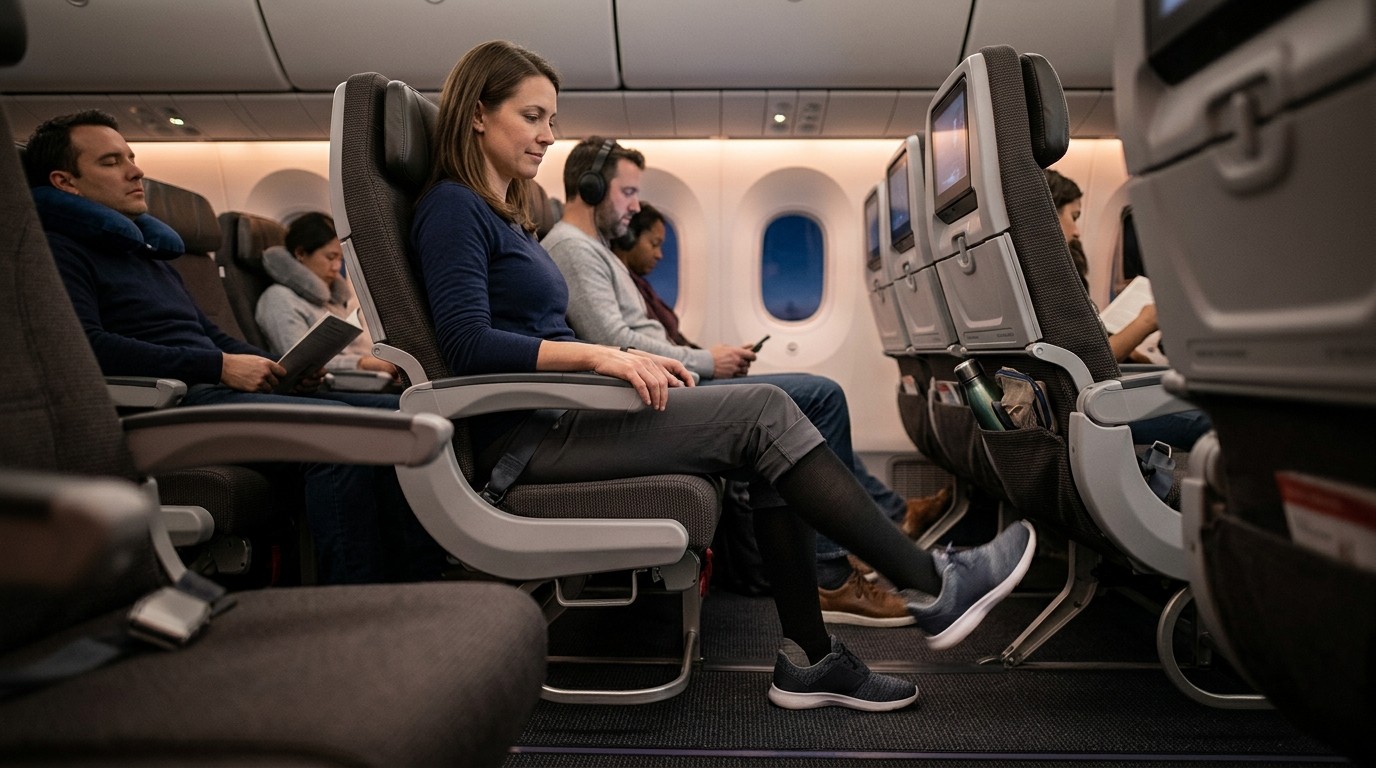
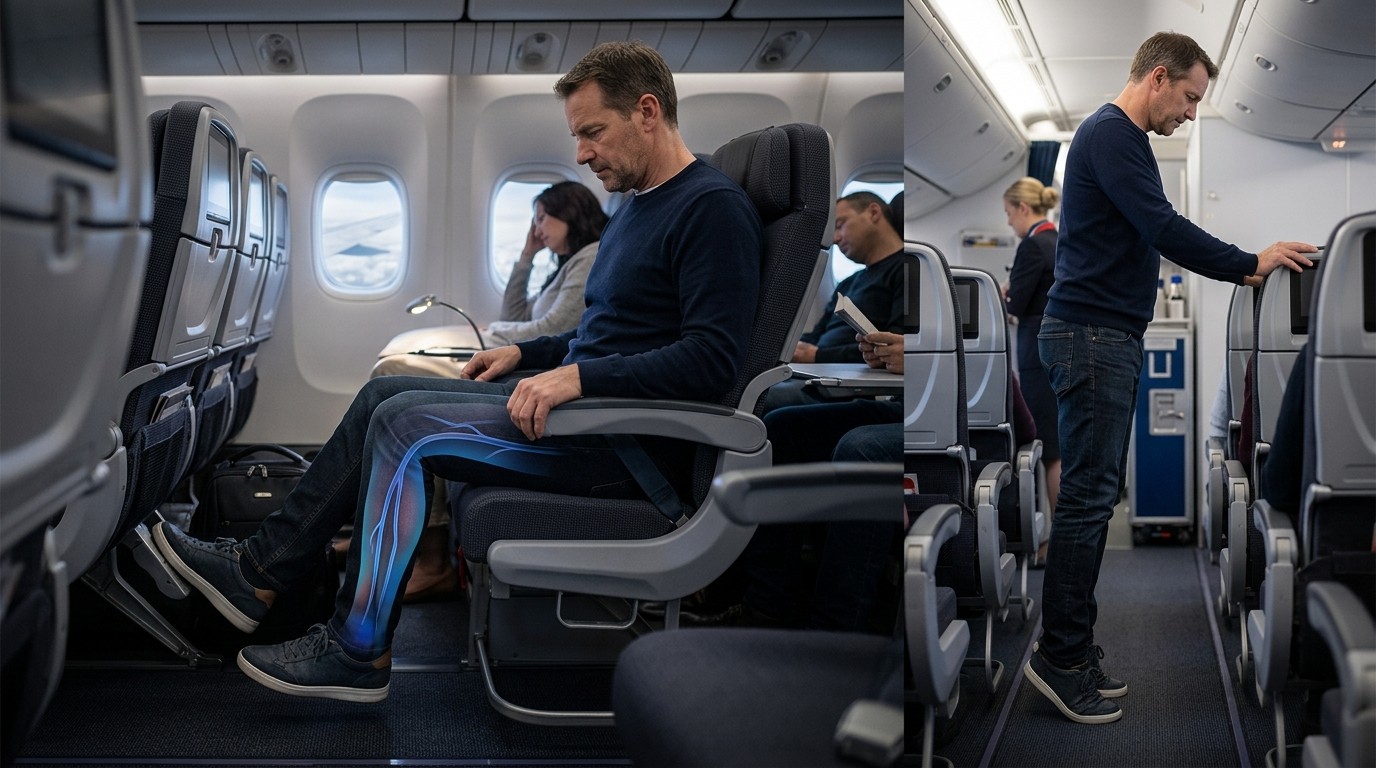
Deep Vein Thrombosis is strongly influenced by motion because stillness lets blood pool in the lower legs. That is why movement matters even if you are tired, sleepy, or trying to relax. The CDC advises standing up or walking occasionally during travel, and the Mayo Clinic similarly recommends frequent breaks, standing or walking on planes, and lower-leg exercises if walking is not possible. Deep Vein Thrombosis prevention therefore works best when movement is treated like an appointment, not an optional extra. Small actions such as rising for a short walk, stretching the calves, and changing your sitting position can reduce the time your legs stay compressed. You do not need to do something dramatic; you need to interrupt immobility often enough that the legs keep circulating.
Seated Exercises That Fit Real Travel
Deep Vein Thrombosis prevention is much easier when you know exactly what to do while seated. Raise and lower your heels while your toes stay on the floor, then switch and raise your toes while your heels stay down. Tighten and release your leg muscles. The CDC lists these ankle and calf movements, and Mayo Clinic recommends lower-leg exercises for travelers who cannot walk around. Deep Vein Thrombosis becomes less threatening when the body is still but the muscles are not. A few repetitions every so often can be enough to keep your legs from feeling locked in place, especially during long-haul segments where you are trying to sleep or watch a screen.
Seat Choice Can Change Comfort and Circulation
An aisle seat can make Deep Vein Thrombosis prevention easier because it reduces the friction between you and the aisle. The CDC specifically notes that aisle seating can help because it lets you walk around every 2–3 hours. That may sound small, but in a long flight it creates several chances to stand, stretch, and reset circulation. Deep Vein Thrombosis is harder to ignore when the seat itself reminds you that your body was not designed to stay folded for many hours. If you already know that you sleep deeply, avoid moving once seated, or feel awkward bothering others, the aisle is often the simplest choice because it removes one more reason to stay still.
Hydration Helps More Than People Expect
Deep Vein Thrombosis prevention is often linked with hydration because dry cabins, limited bathroom breaks, and general travel stress can all make people drink less than they should. The NHS recommends drinking plenty of fluids and avoiding dehydration on long journeys, and it also advises avoiding alcohol and not sitting still for long periods. Deep Vein Thrombosis is not prevented by water alone, but good hydration supports the kind of body state that makes movement easier and fatigue less severe. Think of hydration as a supportive habit rather than a miracle fix. When you are well hydrated, standing up feels easier, the body feels less sluggish, and your travel routine becomes more sustainable.
Alcohol, Smoking, and Other Hidden Drains
Deep Vein Thrombosis risk becomes more concerning when alcohol or smoking adds to the problem. The NHS advises avoiding alcohol on long journeys and not smoking, while Mayo Clinic also notes that smoking increases DVT risk. Deep Vein Thrombosis should therefore be approached with the same mindset you would use for any body-sensitive travel choice: reduce the extra stressors that make circulation worse. Alcohol can make people sleep longer in one position, miss movement cues, and wake up more dehydrated. Smoking and recent nicotine use are additional concerns because they affect vascular health. If your goal is safer long-haul travel, the most helpful habit is often not a dramatic one; it is the avoidance of the little things that quietly add up.
Compression Stockings and When to Ask a Doctor
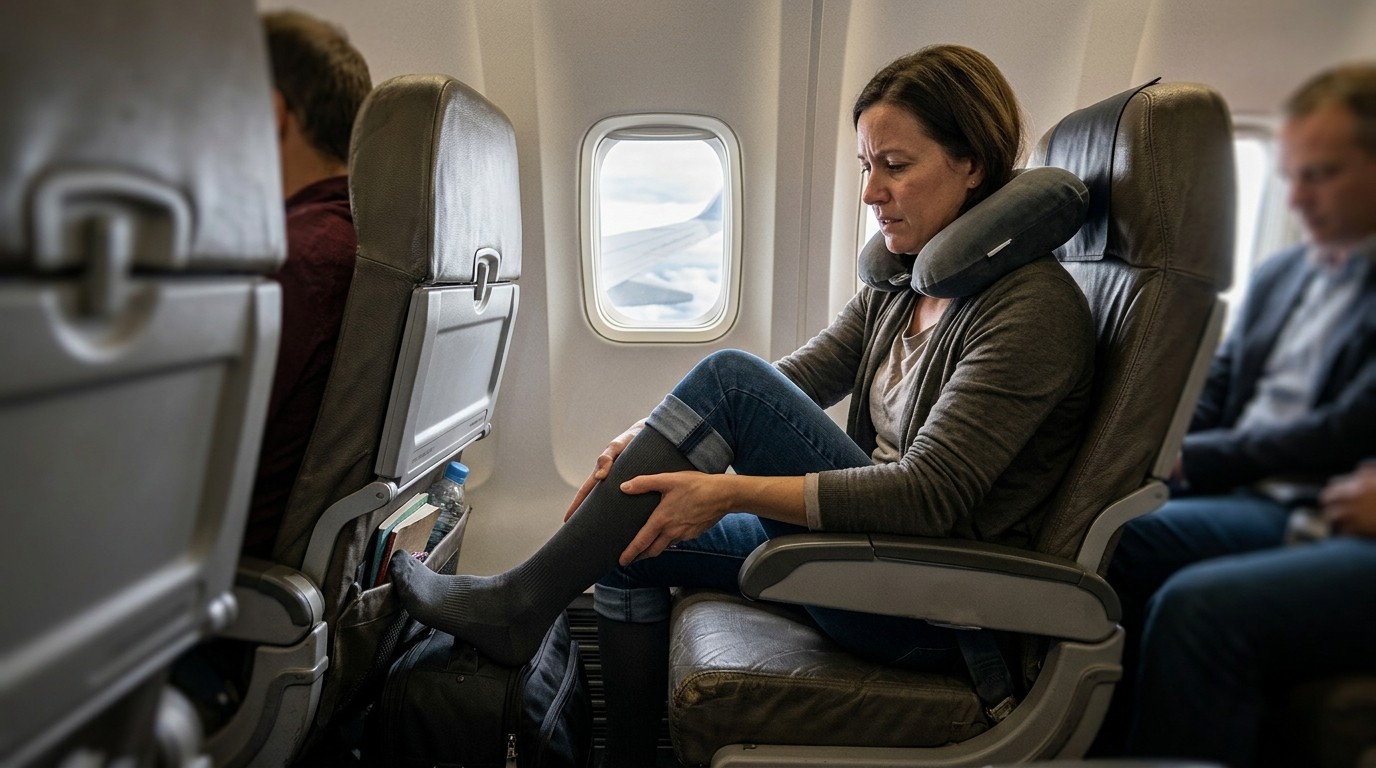
Deep Vein Thrombosis prevention sometimes includes graduated compression stockings, especially for travelers with additional risk factors. The CDC notes that compression stockings appear to reduce asymptomatic DVT in travelers and are generally well tolerated, but decisions about medication or stronger prevention should be made individually. For high-risk long-distance travelers, the CDC Yellow Book says clinicians may consider graduated compression stockings or prophylactic low-molecular-weight heparin, while aspirin is not recommended for low-risk travelers and is not advised routinely as first-line prevention. Deep Vein Thrombosis is not a condition where everyone should self-prescribe a solution. If you have a history of clots, recent surgery, pregnancy, cancer treatment, or multiple risk factors, medical advice is the right next step before flying.
Why Travel Time Matters
Deep Vein Thrombosis risk increases with longer periods of sitting, which is why flights over four hours deserve more attention. The CDC Yellow Book notes that the incidence of travel-associated VTE is generally low, but it also states that risk correlates with duration of travel and with existing risk factors. For most healthy travelers, Deep Vein Thrombosis remains uncommon, yet the duration of travel still matters because immobility is the main driver. The longer you sit without moving, the more the lower-leg veins behave as if they have been asked to pause their job. That is why your prevention plan should scale with flight length: the longer the trip, the more intentionally you should move, hydrate, and check your body.
What Risk Looks Like After the Flight
Deep Vein Thrombosis does not always announce itself immediately. The CDC warns that symptoms of deep vein thrombosis can include swelling, pain, tenderness, warmth, or redness in the leg, and that pulmonary embolism symptoms can include shortness of breath, chest pain, rapid heartbeat, coughing up blood, lightheadedness, or fainting. Deep Vein Thrombosis becomes more urgent when symptoms appear after travel because the clot can move or grow. If anything feels off, do not try to self-diagnose your way through it. The right response is prompt medical evaluation, especially if the symptoms are one-sided, sudden, or paired with breathing issues.
A Simple In-Flight Routine
Deep Vein Thrombosis prevention is easier when it becomes a repeating habit. On boarding, choose your seat, place water where you can reach it, and decide when you will stand up or move. During the flight, stretch your calves, flex your ankles, and set a reminder to change position. The CDC’s guidance to walk every 2–3 hours and the Mayo Clinic’s recommendation to keep the legs active both point to the same truth: Deep Vein Thrombosis is easier to manage when the body never gets too still for too long. If you are resting, keep the rest active enough that circulation does not stall.
Planning Around Other Travel Discomforts
Deep Vein Thrombosis prevention is only one part of a healthier trip. Travelers often think first about issues like Jet Lag Cure or Airplane Ear Pain, but the circulation question deserves equal attention because it is less visible and sometimes more serious. If you compare Eco Travel vs Traditional Travel or browse Top Best Eco Friendly Travel Destinations, you are already thinking about how travel choices affect comfort and well-being; the same logic applies here. Deep Vein Thrombosis should be managed with the same practical mindset: solve the problem before it grows. Good travel planning is rarely about one perfect decision. It is about reducing several small stressors at once so the body remains steady throughout the journey.
Booking Choices Can Support Better Circulation
Deep Vein Thrombosis prevention starts earlier than the flight itself, because booking decisions shape how much your body will be forced to sit. If Travel Hacking Miles helps you access a more comfortable seat or a better itinerary, that can be a meaningful upgrade for long-haul circulation. Likewise, travelers who prefer Overseas Adventure Travel often choose more structured trips, and structure can make movement, connection times, and recovery easier to manage. Deep Vein Thrombosis does not require luxury, but it does benefit from choices that reduce pressure on the body. A slightly smarter schedule, an aisle seat, or a better connection can be more valuable than a small cost saving if the result is less immobility.
Who Should Talk to a Clinician First
Deep Vein Thrombosis deserves a medical conversation before travel if you have a previous clot, a clotting disorder, recent surgery, active cancer, pregnancy, postpartum status, or a combination of risk factors. The CDC Yellow Book notes that long-distance travelers at substantially increased risk may be considered for graduated compression stockings or prophylactic LMWH on an individual basis, and that aspirin is not routinely recommended for those without risk factors. Deep Vein Thrombosis should also be discussed if you have a history of lung embolism, are on hormone therapy, or have been told to avoid long travel after a recent diagnosis. If your doctor gives you a prevention plan, follow that plan rather than mixing internet advice with guesswork.
After Landing: Keep the Momentum Going
Deep Vein Thrombosis prevention does not stop when the plane doors open. After landing, keep moving if you can, especially if the flight was long or you feel stiff. Symptoms can appear within the first days or weeks after travel, so pay attention to anything unusual in the legs or breathing. The CDC explains that travel-associated clots can be serious, and Mayo Clinic advises immediate medical help for pulmonary embolism symptoms. Deep Vein Thrombosis is easier to catch early when you stay alert to changes instead of assuming everything is normal just because the flight ended. That awareness is simple, but it can be lifesaving.
Practical Checklist for Long Flights
Deep Vein Thrombosis becomes more manageable when the checklist is short and usable. Pack a refillable water bottle, wear loose clothing, choose an aisle seat if possible, set a movement reminder, and review your personal risk factors before departure. Plan to walk or stretch every couple of hours, flex your calves while seated, and avoid sitting in the same position for the whole journey. If you are at higher risk, ask your clinician whether compression stockings or medication are appropriate. Deep Vein Thrombosis is not prevented by one big gesture. It is prevented by a chain of small, boring, effective habits repeated at the right times.
A Travel Table You Can Use
| Situation | Smart Response | Why It Helps |
|---|---|---|
| Long seating stretch | Stand and walk occasionally | Interrupts immobility |
| No aisle access | Do seated calf and ankle exercises | Keeps blood moving |
| Dry cabin air | Drink water regularly | Supports circulation and energy |
| Higher personal risk | Ask about stockings or medicine | Individualized prevention |
| After landing stiffness | Move soon and monitor symptoms | Supports early recognition |
Deep Vein Thrombosis becomes easier to manage when prevention is visible in a checklist rather than hidden in memory. The table reflects the same core guidance found in CDC, NHS, and Mayo Clinic advice: move, hydrate, reduce stillness, and get medical help quickly if warning signs appear.
The Human Side of Long-Haul Travel
Deep Vein Thrombosis planning is not only about veins; it is also about attention, mood, and routine. People often forget to move when they are tired, nervous, or absorbed in entertainment. That is why behavior design matters. If the reminder is simple, the body is more likely to follow it. Deep Vein Thrombosis also benefits from a calm mindset because anxiety can make travelers either overreact to normal fatigue or ignore real symptoms. The best approach is steady and non-dramatic: do the basic things well, know the warning signs, and trust the plan you made before boarding.
Extra Planning Layers That Make the Difference
Deep Vein Thrombosis prevention improves when you look beyond the flight itself and think about the full travel chain. If you can choose a more comfortable itinerary, a less rushed connection, or a seat that makes standing easier, those small decisions compound. Deep Vein Thrombosis is not only about what happens at cruising altitude; it is also about the stress and stillness that build before boarding and after landing. Travelers who prepare early tend to move more naturally because the plan has already removed some of the friction. When the schedule is simpler, Deep Vein Thrombosis prevention becomes simpler too.
Deep Vein Thrombosis also benefits from packing choices that make movement easier instead of harder. Loose clothing, shoes that can come off and on comfortably, a water bottle within reach, and anything you need for seated leg exercises all support the same goal. The NHS advises loose clothing and plenty of water during long journeys, and the CDC recommends movement every couple of hours when possible. Deep Vein Thrombosis is much easier to handle when your clothing and carry-on setup do not make the body feel trapped. Comfort here is not a luxury. It is part of prevention, because a body that feels less constrained is more likely to move.
High-risk travelers should treat Deep Vein Thrombosis like a pre-trip medical question, not an airport guess. If you have a prior clot, active cancer, a clotting disorder, pregnancy, postpartum status, or recent surgery, ask a clinician what prevention is appropriate for you. The CDC Yellow Book notes that higher-risk long-distance travelers may be considered for graduated compression stockings or prophylactic low-molecular-weight heparin on an individual basis. Deep Vein Thrombosis should therefore be personalized when risk is elevated, because what is sensible for one traveler may be unnecessary for another. That is why the safest choice is to match prevention to the person, not to the crowd.
After the flight, Deep Vein Thrombosis prevention is still relevant for the next few days because symptoms can appear after arrival rather than during the journey. If you notice leg swelling, pain, warmth, tenderness, chest pain, shortness of breath, coughing blood, fainting, or a racing heartbeat, seek medical help right away. The CDC and Mayo Clinic both stress prompt evaluation because untreated clot complications can become life-threatening. Deep Vein Thrombosis is therefore not a problem you stop thinking about the moment you leave the plane. Staying alert after landing is part of the full safety loop.
Deep Vein Thrombosis prevention works best when it is treated as a repeatable routine rather than a single airline trick. Deep Vein Thrombosis prevention begins with movement, Deep Vein Thrombosis prevention continues with hydration, Deep Vein Thrombosis prevention becomes easier with an aisle seat, Deep Vein Thrombosis prevention is stronger when you know your personal risk factors, and Deep Vein Thrombosis prevention is smartest when you ask a clinician about higher-risk travel. On the day of travel, Deep Vein Thrombosis prevention should feel boring, visible, and automatic. After landing, Deep Vein Thrombosis prevention stays relevant until your body has fully re-warmed, re-moved, and settled back into normal activity. That simple loop is usually enough for healthy travelers to make the journey safer without turning it into a stressful project.
Deep Vein Thrombosis is worth planning for, Deep Vein Thrombosis is worth remembering after the flight, and Deep Vein Thrombosis is worth discussing with a doctor whenever your personal risk is higher than average.
Conclusion
Deep Vein Thrombosis prevention on long flights is mostly about repeating small habits: move regularly, choose a seat that lets you stand easily, stay hydrated, avoid sitting still for too long, and pay attention to your risk factors. The good news is that most travelers do not develop travel-related clots, and the CDC says the overall risk is generally low for people without preexisting factors. Still, the serious cases are real, which is why a plan is worth making before you fly. If you are at higher risk, talk with a clinician before travel so your steps match your situation.
Frequently Asked Questions (FAQ)
1. What is the simplest way to reduce risk on a flight?
The simplest approach is to stand or walk occasionally, do seated calf exercises, and drink water regularly. That steady routine gives Deep Vein Thrombosis fewer chances to develop during long immobile stretches.
2. Who should be most cautious?
Travelers with a previous clot, recent surgery, pregnancy, postpartum status, cancer, obesity, hormonal therapy, or a clotting disorder should be especially careful because these are recognized risk factors. Deep Vein Thrombosis deserves a medical plan when those factors are present.
3. Does drinking water prevent clots by itself?
Water alone is not a magic fix, but hydration supports the routine that makes movement easier and fatigue less severe. It is one helpful part of Deep Vein Thrombosis prevention, not the whole solution.
4. Are compression stockings worth considering?
Yes, especially if you have additional risk factors. The CDC says graduated compression stockings appear to reduce asymptomatic DVT in travelers and are generally well tolerated, though decisions should be individualized. Deep Vein Thrombosis may need that extra layer in higher-risk cases.
5. Should I take aspirin before flying?
Not routinely. CDC guidance says aspirin is not recommended for most travelers for travel clot prevention, and higher-risk people should discuss proper prevention with a clinician instead. Deep Vein Thrombosis should not be self-treated casually.
6. How often should I move during the flight?
The CDC recommends standing or walking around every 2–3 hours when possible, and Mayo Clinic also advises frequent breaks and seated leg exercises. That rhythm helps keep Deep Vein Thrombosis risk lower.
7. What symptoms should I watch for after landing?
Watch for swelling, pain, tenderness, warmth, or redness in a leg, and seek urgent help if you develop shortness of breath, chest pain, coughing blood, lightheadedness, or fainting. Those are warning signs that Deep Vein Thrombosis may have become serious.
8. Is the risk high for most healthy travelers?
The CDC says the risk is generally low for travelers without preexisting risk factors, though long periods of immobility can still contribute. Good habits keep Deep Vein Thrombosis from becoming a bigger problem.
9. Can I reduce risk by choosing an aisle seat?
Yes. An aisle seat makes it easier to stand and walk occasionally, which is one of the CDC’s recommended prevention steps for travel-related clot risk. Deep Vein Thrombosis is easier to manage when movement is not blocked by the seat arrangement.
10. When should I speak to a doctor before a flight?
Speak to a doctor before travel if you have a history of clots, recent surgery, pregnancy, cancer treatment, hormone therapy, or several risk factors at once. That is the point where Deep Vein Thrombosis should be discussed individually rather than guessed at.