Travel eSIM Guide helps travelers stay connected across borders with less hassle, safer setup, and more flexible data choices before, during, and after arrival.
Travel eSIM Guide matters because travel has become more dependent on fast, reliable mobile access than most people realize. Flights change, maps update, rideshare pickups shift, hotel messages arrive, and currency checks happen in real time. When you land in a new country, the first hours are often the most confusing, and that is exactly when having mobile data can reduce stress. A good Travel eSIM Guide helps you think ahead so you are not trying to solve connectivity problems while carrying luggage, finding transport, or checking into a hotel.
Travel eSIM Guide also matters because modern travelers want flexibility. A physical SIM can work, but it usually requires a swap, storage, and sometimes a hunt for a kiosk or carrier shop. By contrast, GSMA explains that eSIM enables remote SIM provisioning and lets consumers store multiple operator profiles on one device, while Apple says supported iPhones can use Dual SIM internationally and even run two eSIMs on compatible models. That combination makes a Travel eSIM Guide especially useful for anyone who wants a simpler start to the trip.
Travel eSIM Guide is also about peace of mind. Apple notes that eSIM is more secure than a physical SIM because it cannot be removed if a device is lost or stolen, and Google advises Pixel users to consider prepaid eSIMs from international carriers for travel. Those details matter because travel is easier when the basics feel under control. If the connection is stable, the traveler can focus on the trip instead of worrying about network access.
Travel eSIM Guide becomes even more valuable when you realize how much of travel is now digital. Boarding passes, hotel check-in links, translation tools, navigation, airport alerts, and currency tools all depend on a working connection. A smart Travel eSIM Guide is not only about buying data. It is about removing friction from the entire journey. The more predictable your connection, the easier the rest of the trip feels.
What an eSIM actually is
Travel eSIM Guide starts with a simple idea: an eSIM is a digital SIM built into your device instead of a removable plastic card. GSMA describes eSIM as a global specification for remote SIM provisioning, which means the profile can be delivered digitally rather than physically inserted. That is the basic reason it has become so popular for travelers who want to avoid the delays and inconvenience of swapping cards abroad.
Travel eSIM Guide is easier to understand when you compare it to a physical SIM. A physical SIM must be obtained, carried, inserted, and sometimes stored safely until you return home. An eSIM can often be purchased and activated through a provider app or QR-style setup, depending on the carrier and device. Apple’s support pages explain that supported iPhones can use Dual SIM while traveling, and Google notes that Pixel phones can connect using either an active nano SIM or an eSIM.
Travel eSIM Guide also helps people understand that an eSIM is not just a travel trick. It is a mainstream mobile technology now used by many carriers and device makers. GSMA notes that consumers can store multiple operator profiles on a device and switch between them remotely. That means you can often keep your home line active while using a travel line for data, which is one of the biggest reasons eSIM has become so practical for international travel.
Travel eSIM Guide should also make one thing clear: not every phone or plan works the same way. Device support, carrier policies, and country-specific rules all matter. That is why the best advice is never “buy any eSIM.” It is “check your device, check your carrier, and check your destination.” That mindset avoids most of the common problems travelers run into.
Device compatibility and setup
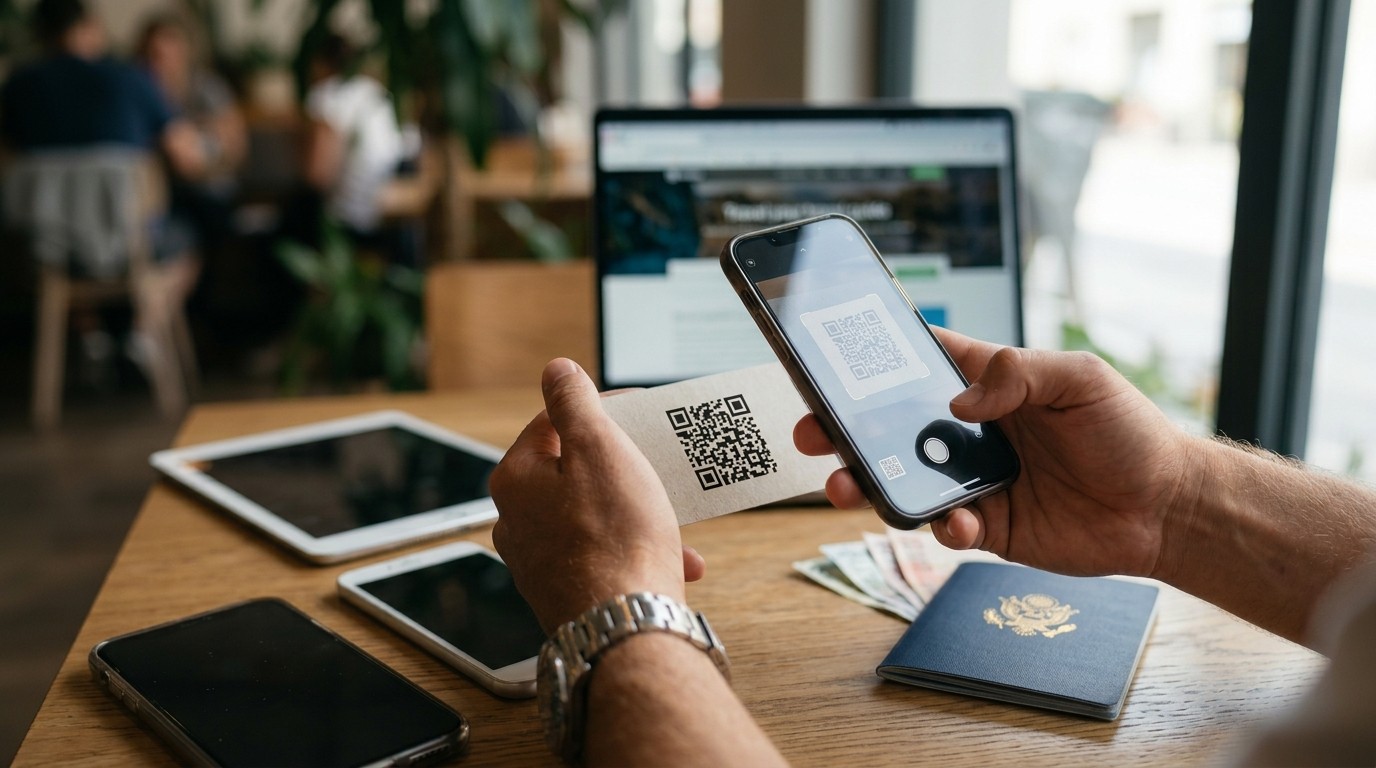
Travel eSIM Guide becomes useful very quickly once you check whether your device supports the feature. Apple says an iPhone XS, XS Max, or XR or later can use eSIM for international travel, and Google’s Pixel help center confirms that Pixel phones can connect to mobile networks with an active nano SIM or eSIM. Before you buy anything, the first step is always device compatibility.
Travel eSIM Guide also needs to account for unlock status. Apple says the iPhone must be unlocked or the plans must be from the same network provider in order for Dual SIM with eSIM to work properly in some cases, and Google says unlocked devices can use eSIM plans offered by other carriers. That matters because a locked phone can quietly block your travel plan if you do not check first.
Travel eSIM Guide should mention setup timing because activation often works best before the trip is chaotic. Apple says an iPhone must generally be connected to Wi-Fi or a hotspot for setup, though some eSIM-only models in some countries can activate without Wi-Fi. Google also suggests activating prepaid travel eSIMs when you arrive at your destination if you want to avoid roaming charges. The safest habit is to prepare the plan in advance and activate it at the right moment.
Travel eSIM Guide also includes the reality that setup methods can differ. Apple offers eSIM Quick Transfer on supported iPhones when carriers allow it, while Google provides help for adding a SIM or eSIM to Pixel phones. If you are switching phones, transferring service, or managing a home line and a travel line together, the exact steps depend on the device and carrier. Reading the manufacturer’s setup guidance before departure saves a lot of confusion later.
Travel eSIM Guide should encourage travelers to test everything before boarding. If you can confirm that the device recognizes the plan, that data settings are correct, and that your home line still behaves the way you expect, your arrival day will be much calmer. A five-minute check at home often prevents a one-hour problem in the airport. That is one of the most underrated benefits of planning ahead.
Choosing the right plan
Travel eSIM Guide is not just about compatibility; it is also about choosing the right plan. A light data plan may be perfect for short city breaks with mostly Wi-Fi use, while a heavier plan may be better for navigation, ride-hailing, messaging, and constant work access. Google notes that many carriers and service providers offer eSIM plans in more than 190 countries and regions, which makes the comparison process much easier than it used to be.
Travel eSIM Guide works best when you match plan size to actual behavior. If you mainly need maps, messaging, and the occasional search, you may not need a huge data allowance. If you stream video, upload content, or work from the road, a larger plan is more realistic. The point is to buy enough data for your real habits instead of guessing based on fear.
Travel eSIM Guide also becomes more practical when you compare duration and region coverage. Some plans are country-specific, while others cover multiple destinations. If your trip includes several stops, a broader regional plan can be simpler than buying separate connections at every border. GSMA’s explanation of multiple operator profiles helps explain why this flexibility is now possible on modern devices.
Travel eSIM Guide should also remind travelers to compare support quality. The best plan is not always the cheapest one. A good provider should make activation clear, explain troubleshooting steps, and offer enough help if something goes wrong. The value of an eSIM is not only in the data itself; it is also in how quickly you can get connected without wasting your first hours abroad.
When to activate and when to wait
Travel eSIM Guide matters a lot at the activation stage because timing affects both convenience and cost. Google advises activating a prepaid travel eSIM when you arrive at your destination to avoid roaming charges, which is a useful rule for many travelers. If you activate too early, you may waste the plan; if you activate too late, you may arrive without a useful connection.
Travel eSIM Guide also helps you decide whether to install the profile before departure or wait until landing. Many travelers like to complete the setup at home on Wi-Fi and then switch the line on when they arrive. Apple’s guidance around Wi-Fi setup and Dual SIM makes this approach especially sensible for supported iPhones. It gives you less to worry about when the airplane lands and the terminal fills up.
Travel eSIM Guide can be even more useful if you think in terms of risk control. If your travel day includes a late arrival, a tight connection, or an unfamiliar airport, having the eSIM ready in advance reduces uncertainty. If your journey is simple and you have strong airport Wi-Fi, you may be comfortable waiting a little longer. The right choice depends on how much flexibility you want.
Travel eSIM Guide should also help you avoid the most common setup mistake: assuming the line is active when it is not. A travel connection is only useful if the correct line is enabled and the device is actually using it for data. Checking the status before you leave the airport is one of the easiest ways to prevent avoidable frustration.
Dual SIM, home line, and travel line
Travel eSIM Guide is especially helpful for people who want to keep their home number while using a travel data plan. Apple says supported iPhones can use Dual SIM internationally, and iPhone 13 models and later can support two active eSIMs in addition to the physical SIM plus eSIM combination. That means you can keep your usual number available while using a separate line for travel data.
Travel eSIM Guide becomes even more useful when you understand why Dual SIM matters. You may want your home number available for banking, two-factor codes, or family contact, while your travel line handles data and navigation. That separation is one of the biggest practical advantages of eSIM for international trips. It keeps your essential communication alive without forcing you to pay roaming rates for everything.
Travel eSIM Guide should also mention that some phones and carriers handle dual-service arrangements differently. Apple notes that some conditions require the device to be unlocked and the providers to support Dual SIM with eSIM. Google’s help pages also point out that unlocked devices can use eSIM plans from other carriers. In practice, that means the easiest setup is the one you verify before you leave home.
Travel eSIM Guide can save time if you use the home line for calls and the travel line for data, but the exact division depends on the device settings. That is why a quick test at home is helpful. If both lines behave the way you want, you can move through the trip with less stress and fewer surprises. A few minutes of testing is a strong trade for a smoother arrival.
Country rules, registration, and local realities
Travel eSIM Guide should always include local rules because mobile access is not identical everywhere. The U.S. State Department advises travelers to research local SIM card rules and notes that some countries require local SIM registration with ID. That means your plan can be technically valid but still subject to local requirements that you need to know in advance.
Travel eSIM Guide is useful because it reminds you that connectivity is part of travel compliance, not just convenience. Some destinations may want identification for local service, and some may have stricter rules around registration. If you are relying on mobile data for maps, translation, or communication, checking these rules before departure can prevent a very avoidable problem after landing.
Travel eSIM Guide also supports smarter planning around communication. The State Department recommends planning connectivity ahead of time and being cautious with apps, especially for communication and navigation while abroad. That advice matters because your data connection is the foundation for your digital travel habits, including messaging, mapping, and ride-hailing.
Travel eSIM Guide should therefore be read alongside destination research, not in isolation. The best travel setup is one that matches both the phone and the country. If the destination has special SIM requirements, your mobile plan should support them. If the region is easy to connect in, you have more flexibility. In either case, the goal is the same: know the rules before you need the connection.
How to use eSIM with travel tools
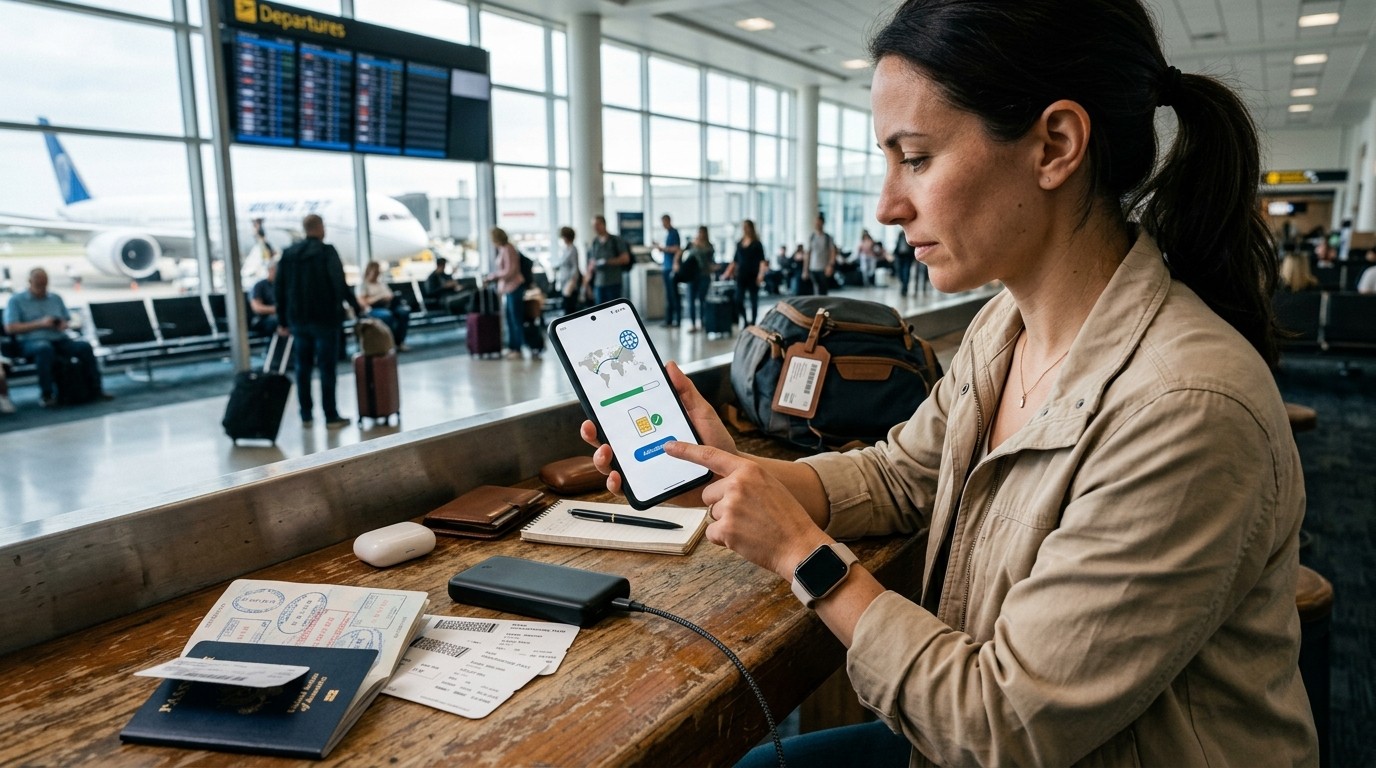
Travel eSIM Guide becomes more powerful when you connect it with the other tools you already use on the road. Flight Tracking Apps are a good example because they rely on live data, push alerts, and airport updates. If you are watching a delay or a gate change, a working travel data connection makes those alerts much more useful.
Travel eSIM Guide also fits naturally with Top Travel Apps and Gear. If your maps, translation tools, booking apps, and messaging tools all rely on the internet, then mobile data becomes a core part of your travel kit rather than a bonus. A strong connection makes the rest of your digital setup work the way it should. That is why the travel phone should be treated as seriously as any other piece of gear.
Travel eSIM Guide also pairs well with Travel Channel Guide-style planning because inspiration and execution are different tasks. A travel show or destination guide may help you decide where to go, but your connection plan helps you navigate once you get there. That connection between dreaming and doing is what makes the trip feel smooth.
Travel eSIM Guide can also support Currency Converter Apps when you are paying in a new market. A stable connection lets you check exchange rates, compare local prices, and avoid unnecessary surprises. In that sense, your data plan helps you make better money decisions, not just better navigation decisions. For travelers crossing borders often, that kind of support is surprisingly valuable.
Security and loss prevention
Travel eSIM Guide should not ignore security. Apple says eSIM is more secure than a physical SIM because it cannot be removed from a lost or stolen phone. That is a meaningful advantage for travelers because it gives you one less thing to worry about if your device is misplaced. The security benefit is not magical, but it is real and practical.
Travel eSIM Guide also helps because you are less likely to lose a tiny card or a paper tray tool while traveling. Physical SIMs can be misplaced, and swapping them in public places is not always ideal. With an eSIM, much of the setup happens digitally, which reduces handling and lowers the chance of a simple mistake becoming a bigger travel problem.
Travel eSIM Guide should also remind travelers to protect their devices with passwords, backups, and clear account access. If your phone is the gateway to your booking confirmations, maps, and two-factor codes, then phone security is travel security. The eSIM is only part of the picture. The rest is device hygiene and account discipline.
Travel eSIM Guide works best when you think of the travel phone as a layered system: the device, the plan, the app stack, and the backup habits all matter. A secure setup reduces stress because you know what to do if the connection drops or the phone fails. Good planning means fewer surprises and faster recovery if something goes wrong.
Troubleshooting without panic
Travel eSIM Guide also needs a calm troubleshooting mindset. Apple’s support pages suggest basic steps like toggling Airplane Mode, checking Cellular settings, and restarting the device if an eSIM is not working properly. Those steps sound simple, but they solve many of the most common first-time problems. When the issue is minor, a calm reset can save time.
Travel eSIM Guide becomes more reassuring when you know what “not working” actually means. Sometimes the problem is the wrong line being selected for data, sometimes it is a weak signal, and sometimes it is a setup step that did not complete. Knowing the likely cause helps you avoid panic and fix the issue methodically instead of randomly tapping settings.
Travel eSIM Guide also benefits from understanding that provider support matters. If your carrier or worldwide service provider supports eSIM, setup is usually much smoother. If the provider does not support your plan type or device status, the fix may be on the account side rather than the phone side. That is why reading official support pages before traveling is so helpful.
Travel eSIM Guide should leave travelers with a practical rule: test before you depart, activate with intention, and keep backup information handy. That habit turns problems into small adjustments instead of trip-ruining surprises. The more familiar you are with the process before departure, the less emotionally expensive any issue becomes after landing.
Best use cases for travelers
Travel eSIM Guide works especially well for short international city breaks, multi-country itineraries, work trips, and long vacations where roaming costs would otherwise add up. Google notes that many providers offer eSIM plans in over 190 countries and regions, which makes these plans useful for a wide range of itineraries. If you travel often, the flexibility becomes even more valuable.
Travel eSIM Guide is also a strong fit for travelers who depend heavily on navigation, transit apps, or real-time communication. If your trip involves airports, train stations, moving around a city, or constant messaging, data access is no longer optional. In that setting, a well-chosen eSIM can be the difference between smooth travel and frustrating guesswork.
Travel eSIM Guide is equally useful for people who want to keep their home number available without paying full roaming rates. Apple’s Dual SIM guidance explains that supported iPhones can keep a home line and a travel line active together. That means you do not have to choose between staying reachable and staying connected. You can often do both.
Travel eSIM Guide may be less useful only when your device is unsupported, your destination has unusual registration requirements you cannot meet, or your travel style is extremely offline. Even then, the idea is still worth understanding because the technology keeps expanding. GSMA’s current guidance shows that eSIM remains a major part of how mobile connectivity is evolving in 2026.
Common mistakes to avoid
Travel eSIM Guide should also warn against buying before checking device compatibility. That is the mistake that causes the most frustration. A traveler sees a good price, buys a plan, and only later discovers the phone is locked, unsupported, or set up incorrectly. The easiest fix is to check your phone before you buy the plan.
Travel eSIM Guide also points to another mistake: assuming all travel plans are the same. Some are data-only, some are regional, some are country-specific, and some activate immediately while others are meant to be started on arrival. Google’s guidance to activate many prepaid travel eSIMs when you arrive is a good reminder that timing matters.
Travel eSIM Guide should discourage travelers from treating setup as a last-minute airport task. If you wait until boarding or arrival to learn how the plan works, you will be more likely to miss a step. The best habit is to read the setup instructions at home and leave with the settings already prepared. That small bit of preparation often saves a lot of stress.
Travel eSIM Guide also helps you avoid overbuying. You do not always need the biggest data plan just because the trip is long. If your habits are light, a smaller plan can be enough. If your habits are heavy, the smaller plan can be false economy. Matching the plan to the actual use case is the smartest way to avoid waste.
How to make the whole trip easier

Travel eSIM Guide is ultimately about reducing friction. A phone that connects quickly lets you find your ride, confirm your hotel, check a map, and message people without stress. That means you spend less time solving logistics and more time actually experiencing the destination. For many travelers, that difference is the real value of eSIM.
Travel eSIM Guide also reminds you that mobile access is a trip tool, not just a tech product. The plan you choose shapes how easily you can use flight alerts, translation apps, navigation, and payment tools. When the connection works, everything else becomes easier. That is why connectivity belongs in the planning stage, not after you land.
Travel eSIM Guide can save real money if it helps you avoid roaming fees and reduce the need for airport purchases. Google’s advice to use prepaid international eSIMs to avoid roaming charges is especially helpful for travelers who cross borders often. The savings are not only financial; they also come from time and mental energy saved.
Travel eSIM Guide is strongest when you see it as part of your travel system. The better your device, provider, and backup habits are aligned, the smoother the trip feels. That is the payoff of connecting the phone to the journey deliberately instead of hoping it works out automatically.
Conclusion
A good connectivity plan does more than keep your phone online. It lowers stress, simplifies arrival, and helps every other travel tool work better. The biggest advantage of an eSIM is not just convenience; it is control. You can often keep your home number available, use a separate data line abroad, and avoid the hassle of swapping physical cards in airports or shops. That makes international travel feel smoother from the moment you land. If you check compatibility, choose the right plan, activate at the right time, and keep a few simple troubleshooting habits in mind, you will be much better prepared for the trip. The result is less guesswork and more confidence once you are on the road.
Frequently Asked Questions (FAQ)
1. What is the main advantage of an eSIM?
The biggest advantage is flexibility. You can often set it up digitally, keep multiple profiles available, and avoid swapping physical SIM cards while traveling.
2. Do I need Wi-Fi to set it up?
Usually yes, especially on many iPhone models, which Apple says must be connected to Wi-Fi or a hotspot for setup in most cases.
3. Can I keep my home number active?
Yes, on supported devices you can often use Dual SIM and keep your home line while using a travel line for data. Apple documents this for international travel on supported iPhones.
4. Is it safer than a physical SIM?
Apple says eSIM is more secure because it cannot be removed if your phone is lost or stolen. That is a real benefit, especially for travel.
5. When should I activate the travel plan?
Google recommends activating a prepaid travel eSIM when you arrive at your destination to avoid roaming charges. That timing often works well for many travelers.
6. What devices support it?
Apple lists iPhone XS, XS Max, and XR or later for eSIM travel use, and Google confirms that Pixel phones can use either nano SIM or eSIM. Device support still needs to be checked model by model.
7. Can I use it in many countries?
Yes, many providers and service providers offer plans across a large number of countries and regions. Google says worldwide providers offer eSIM plans in over 190 countries and regions.
8. What if the plan does not work?
Apple recommends simple troubleshooting steps such as toggling Airplane Mode, checking Cellular settings, and restarting the device. If that does not help, the issue may be with the carrier or plan setup.
9. Do some countries require extra registration?
Yes. The U.S. State Department notes that some countries require SIM registration with ID, so it is important to check the local rules before traveling.
10. Is it worth using for short trips?
Often yes, because even short trips depend on maps, messages, bookings, and airport updates. A reliable connection can make a short trip feel much easier and less stressful.