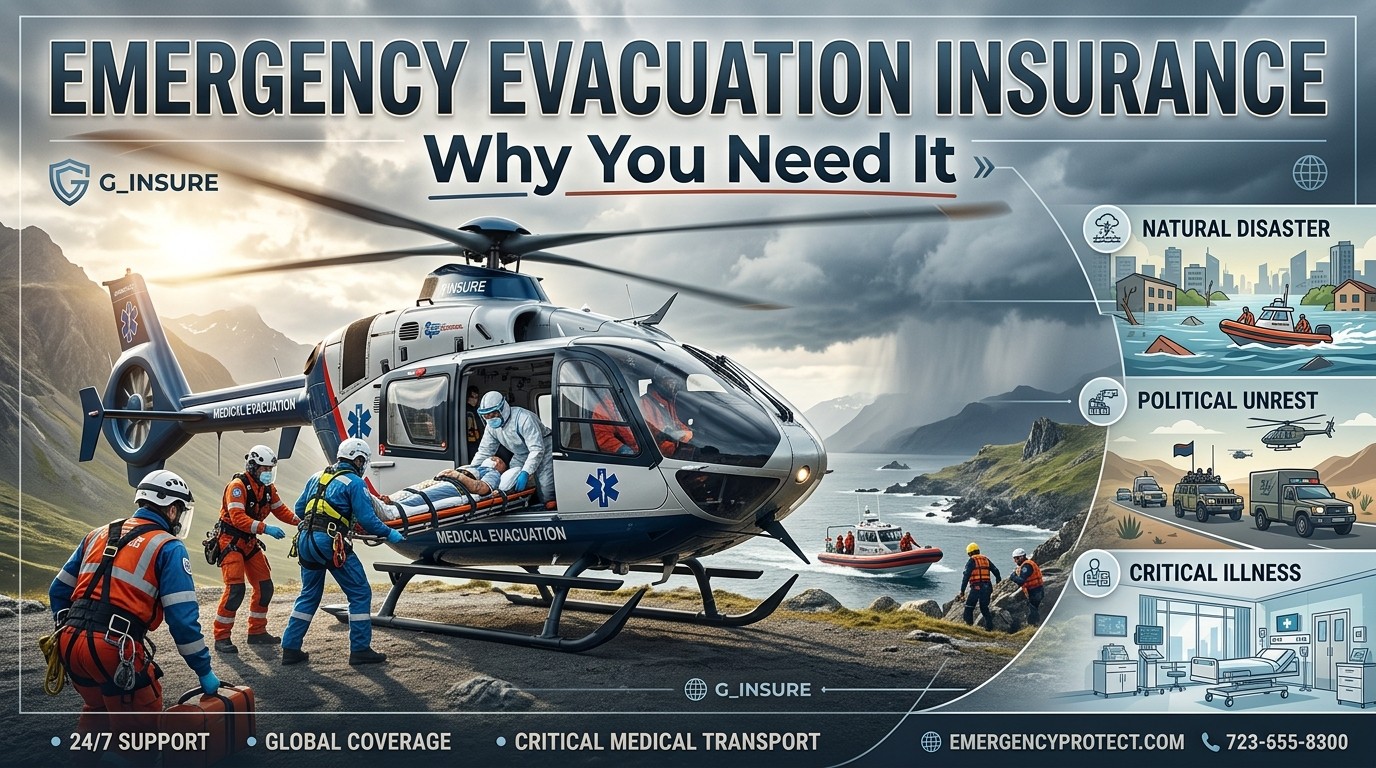
Emergency Evacuation Insurance helps travelers cover the high cost of medically necessary transport when local care is not enough, especially in remote, rural, or medically limited destinations.
Emergency Evacuation Insurance is one of those travel protections people often ignore until they need it, and by then it is too late. The coverage exists for situations where you are sick or injured far from adequate care and need transport to a better facility, sometimes even home. The CDC notes that medical evacuation insurance can be purchased separately or with other travel coverage, while the NAIC explains that this kind of protection is meant for emergency transport rather than treatment itself.
The reason Emergency Evacuation Insurance matters is simple: the trip that goes wrong is rarely the one you planned for. A broken leg on a hiking trail, a sudden illness on a cruise, or a medical issue in a remote location can quickly turn into a transport problem. The CDC says evacuation from a remote area to a high-quality hospital can cost more than $100,000, and NAIC notes that most U.S. health insurance companies will not pay for transport to an appropriate facility overseas or for repatriation.
That financial gap is why Emergency Evacuation Insurance is not just a nice extra. It is a safeguard against a kind of expense that most travelers never budget for but can be forced to pay very quickly if they are unprotected. In plain terms, this coverage helps shift a catastrophic logistics problem away from your personal finances and into a plan designed for that exact risk.
What Emergency Evacuation Insurance Actually Covers
Emergency Evacuation Insurance is designed for transportation during a medical emergency, not for the medical treatment you receive once you arrive. That distinction matters a lot. InsureMyTrip explains that evacuation coverage pays for transport in a medical emergency, while medical expense coverage pays for treatment. The CDC and NAIC similarly separate medical evacuation from health coverage and emphasize that plans vary widely.
A policy may cover transport from a remote area to a hospital with better care, transport to the nearest appropriate facility, or transport home if medically necessary and allowed by the plan. NAIC says emergency medical evacuation can include air evacuation and medical transportation to the nearest adequate medical facility, then home if warranted. InsureMyTrip also notes that evacuation is generally approved when medically necessary and signed off by the treating physician and the plan’s medical team.
That is why Emergency Evacuation Insurance feels so different from standard trip protection. You are not buying reassurance for a cancelled flight or a delayed bag. You are buying a response plan for a medical situation that requires fast and expensive transport. In some cases, the coverage is the difference between getting to the right facility and facing an enormous bill on your own.
Why the Cost Can Be So High
One reason Emergency Evacuation Insurance is so important is that evacuation is logistically complex. Moving a patient safely often requires coordination between ground transport, air transport, medical approval, and destination acceptance. The CDC says evacuation from a remote area to a high-quality hospital could cost more than $100,000. InsureMyTrip also reports that evacuations can run $50,000 to $150,000 from cruise ships and more than $100,000 from remote destinations.
Those numbers are easy to underestimate because most travelers think first about a doctor visit or an urgent care bill. But evacuation is not just a ride. It may involve medical aircraft, specialized equipment, trained staff, and multiple handoffs. That is why Emergency Evacuation Insurance exists as a separate layer rather than being folded into ordinary health coverage.
The psychology here matters too. People usually judge risk by how familiar it feels, not by how expensive it could be. A traveler may happily pay for meals, souvenirs, or upgrades while ignoring a protection they hope never to use. Emergency Evacuation Insurance protects against a low-probability, high-cost event, which is exactly the kind of risk people tend to underestimate until they learn the numbers.
Who Needs It Most
Emergency Evacuation Insurance is especially valuable for travelers going to remote destinations, areas with limited medical infrastructure, or places where the nearest adequate hospital may be far away. The CDC explicitly recommends considering medical evacuation insurance if you are traveling to a remote destination or somewhere where care may not meet U.S. standards. NAIC gives similar guidance and says the coverage is useful in rural areas without easy access to medical facilities.
Adventure travelers are another group that benefits strongly. Hikers, divers, skiers, cruise passengers, and off-grid travelers all face situations where local care might not be enough. InsureMyTrip specifically highlights cruisers, adventure travelers, and anyone visiting medically limited areas as common candidates for evacuation coverage. That is why Emergency Evacuation Insurance often appears in the same planning conversation as Adventure Travel Insurance.
Solo travelers may need the coverage even more because there is no one else to organize a response if something goes wrong. If you have ever planned Iceland Solo Travel, for example, you already know that beautiful landscapes can also mean distance, weather, and slower access to help. Emergency Evacuation Insurance gives solo travelers a backup system when the trip takes them away from easy medical access.
How It Differs from Regular Travel Insurance
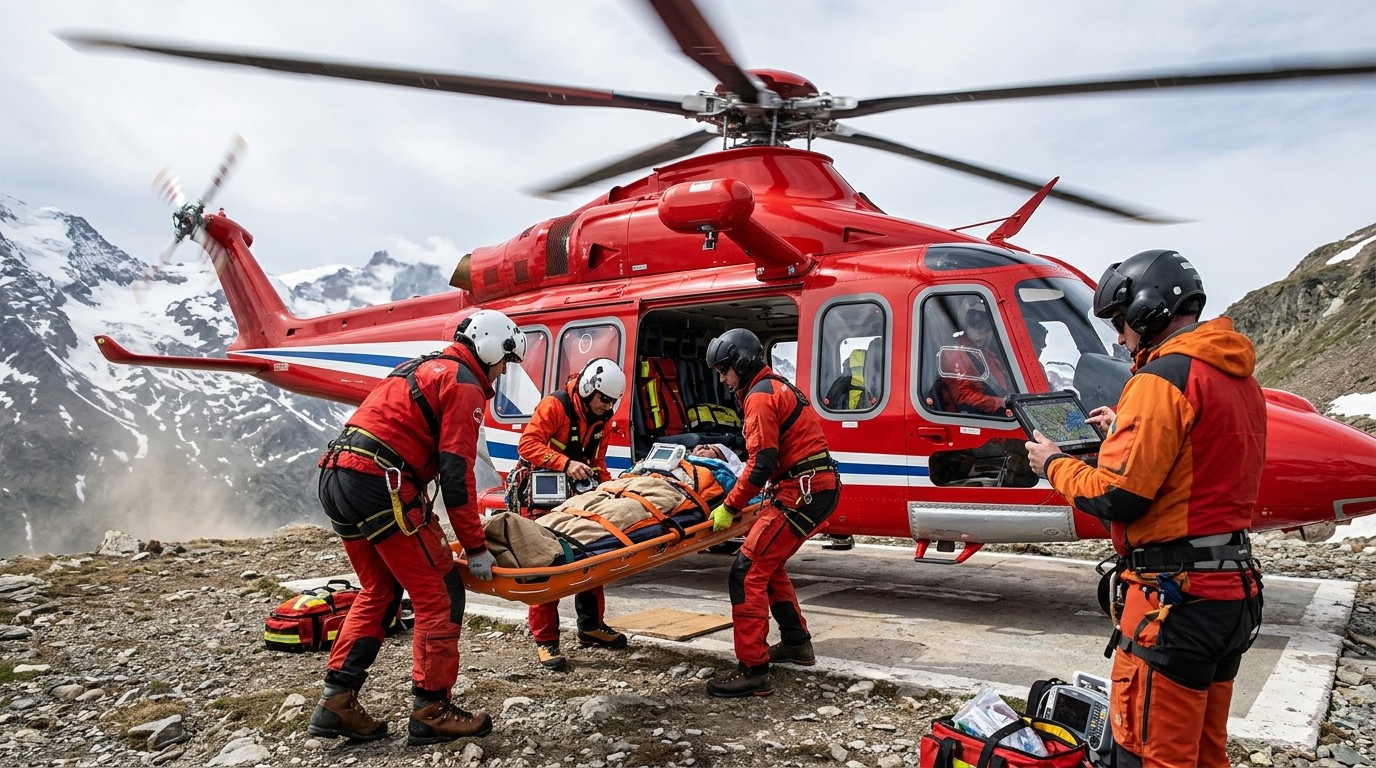
A lot of travelers assume Emergency Evacuation Insurance is just another name for travel insurance, but the coverage is narrower than that. The CDC says travel disruption insurance, travel health insurance, and medical evacuation insurance each provide different benefits. That means a basic trip policy may help with cancellations or some medical expenses, but not necessarily with transport to a proper hospital or home.
NAIC also points out that most U.S. health insurance companies will not pay for repatriation or transport to the nearest appropriate medical facility overseas. That makes Emergency Evacuation Insurance a critical gap-filler for international trips. In other words, your regular health plan may cover treatment at home, but it may not get you to the place where you can safely receive treatment in the first place.
This is where a lot of travelers make a false assumption. They think, “I have health insurance, so I am covered.” But the real question is whether your plan pays for transport in a foreign setting, and the answer is often no. Emergency Evacuation Insurance exists because treatment and transport are not the same thing, and both can be expensive in different ways.
What It Usually Does Not Cover
Emergency Evacuation Insurance does not automatically cover every medical bill you may face. InsureMyTrip clearly states that evacuation insurance covers transportation during a medical emergency, not treatment after arrival. That means hospital fees, surgery, prescriptions, and follow-up care may still need separate medical coverage.
It also may not cover every pre-existing condition or every type of trip disruption. The CDC warns that travel-specific health insurance plans vary widely and may not cover the full cost of emergency care, evacuation, or itinerary changes needed to receive care. Some supplemental policies exclude pre-existing conditions. That is why reading the fine print matters so much before buying Emergency Evacuation Insurance.
Coverage approvals usually depend on medical necessity and the insurer’s medical team. In practice, this means the insurer is not just paying because you are uncomfortable or inconvenienced. The need has to be real, serious, and aligned with the policy terms. Emergency Evacuation Insurance is built for medical need, not for convenience.
How to Choose the Right Plan
A good Emergency Evacuation Insurance policy should be judged by several things: coverage limit, medical necessity rules, destination limits, coordination process, and whether it works alongside your existing health coverage. The CDC notes that medical evacuation insurance may be purchased separately or bundled with travel health insurance, and NAIC recommends understanding the difference before you buy.
Coverage amount matters because the cost of a major evacuation can exceed $100,000. For that reason, InsureMyTrip says international travelers should consider at least $100,000 in emergency medical coverage, with higher limits for longer or more expensive trips. While medical coverage and evacuation coverage are not identical, the same principle applies: choose a limit that matches the realistic worst-case cost of your destination.
You should also check where the plan will take you. Some policies transport you to the nearest appropriate hospital, while others can bring you home if medically required and covered. That difference matters when you are comparing Emergency Evacuation Insurance plans because “transport” is not a single fixed promise. The route, destination, and level of care can all affect what happens.
A Simple Comparison Table
| Coverage type | Main purpose | What it typically pays for |
|---|---|---|
| Travel health insurance | Medical treatment abroad | Doctor visits, hospital care, treatment costs |
| Emergency Evacuation Insurance | Medical transport | Transport to proper care or home |
| Travel disruption insurance | Trip interruptions | Cancellations, delays, trip changes |
| Repatriation coverage | Return after death | Transportation of remains |
This table reflects the CDC and NAIC distinction between treatment, evacuation, disruption, and repatriation coverage.
Why Solo and Adventure Travelers Should Pay Extra Attention

Emergency Evacuation Insurance becomes even more important when your trip is built around distance, outdoors, or unpredictable conditions. Remote hiking, island travel, cruise travel, and scenic road trips all raise the chance that local care is not enough. The CDC specifically says remote destinations are a strong reason to consider evacuation coverage.
That is why the planning mindset often overlaps with a Flight Risk Management Guide. The point is not to become fearful. The point is to identify where a trip could become complicated and make sure you have a response plan. Good travelers do not assume nothing will go wrong; they assume some things might, and they prepare accordingly. Emergency Evacuation Insurance fits that style of planning perfectly.
If you have ever looked at Best Routes for Solo Travel Spain and Portugal, you already know how route choice affects risk, access, and pace. The same logic applies here. Some itineraries are easy to support with basic insurance, while others make Emergency Evacuation Insurance a far more sensible choice because the distance from care is greater.
How Claims Usually Work
Emergency Evacuation Insurance usually requires communication with the insurer or assistance provider before transport happens, unless the situation is too urgent to wait. InsureMyTrip explains that evacuation is typically covered when medically necessary and approved by the treating physician and the plan’s medical team. This is why keeping your policy documents accessible during travel is so important.
In practice, that means travelers should know whom to call, what the policy number is, and how the insurer defines emergency transport. If you are too sick to handle it yourself, the hospital or local contact may need to coordinate. Emergency Evacuation Insurance is most effective when the traveler knows the process before the emergency happens.
The strongest takeaway is that claims are simpler when the policy is clearly understood. If you only learn the rules after something goes wrong, the stress level rises quickly. Good preparation gives the policy a chance to do the job it was meant to do.
Common Mistakes Travelers Make
One mistake is buying a travel policy and assuming all emergencies are included. They are not. Another mistake is focusing only on trip cancellation while ignoring transport risk. A third mistake is choosing a policy with a low limit because the trip seems short or “safe.” The CDC and NAIC both show that evacuation need is often tied to location and access, not trip length alone.
Another frequent error is failing to check whether home-country health coverage will help abroad. NAIC says most U.S. health insurers do not pay for repatriation or transport to the nearest appropriate medical facility overseas. That means assuming you are covered can be more dangerous than not buying anything at all, because it gives false confidence. Emergency Evacuation Insurance is valuable precisely because it covers the hole that many travelers do not realize exists.
How Much Coverage Is Enough
There is no single number that works for every traveler, but the CDC and InsureMyTrip both suggest thinking in terms of high-cost scenarios, especially in remote or medically limited locations. If an evacuation can exceed $100,000, then a small policy limit may leave you exposed. That is why Emergency Evacuation Insurance should be sized to the destination and the activity.
In general, the more remote the trip, the more important generous coverage becomes. Cruisers, hikers, island travelers, and adventure travelers may face much more expensive transport than urban tourists. The policy should reflect the trip you are actually taking, not the trip you wish you were taking. Emergency Evacuation Insurance is strongest when the benefit amount matches the real risk.
Why This Coverage Feels “Invisible” Until You Need It

Emergency Evacuation Insurance is easy to overlook because most trips end without incident. That creates a dangerous mental shortcut. Travelers start to believe the risk is smaller than it is, or that “nothing serious will happen to me.” But the coverage is designed for low-frequency events with very high cost. Those are exactly the risks that are easiest to dismiss and hardest to afford.
There is also a comfort bias. People feel more protected when they can point to a visible object like a boarding pass or hotel booking than to an abstract policy clause. Emergency Evacuation Insurance is abstract until the moment it suddenly becomes the most important purchase of the trip. That is why reading the policy before departure matters so much.
A Practical Pre-Trip Checklist
Before you leave, confirm that your policy specifically includes Emergency Evacuation Insurance, not just general travel insurance language. Check whether it covers nearest-facility transport, home transport, or both. Verify whether the plan needs pre-approval, physician approval, or insurer assistance team involvement. Make sure you know what the emergency phone number is and where to find the policy documents quickly.
It also helps to pair your policy with common-sense travel planning. Know where the nearest major hospital is, carry copies of key medical information, and keep your passport and policy details in a safe but accessible place. Emergency Evacuation Insurance works best when it is part of a larger preparedness habit rather than a last-minute add-on.
Why It Is Worth the Price
The price of Emergency Evacuation Insurance is usually small compared with the possible transport bill. That asymmetry is the entire logic of the coverage. You are paying a modest amount to protect against a rare but potentially massive expense. The CDC’s and NAIC’s guidance makes clear that transport abroad can be expensive and often is not covered by ordinary U.S. health plans.
For many travelers, that makes the decision simple. The policy is not there to make travel risk disappear. It is there to prevent one emergency from becoming a financial disaster. That is a very different, and very useful, kind of protection. Emergency Evacuation Insurance is often the kind of purchase you barely notice when nothing happens and deeply appreciate when something does.
Conclusion
Emergency Evacuation Insurance is one of the most important travel protections because it covers a risk that many regular health and trip policies do not fully handle: medically necessary transport when you are far from appropriate care. The CDC, NAIC, and travel-insurance guidance all point to the same lesson. Remote destinations, adventure travel, cruises, and international trips can create expensive evacuation needs, and those costs can easily reach five figures or more. If you are planning a trip where distance, terrain, or limited medical access could become a problem, this coverage is worth serious attention. The best time to buy Emergency Evacuation Insurance is before anything goes wrong, not after.
Frequently Asked Questions (FAQ)
1. What does Emergency Evacuation Insurance cover?
Emergency Evacuation Insurance covers medically necessary transport during a medical emergency, usually to the nearest appropriate facility or sometimes home, depending on the policy.
2. Does it pay for medical treatment too?
No. InsureMyTrip says evacuation coverage pays for transportation, not the medical treatment that happens after arrival.
3. Who needs Emergency Evacuation Insurance most?
Travelers going to remote, rural, cruise, island, or adventure destinations usually benefit most because care may be far away or expensive to reach.
4. How expensive can evacuation be?
The CDC says evacuation from a remote area to a high-quality hospital could cost more than $100,000, and InsureMyTrip reports that some evacuations can run $50,000 to $150,000.
5. Is it different from normal travel insurance?
Yes. The CDC says travel disruption insurance, travel health insurance, and medical evacuation insurance are different types of coverage with different purposes.
6. Will my U.S. health insurance cover evacuation abroad?
Usually not. NAIC says most U.S. health insurance companies will not pay for repatriation or transport to the nearest appropriate medical facility overseas.
7. Is it useful for solo travelers?
Yes. Solo travelers may have fewer practical options in an emergency, so Emergency Evacuation Insurance can be especially helpful.
8. Do I need it for a city trip?
Maybe not always, but if the destination has limited medical access or you are traveling far from home, it may still be a smart precaution.
9. How do I choose the right limit?
Choose a limit that reflects the destination and the possible cost of transport. For remote or adventure-heavy trips, higher limits are usually wiser.
10. When should I buy it?
Buy Emergency Evacuation Insurance before you travel so the coverage is in place before any emergency happens.